Malaria during Pregnancy
- PMID: 28213434
- PMCID: PMC5453384
- DOI: 10.1101/cshperspect.a025551
Malaria during Pregnancy
Abstract
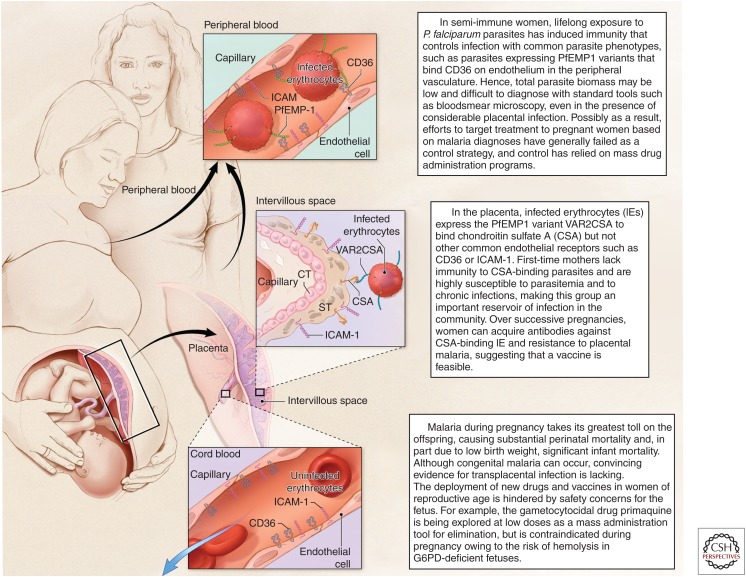
One hundred and twenty-five million women in malaria-endemic areas become pregnant each year (see Dellicour et al. PLoS Med7: e1000221 [2010]) and require protection from infection to avoid disease and death for themselves and their offspring. Chloroquine prophylaxis was once a safe approach to prevention but has been abandoned because of drug-resistant parasites, and intermittent presumptive treatment with sulfadoxine-pyrimethamine, which is currently used to protect pregnant women throughout Africa, is rapidly losing its benefits for the same reason. No other drugs have yet been shown to be safe, tolerable, and effective as prevention for pregnant women, although monthly dihydroartemisinin-piperaquine has shown promise for reducing poor pregnancy outcomes. Insecticide-treated nets provide some benefits, such as reducing placental malaria and low birth weight. However, this leaves a heavy burden of maternal, fetal, and infant morbidity and mortality that could be avoided. Women naturally acquire resistance to Plasmodium falciparum over successive pregnancies as they acquire antibodies against parasitized red cells that bind chondroitin sulfate A in the placenta, suggesting that a vaccine is feasible. Pregnant women are an important reservoir of parasites in the community, and women of reproductive age must be included in any elimination effort, but several features of malaria during pregnancy will require special consideration during the implementation of elimination programs.
Copyright © 2017 Cold Spring Harbor Laboratory Press; all rights reserved.
Figures
References
-
- Abrams ET, Brown H, Chensue SW, Turner GD, Tadesse E, Lema VM, Molyneux ME, Rochford R, Meshnick SR, Rogerson SJ. 2003. Host response to malaria during pregnancy: Placental monocyte recruitment is associated with elevated β chemokine expression. J Immunol 170: 2759–2764. - PubMed
-
- Achur RN, Valiyaveettil M, Alkhalil A, Ockenhouse CF, Gowda DC. 2000. Characterization of proteoglycans of human placenta and identification of unique chondroitin sulfate proteoglycans of the intervillous spaces that mediate the adherence of Plasmodium falciparum–infected erythrocytes to the placenta. J Biol Chem 275: 40344–40356. - PubMed
-
- Aitken EH, Mbewe B, Luntamo M, Maleta K, Kulmala T, Friso MJ, Fowkes FJ, Beeson JG, Ashorn P, Rogerson SJ. 2010. Antibodies to chondroitin sulfate A-binding infected erythrocytes: Dynamics and protection during pregnancy in women receiving intermittent preventive treatment. J Infect Dis 201: 1316–1325. - PubMed
-
- Alkhalil A, Achur RN, Valiyaveettil M, Ockenhouse CF, Gowda DC. 2000. Structural requirements for the adherence of Plasmodium falciparum–infected erythrocytes to chondroitin sulfate proteoglycans of human placenta. J Biol Chem 275: 40357–40364. - PubMed
Publication types
MeSH terms
Substances
LinkOut - more resources
Full Text Sources
Other Literature Sources
Medical