


Piloting the Use of Patient-Specific Cardiac Models as a Novel Tool to Facilitate Communication During Cinical Consultations
- PMID: 28214968
- PMCID: PMC5388703
- DOI: 10.1007/s00246-017-1586-9
Piloting the Use of Patient-Specific Cardiac Models as a Novel Tool to Facilitate Communication During Cinical Consultations
Abstract
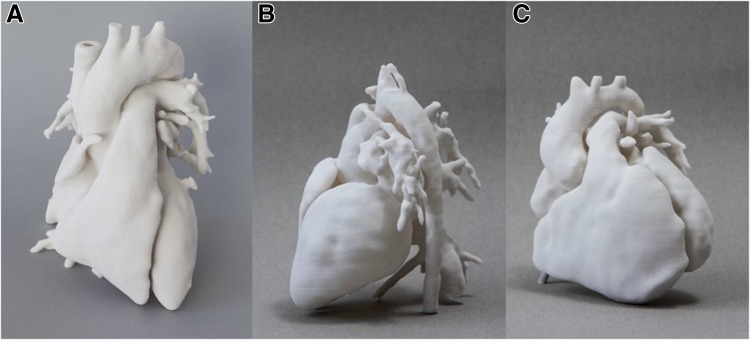
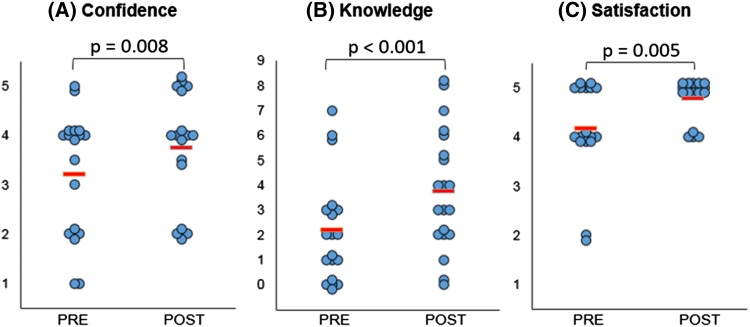
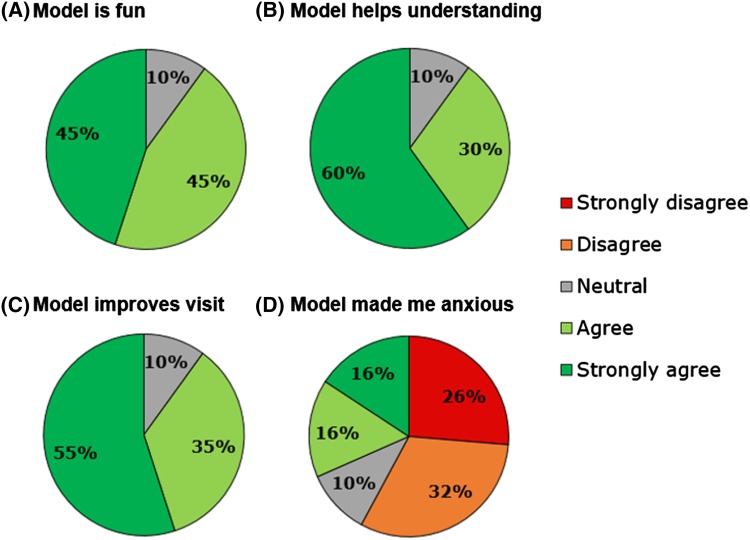
This pilot study aimed to assess the impact of using patient-specific three-dimensional (3D) models of congenital heart disease (CHD) during consultations with adolescent patients. Adolescent CHD patients (n = 20, age 15-18 years, 15 male) were asked to complete two questionnaires during a cardiology transition clinic at a specialist centre. The first questionnaire was completed just before routine consultation with the cardiologist, the second just after the consultation. During the consultation, each patient was presented with a 3D full heart model realised from their medical imaging data. The model was used by the cardiologist to point to main features of the CHD. Outcome measures included rating of health status, confidence in explaining their condition to others, name and features of their CHD (as a surrogate for CHD knowledge), impact of CHD on their lifestyle, satisfaction with previous/current visits, positive/negative features of the 3D model, and open-ended feedback. Significant improvements were registered in confidence in explaining their condition to others (p = 0.008), knowledge of CHD (p < 0.001) and patients' satisfaction (p = 0.005). Descriptions of CHD and impact on lifestyle were more eloquent after seeing a 3D model. The majority of participants reported that models helped their understanding and improved their visit, with a non-negligible 30% of participants indicating that the model made them feel more anxious about their condition. Content analysis of open-ended feedback revealed an overall positive attitude of the participants toward 3D models. Clinical translation of 3D models of CHD for communication purposes warrants further exploration in larger studies.
Keywords: 3D printing; Communication; Congenital heart disease; Rapid prototyping; Transition clinic.
Conflict of interest statement
All authors declare that they have no conflict of interest.
Figures
References
-
- McMurray R, Kendeall L, Parsons JM, Quirk J, Veldtman GR, Lewin RJP, Sloper P. A life less ordinary: growing up and coping with congenital heart disease. Coronary Health Care. 2001;5:51–57. doi: 10.1054/chec.2001.0112. - DOI
MeSH terms
Grants and funding
LinkOut - more resources
Full Text Sources
Other Literature Sources
Medical
