Review
. 2017 Jan;5(2):31.
doi: 10.21037/atm.2016.12.69.

The mycobiome of the human urinary tract: potential roles for fungi in urology

Affiliations
Review

The mycobiome of the human urinary tract: potential roles for fungi in urology

A Lenore Ackerman et al. Ann Transl Med. 2017 Jan.

Abstract

The mycobiome, defined as the fungal microbiota within a host environment, is an important but understudied component of the human microbial ecosystem. New culture-independent approaches to determine microbial diversity, such as next-generation sequencing methods, have discovered specific, characteristic, commensal fungal populations present in different body sites. These studies have also identified diverse patterns in fungal communities associated with various diseases. While alterations in urinary bacterial communities have been noted in disease states, a comprehensive description of the urinary mycobiome has been lacking. Early evidence suggests the urinary mycobiome is a diverse community with high intraindividual variability. In other disease systems, the mycobiome is thought to interact with other biomes and the host to play a role in organ homeostasis and pathology; further study will be needed to elucidate the role fungi play in bladder health and disease.

Keywords: Mycobiome; fungal microbiome; fungi; lower urinary tract symptom (LUTS); urinary tract; urology.


Conflict of interest statement

Conflicts of Interest: The authors have no conflicts of interest to declare.

Figures
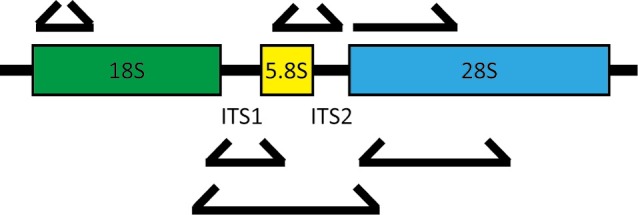
Figure 1
Figure 1
Schematic representation of the fungal ribosomal gene cluster. The 18S, 5.8S, and 28S genes are separated within the locus by two ITS. These ITS sequences are noncoding regions, and therefore have the highest diversity within the locus. Binding locations for several of the commonly used fungal primers for NGS are shown above and below the schematic. ITS, internal transcribed spacer; NGS, next generation sequencing.
Figure 2
Figure 2
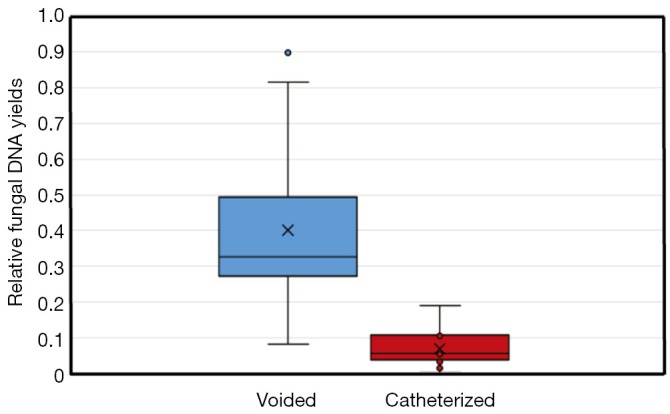
Relative fungal DNA quantities in urine samples. Quantitative PCR for fungal ribosomal DNA was used to determine the median levels of fungal DNA in urine samples from asymptomatic female patients. The median levels in voided urinary samples were nearly an order of magnitude higher (8.5-fold) than those seen in catheterized specimens. These data imply the presence of substantial contamination from vaginal and possibly skin sources, suggesting that the analysis of voided specimens may be dominated by non-urinary microbes. PCR, polymerase chain reaction.
Figure 3
Figure 3
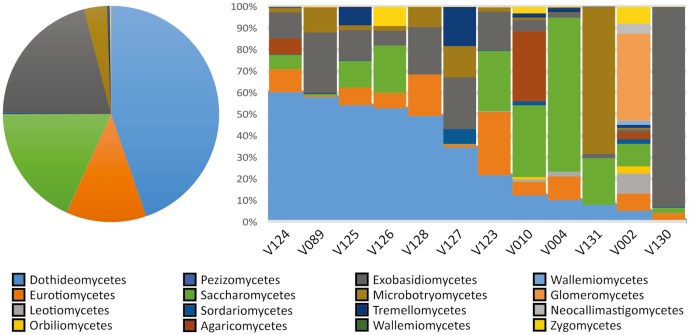
The urinary mycobiome of asymptomatic control subjects. Clean-catch mid-stream urine samples were obtained from a panel of women without urinary complaints, as confirmed by validated urinary symptom questionnaires, then subjected to NGS using the ITS1 fungal ribosomal primer set. (A) The pie chart represents the overall prevalence of individual classes of fungi across the population as determined by taxonomic assignment using the THF database; (B) stacked bar-plot representation of the relative abundances at the class level of the urinary mycobiota of healthy subjects demonstrates significant interindividual variability as well as intraindividual diversity. NGS, next generation sequencing.

References

    1. Wu GD, Lewis JD, Hoffmann C, et al. Sampling and pyrosequencing methods for characterizing bacterial communities in the human gut using 16S sequence tags. BMC Microbiol 2010;10:206. 10.1186/1471-2180-10-206 - DOI - PMC - PubMed
    1. Bäckhed F, Ley RE, Sonnenburg JL, et al. Host-bacterial mutualism in the human intestine. Science 2005;307:1915-20. 10.1126/science.1104816 - DOI - PubMed
    1. Proctor LM. The Human Microbiome Project in 2011 and beyond. Cell Host Microbe 2011;10:287-91. 10.1016/j.chom.2011.10.001 - DOI - PubMed
    1. Pearce MM, Hilt EE, Rosenfeld AB, et al. The female urinary microbiome: a comparison of women with and without urgency urinary incontinence. MBio 2014;5:e01283-14. 10.1128/mBio.01283-14 - DOI - PMC - PubMed
    1. Thomas-White KJ, Hilt EE, Fok C, et al. Incontinence medication response relates to the female urinary microbiota. Int Urogynecol J 2016;27:723-33. 10.1007/s00192-015-2847-x - DOI - PMC - PubMed

LinkOut - more resources