


Iron acquisition in fungal pathogens of humans
- PMID: 28217776
- PMCID: PMC5734051
- DOI: 10.1039/c6mt00301j
Iron acquisition in fungal pathogens of humans
Abstract
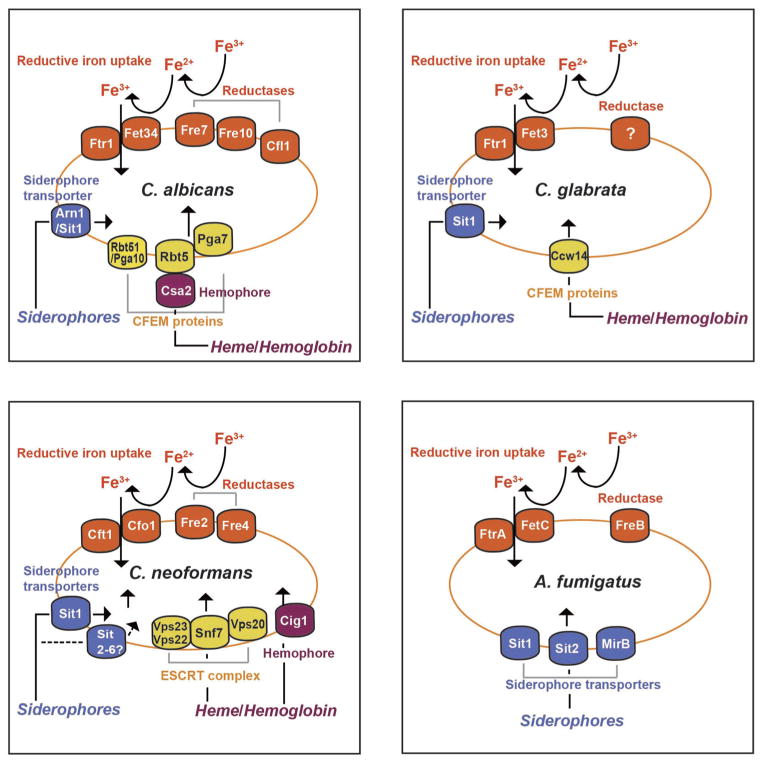
The devastating infections that fungal pathogens cause in humans are underappreciated relative to viral, bacterial and parasitic diseases. In recent years, the contributions to virulence of reductive iron uptake, siderophore-mediated uptake and heme acquisition have been identified in the best studied and most life-threatening fungal pathogens: Candida albicans, Cryptococcus neoformans and Aspergillus fumigatus. In particular, exciting new work illustrates the importance of iron acquisition from heme and hemoglobin in the virulence of pathogenic yeasts. However, the challenge of establishing how these fungi gain access to hemoglobin in blood and to other sources of heme remains to be fully addressed. Recent studies are also expanding our knowledge of iron uptake in less-well studied fungal pathogens, including dimorphic fungi where new information reveals an integration of iron acquisition with morphogenesis and cell-surface properties for adhesion to host cells. Overall, the accumulating information provides opportunities to exploit iron acquisition for antifungal therapy, and new work highlights the development of specific inhibitors of siderophore biosynthesis and metal chelators for therapeutic use alone or in conjunction with existing antifungal drugs. It is clear that iron-related therapies will need to be customized for specific diseases because the emerging view is that fungal pathogens use different combinations of strategies for iron acquisition in the varied niches of vertebrate hosts.
Figures
References
-
- Armstrong-James D, Meintjes G, Brown GD. A neglected epidemic: fungal infections in HIV/AIDS. Trends Microbiol. 2014;22:120–127. - PubMed
-
- Brown GD, Denning DW, Levitz SM. Tackling human fungal infections. Science. 2012;336:647. - PubMed
-
- Brown GD, Denning DW, Gow NA, Levitz SM, Netea MG, White TC. Hidden killers: human fungal infections. Sci Transl Med. 2012;4:165rv113. - PubMed
-
- Vallabhaneni S, Mody RK, Walker T, Chiller T. The Global Burden of Fungal Diseases. Infect Dis Clin North Am. 2016;30:1–11. - PubMed
Publication types
MeSH terms
Substances
Grants and funding
LinkOut - more resources
Full Text Sources
Other Literature Sources
Medical
