


The biochemical alterations underlying post-burn hypermetabolism
- PMID: 28219767
- PMCID: PMC5563481
- DOI: 10.1016/j.bbadis.2017.02.019
The biochemical alterations underlying post-burn hypermetabolism
Abstract
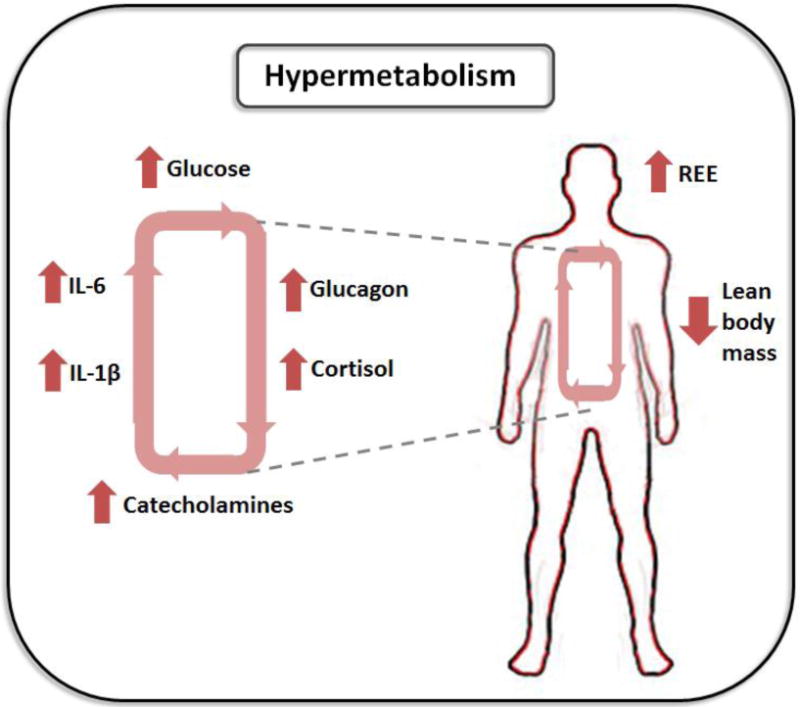
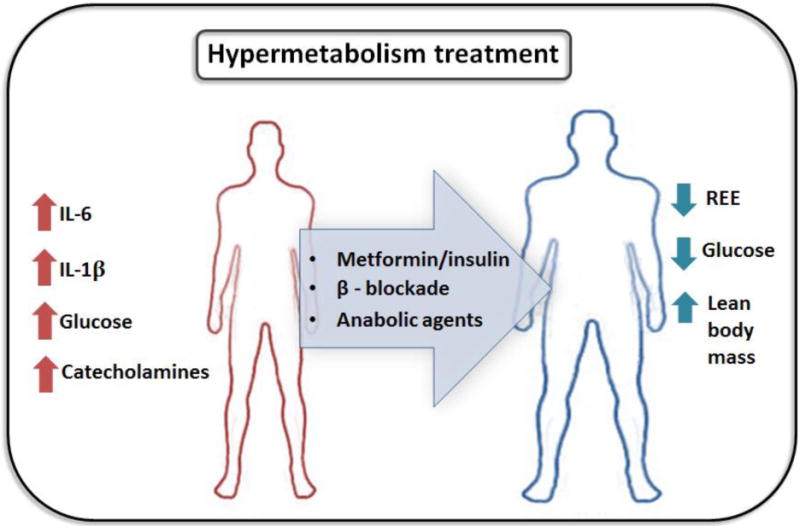
A severe burn can trigger a hypermetabolic state which lasts for years following the injury, to the detriment of the patient. The drastic increase in metabolic demands during this phase renders it difficult to meet the body's nutritional requirements, thus increasing muscle, bone and adipose catabolism and predisposing the patient to a host of disorders such as multi-organ dysfunction and sepsis, or even death. Despite advances in burn care over the last 50 years, due to the multifactorial nature of the hypermetabolic phenomenon it is difficult if not impossible to precisely identify and pharmacologically modulate the biological mediators contributing to this substantial metabolic derangement. Here, we discuss biomarkers and molecules which play a role in the induction and mediation of the hypercatabolic condition post-thermal injury. Furthermore, this thorough review covers the development of the factors released after burns, how they induce cellular and metabolic dysfunction, and how these factors can be targeted for therapeutic interventions to restore a more physiological metabolic phenotype after severe thermal injuries. This article is part of a Special Issue entitled: Immune and Metabolic Alterations in Trauma and Sepsis edited by Dr. Raghavan Raju.
Keywords: Burns; Catabolism; Hypermetabolism; Insulin resistance; Mitochondria; Trauma.
Copyright © 2017 Elsevier B.V. All rights reserved.
Figures
References
-
- World Health Organization. The injury chartbook: a graphical overview of the global burden of injuries. Geneva: 2002.
-
- Wolfe RR. Review: acute versus chronic response to burn injury. Circulatory shock. 1980;8(1):105–115. - PubMed
Publication types
MeSH terms
Grants and funding
LinkOut - more resources
Full Text Sources
Other Literature Sources
Medical
