


Clinical Pharmacist interventions in Refill Clinic at Tertiary Care Eye Specialist Hospital
- PMID: 28223864
- PMCID: PMC5310156
- DOI: 10.1016/j.jsps.2015.07.002
Clinical Pharmacist interventions in Refill Clinic at Tertiary Care Eye Specialist Hospital
Abstract
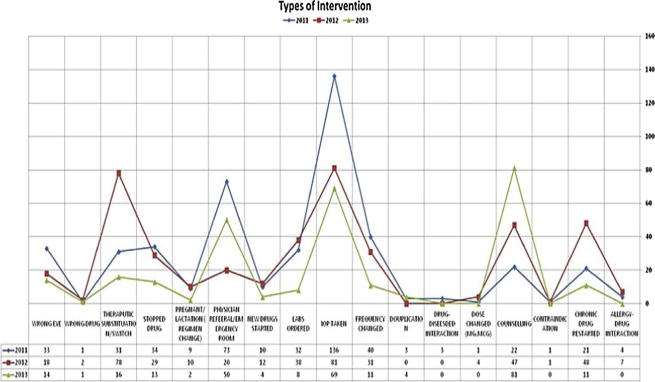
Objective: To describe the role of Clinical Pharmacists in the Medication Refill Clinic area as a part of a multidisciplinary team in which he/she can provide education to patients and caregivers on the safe and appropriate use of medications, counsel on medication compliance, monitor and manage medication side effects, as well as screen for dangerous drug interactions. Methods: The data of this prospective, single-centered, chart review based study have been collected since the clinic launched in June 2011 till December 2013 in King Khalid Eye Specialist Hospital which is a Tertiary Hospital in KSA. Types of interventions documented during the patient-pharmacist visit are categorized as medication review and patient compliance. Key findings: Out of the total 16,417 patients, 3641 (22.2%) are noncompliant. The Clinical Pharmacist identified 18 intervention types. The most frequent interventions are as follows: Eye screening (24.8%), Counseling (13%), Physician/ER referral (12.4%), Therapeutic substitution/switch (10.8%), and Frequency changed (7%). Summary: This prospective analysis is a document evidence showing Clinical Pharmacist positive outcomes in the management of ophthalmic patients. Dissemination of this information would be valuable because it could raise the awareness of other Healthcare Professionals regarding Pharmacist as effective clinicians in care of ophthalmic patients.
Keywords: Clinical Pharmacist; Ophthalmic patient; Pharmacist intervention; Refill Clinic.
Figures
References
-
- Helling D.K., 1, Johnson S.G., 2 Defining and advancing ambulatory care pharmacy practice: it is time to lengthen our stride. Am. J. Health Syst. Pharm. 2014;71(16):1348–1356. - PubMed
-
- Hoevenaars J.G., 1, Schouten J.S., van den Borne B., Beckers H.J., Webers C.A. Will improvement of knowledge lead to improvement of compliance with glaucoma medication? Acta Ophthalmol. 2008;86(8):849–855. - PubMed
-
- Ngan R., Lam D.L., Mudumbai R.C., Chen P.P. Risk factors for noncompliance with follow-up among normal-tension glaucoma suspects. Am. J. Ophthalmol. 2007;144(2):310–311. - PubMed
-
- Sassi-Jones k. Benefits of implementing pharmacist prescribing on a surgical ward. Br. J. Clin. Pharmcol. 2010;2:338–340.
LinkOut - more resources
Full Text Sources
Other Literature Sources
