


Diet-Induced Obesity and Circadian Disruption of Feeding Behavior
- PMID: 28223912
- PMCID: PMC5293780
- DOI: 10.3389/fnins.2017.00023
Diet-Induced Obesity and Circadian Disruption of Feeding Behavior
Abstract
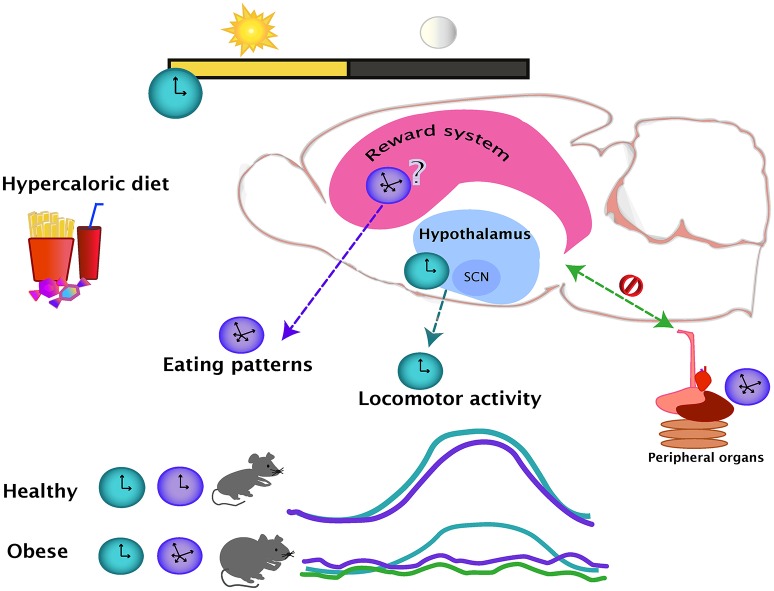
Feeding behavior shows a rhythmic daily pattern, which in nocturnal rodents is observed mainly during the dark period. This rhythmicity is under the influence of the hypothalamic suprachiasmatic nucleus (SCN), the main biological clock. Nevertheless, various studies have shown that in rodent models of obesity, using high-energy diets, the general locomotor activity and feeding rhythms can be disrupted. Here, we review the data on the effects of diet-induced obesity (DIO) on locomotor activity and feeding patterns, as well as the effect on the brain sites within the neural circuitry involved in metabolic and rewarding feeding behavior. In general, DIO may alter locomotor activity by decreasing total activity. On the other hand, DIO largely alters eating patterns, producing increased overall ingestion and number of eating bouts that can extend to the resting period. Furthermore, within the hypothalamic areas, little effect has been reported on the molecular circadian mechanism in DIO animals with ad libitum hypercaloric diets and little or no data exist so far on its effects on the reward system areas. We further discuss the possibility of an uncoupling of metabolic and reward systems in DIO and highlight a gap of circadian and metabolic research that may help to better understand the implications of obesity.
Keywords: circadian; clock-genes; dopamine; feeding; hypothalamus; obesity; palatable; reward.
Figures
References
-
- Aschoff J. (1981). A survey on biological rhythms, in Biological Rhythms, ed Aschoff J. (New York, NY: Plenum Press; ), 3–10. 10.1007/978-1-4615-6552-9_1 - DOI
Publication types
LinkOut - more resources
Full Text Sources
Other Literature Sources
Miscellaneous
