


Enhanced Corticospinal Excitability and Volitional Drive in Response to Shortening and Lengthening Strength Training and Changes Following Detraining
- PMID: 28223941
- PMCID: PMC5293799
- DOI: 10.3389/fphys.2017.00057
Enhanced Corticospinal Excitability and Volitional Drive in Response to Shortening and Lengthening Strength Training and Changes Following Detraining
Abstract
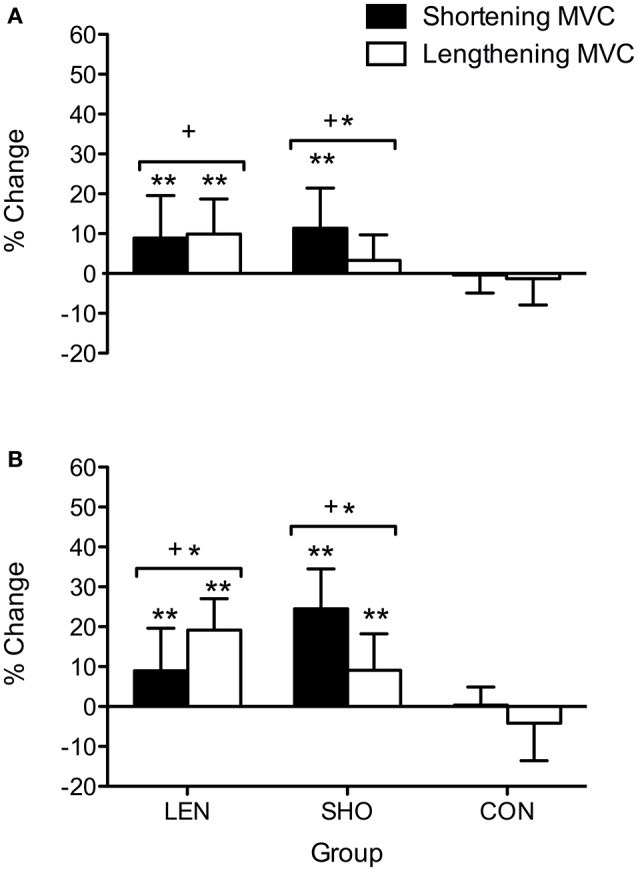
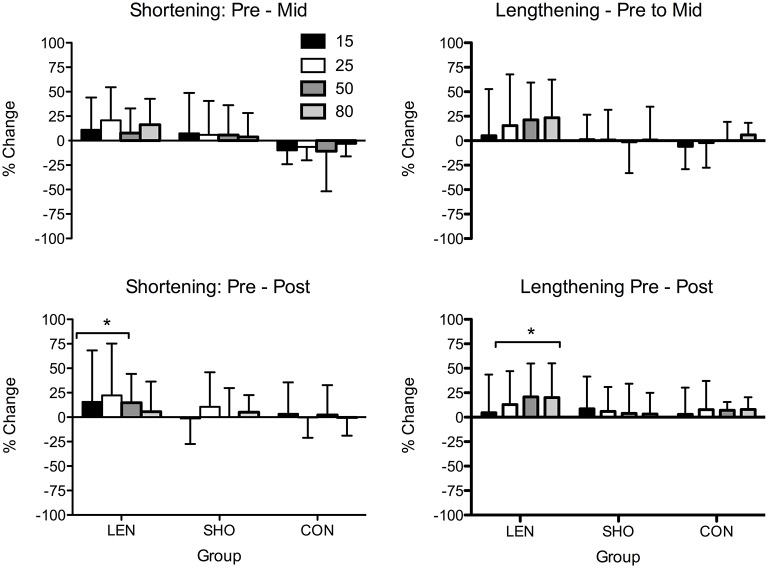
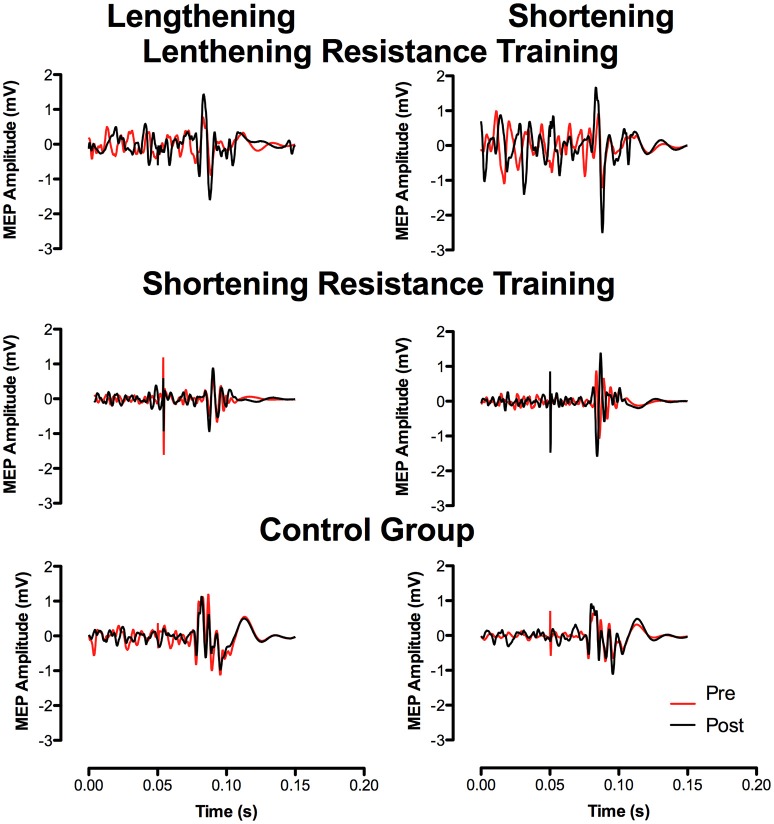
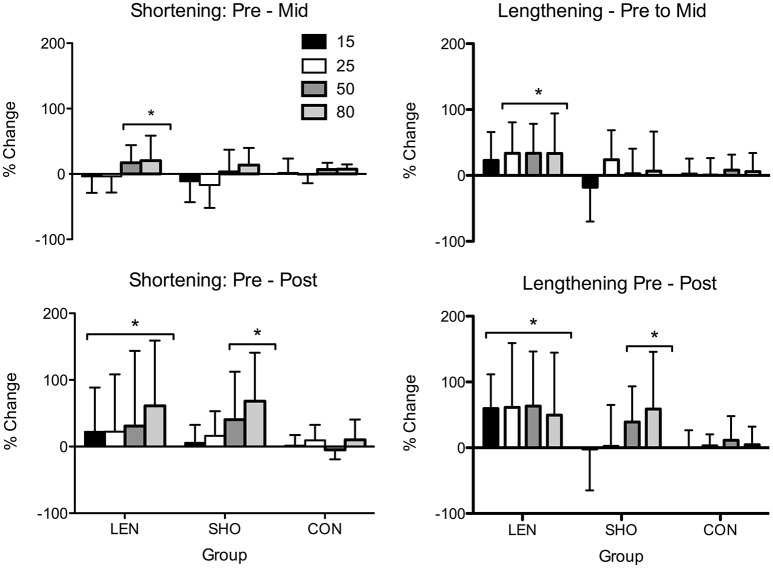
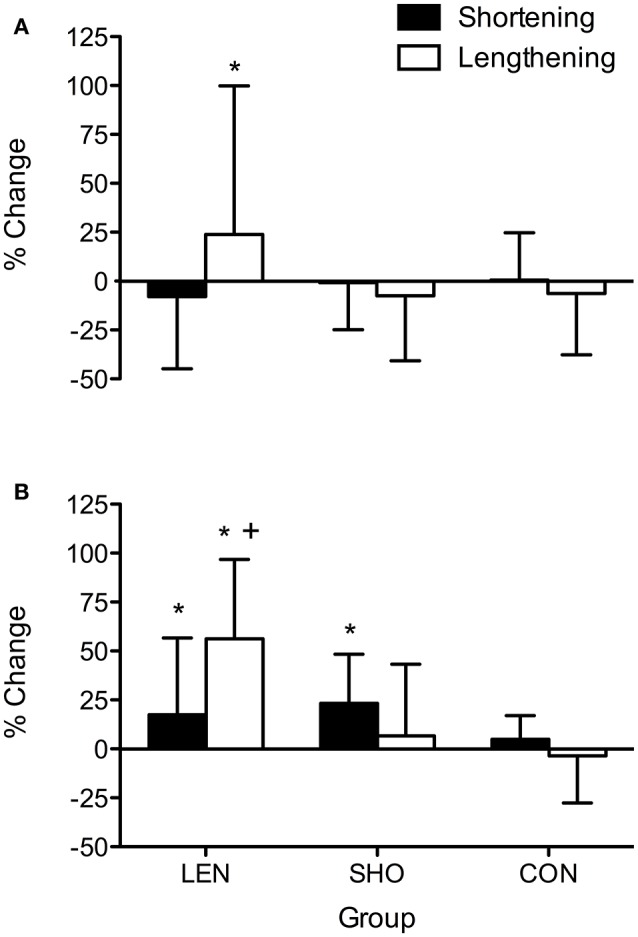
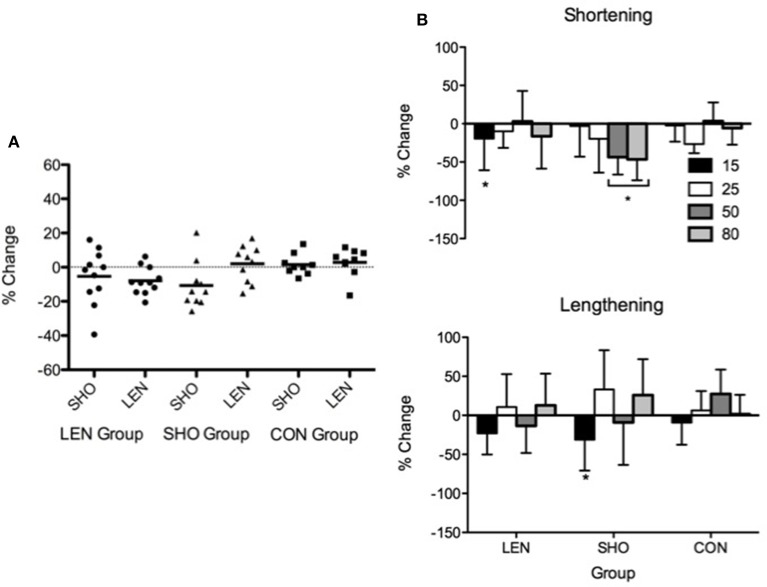
There is a limited understanding of the neurological adaptations responsible for changes in strength following shortening and lengthening resistance training and subsequent detraining. The aim of the study was to investigate differences in corticospinal and spinal responses to resistance training of the tibialis anterior muscle between shortening or lengthening muscle contractions for 4 weeks and after 2 weeks of detraining. Thirty-one untrained individuals were assigned to either shortening or lengthening isokinetic resistance training (4 weeks, 3 days/weeks) or a non-training control group. Transcranial magnetic stimulation and peripheral nerve stimulation (PNS) were used to assess corticospinal and spinal changes, respectively, at pre-, mid-, post-resistance training and post detraining. Greater increases changes (P < 0.01) in MVC were found from the respective muscle contraction training. Motor evoked potentials (expressed relative to background EMG) significantly increased in lengthening resistance training group under contraction intensities ranging from 25 to 80% of the shortening and lengthening contraction intensity (P < 0.01). In the shortening resistance training group increases were only seen at 50 and 80% of both contraction type. Volitional drive (V-wave) showed a greater increase following lengthening resistance training (57%) during maximal lengthening contractions compared to maximal shortening contractions following shortening resistance training (23%; P < 0.001). During the detraining period MVC and V-wave did not change (P > 0.05), although MEP amplitude decreased during the detraining period (P < 0.01). No changes in H-reflex were found pre to post resistance training or post detraining. Modulation in V-wave appeared to be contraction specific, whereby greatest increases occurred following lengthening resistance training. Strength and volitional drive is maintained following 2 weeks detraining, however corticospinal excitability appears to decrease when the training stimulus is withdrawn.
Keywords: PNS; TMS; concentric; eccentric; exercise; resistance.
Figures
References
-
- Capaday C., Lavoie B. A., Barbeau H., Schneider C., Bonnard M. (1999). Studies on the corticospinal control of human walking. I. Responses to focal transcranial magnetic stimulation of the motor cortex. J. Neurophysiol. 81, 129–139. - PubMed
LinkOut - more resources
Full Text Sources
Other Literature Sources
