


A Comprehensive Analysis of Metabolomics and Transcriptomics in Cervical Cancer
- PMID: 28225065
- PMCID: PMC5320559
- DOI: 10.1038/srep43353
A Comprehensive Analysis of Metabolomics and Transcriptomics in Cervical Cancer
Abstract
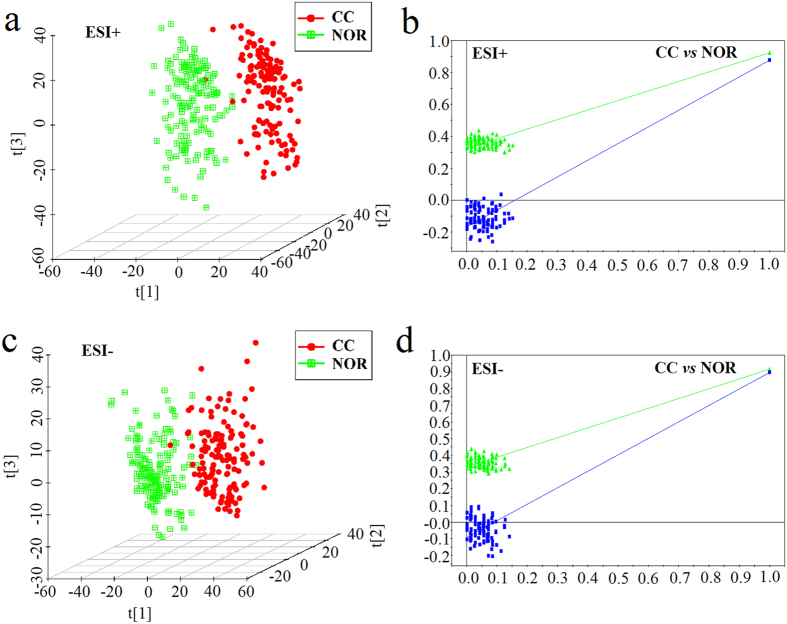
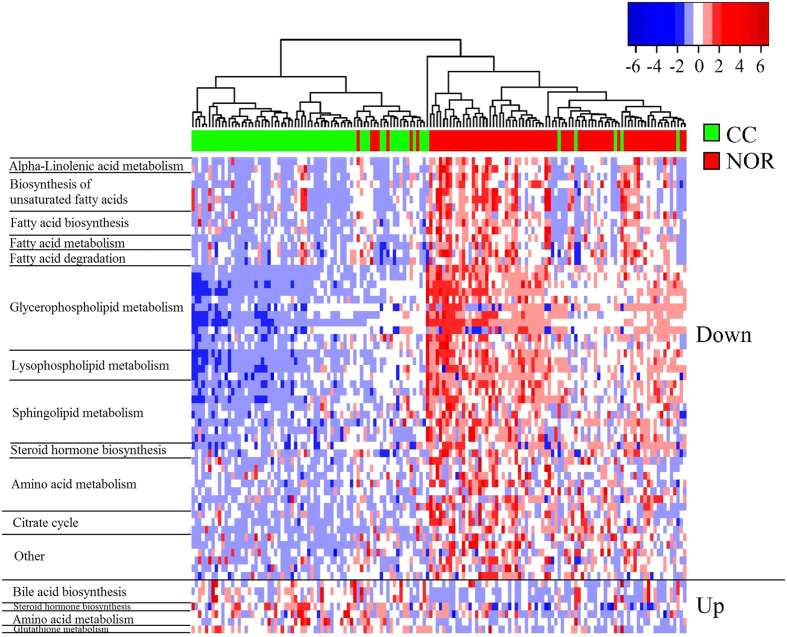
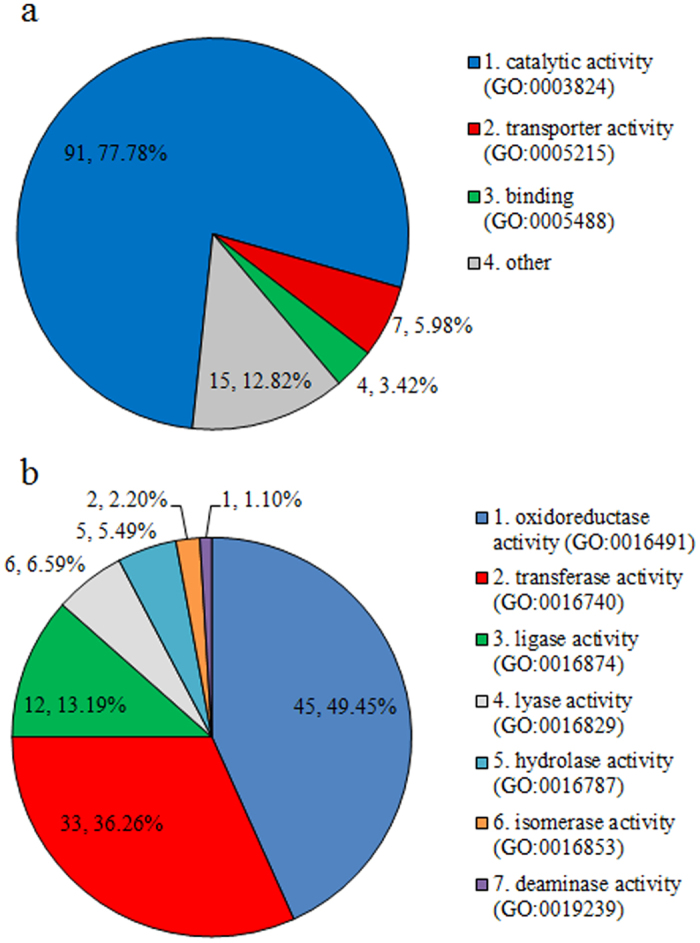
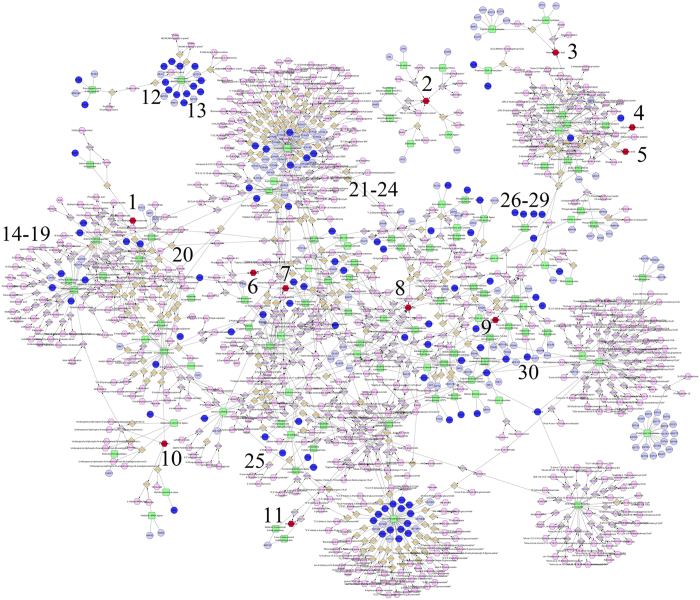
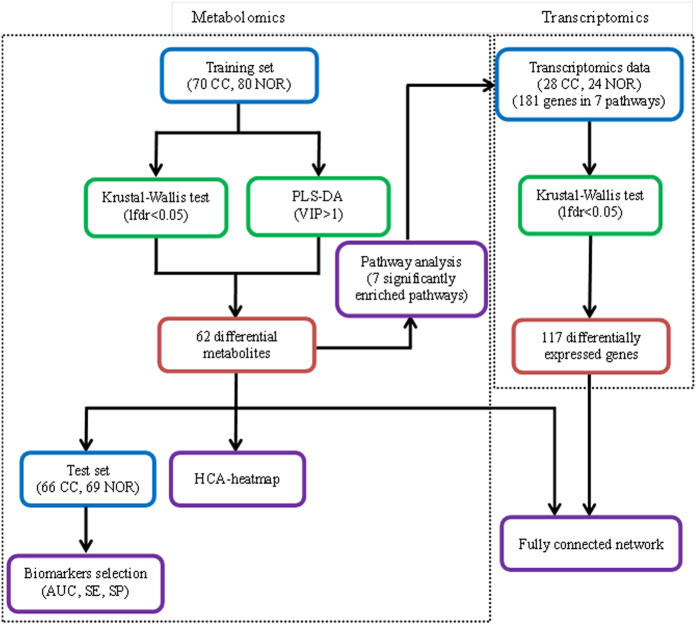
Cervical cancer (CC) still remains a common and deadly malignancy among females in developing countries. More accurate and reliable diagnostic methods/biomarkers should be discovered. In this study, we performed a comprehensive analysis of metabolomics (285 samples) and transcriptomics (52 samples) on the potential diagnostic implication and metabolic characteristic description in cervical cancer. Sixty-two metabolites were different between CC and normal controls (NOR), in which 5 metabolites (bilirubin, LysoPC(17:0), n-oleoyl threonine, 12-hydroxydodecanoic acid and tetracosahexaenoic acid) were selected as candidate biomarkers for CC. The AUC value, sensitivity (SE), and specificity (SP) of these 5 biomarkers were 0.99, 0.98 and 0.99, respectively. We further analysed the genes in 7 significantly enriched pathways, of which 117 genes, that were expressed differentially, were mainly involved in catalytic activity. Finally, a fully connected network of metabolites and genes in these pathways was built, which can increase the credibility of our selected metabolites. In conclusion, our biomarkers from metabolomics could set a path for CC diagnosis and screening. Our results also showed that variables of both transcriptomics and metabolomics were associated with CC.
Conflict of interest statement
The authors declare no competing financial interests.
Figures
References
-
- Denny L. & Prendiville W. Cancer of the cervix: Early detection and cost-effective solutions. International Journal of Gynaecology & Obstetrics the Official Organ of the International Federation of Gynaecology & Obstetrics 131, 28–32 (2015). - PubMed
-
- Siegel R. L., Miller K. D. & Jemal A. Cancer statistics, 2016. Ca A Cancer Journal for Clinicians 66, 7 (2016). - PubMed
-
- Kato H. & Torigoe T. Radioimmunoassay for tumor antigen of human cervical squamous cell carcinoma. Cancer 25, 1621–1628 (1977). - PubMed
Publication types
MeSH terms
Substances
LinkOut - more resources
Full Text Sources
Other Literature Sources
Medical
Molecular Biology Databases
