


Health Benefits of Dietary Whole Grains: An Umbrella Review of Meta-analyses
- PMID: 28228693
- PMCID: PMC5310957
- DOI: 10.1016/j.jcm.2016.08.008
Health Benefits of Dietary Whole Grains: An Umbrella Review of Meta-analyses
Abstract
Objective: The purpose of this study is to review the effectiveness of the role of whole grain as a therapeutic agent in type 2 diabetes, cardiovascular disease, cancer, and obesity.
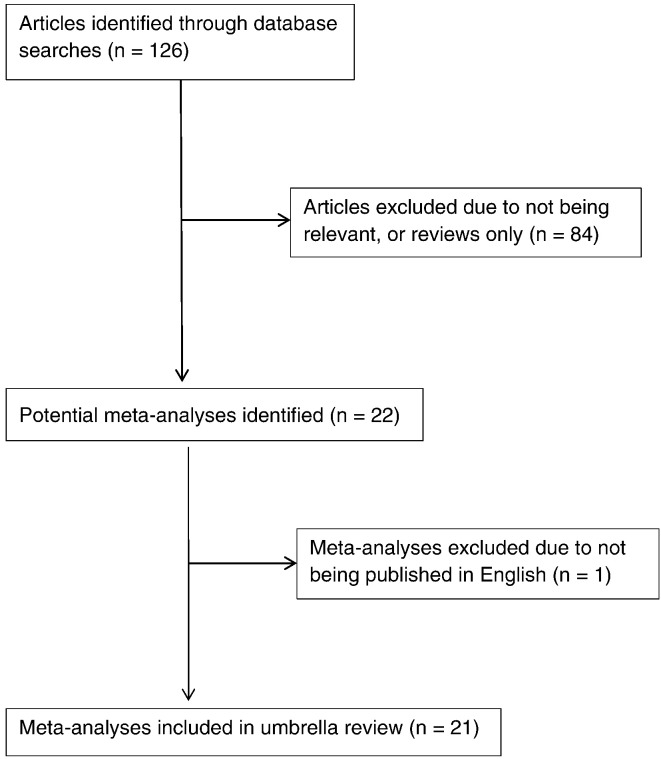
Methods: An umbrella review of all published meta-analyses was performed. A PubMed search from January 1, 1980, to May 31, 2016, was conducted using the following search strategy: (whole grain OR whole grains) AND (meta-analysis OR systematic review). Only English language publications that provided quantitative statistical analysis on type 2 diabetes, cardiovascular disease, cancer, and weight loss were retrieved.
Results: Twenty-one meta-analyses were retrieved for inclusion in this umbrella review, and all the meta-analyses reported statistically significant positive benefits for reducing the incidence of type 2 diabetes (relative risk [RR] = 0.68-0.80), cardiovascular disease (RR = 0.63-0.79), and colorectal, pancreatic, and gastric cancers (RR = 0.57-0.94) and a modest effect on body weight, waist circumference, and body fat mass. Significant reductions in cardiovascular and cancer mortality were also observed (RR = 0.82 and 0.89, respectively). Some problems of heterogeneity, publication bias, and quality assessment were found among the studies.
Conclusion: This review suggests that there is some evidence for dietary whole grain intake to be beneficial in the prevention of type 2 diabetes, cardiovascular disease, and colorectal, pancreatic, and gastric cancers. The potential benefits of these findings suggest that the consumption of 2 to 3 servings per day (~45 g) of whole grains may be a justifiable public health goal.
Keywords: Whole Grains, Meta-analysis, Diabetes Mellitus, Cardiovascular Diseases, Neoplasms, Obesity.
Figures
References
-
- Seal CJ, Brownlee IA. Whole-grain foods and chronic disease: evidence from epidemiological and intervention studies. Proc Nutr Soc. 2015;74(3):313–319. - PubMed
-
- Steffen LM, Jacobs DR, Stevens J, Shahar E, Carithers T, Folsom AR. Associations of whole-grain, refined-grain, and fruit and vegetable consumption with risks of all-cause mortality and incident coronary artery disease and ischemic stroke: the Atherosclerosis Risk in Communities (ARIC) Study. Am J Clin Nutr. 2003;78(3):383–390. - PubMed
-
- Aune D, Norat T, Romundstad P, Vatten LJ. Whole grain and refined grain consumption and the risk of type 2 diabetes: a systematic review and dose-response meta-analysis of cohort studies. Eur J Epidemiol. 2013;28(11):845–858. - PubMed
-
- Aromataris E, Fernandez R, Godfrey CM, Holly C, Khalil H, Tungpunkom P. Summarizing systematic reviews: methodological development, conduct and reporting of an umbrella review approach. Int J Evid Based Healthc. 2015;13(3):132–140. - PubMed
Publication types
LinkOut - more resources
Full Text Sources
Other Literature Sources
