


Survey of Primary Contact Medical and Chiropractic Clinicians on Self-Reported Knowledge and Recognition of Mild Traumatic Brain Injuries: A Pilot Study
- PMID: 28228694
- PMCID: PMC5310953
- DOI: 10.1016/j.jcm.2016.10.005
Survey of Primary Contact Medical and Chiropractic Clinicians on Self-Reported Knowledge and Recognition of Mild Traumatic Brain Injuries: A Pilot Study
Abstract
Objective: The purpose of this study was to assess the self-reported knowledge of concussion recognition and treatment with first-contact family medical and chiropractic practitioners by means of a pilot study of the need, construct validity, and feasibility for further investigation of mild traumatic brain injury (MTBI) knowledge base.
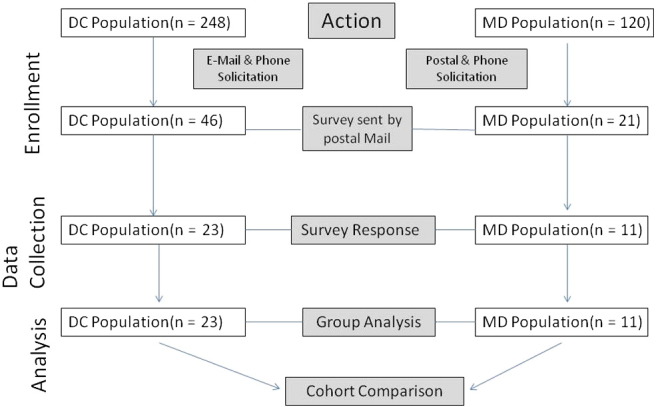
Methods: Two hundred forty-eight practicing chiropractic and 120 medical physicians in the south and northeastern sections of the United States were contacted by e-mail, telephone, and postal mail to answer an 18-item survey on knowledge, diagnosis, and common practice with respect to traumatic brain injury patients. Descriptive analysis was used to assess common trends.
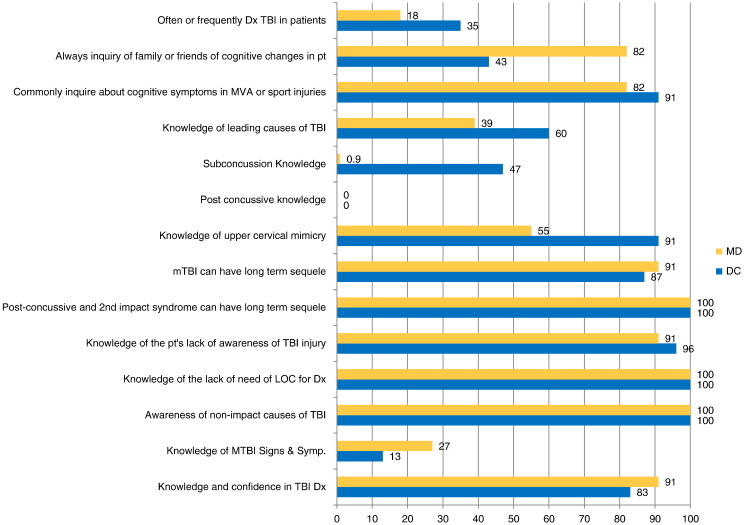
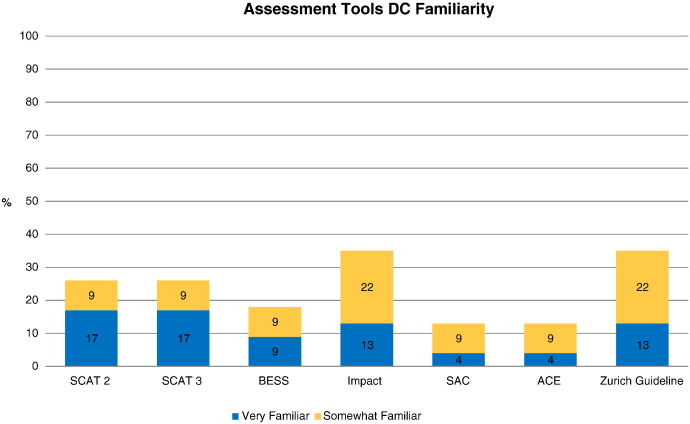
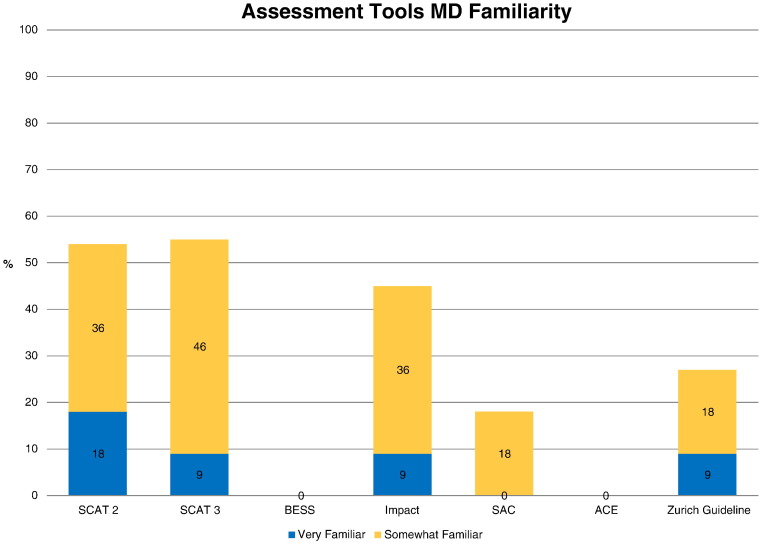
Results: Twenty-three chiropractic and 11 medical primary care practitioners returned completed surveys, making this a low-power pilot study. The majority claimed confidence in diagnosis of MTBI, but a lack of knowledge of many of the assessment tools and the international guidelines. Chiropractic and medical clinicians revealed similar competencies and differing deficiencies. Both groups admitted infrequent diagnosis of MTBI in practice. There was recognition of major TBI signs, but lack of recognition or inquiry for subtle MTBI signs.
Conclusions: There is a need and feasibility for further study of the knowledge transfer to the chiropractic physician with a larger population. These findings correlate with similar medical practitioner studies, and may also support previous findings of underreporting of the prevalence of MTBI. The survey instrument appears to provide valid data on knowledge of MTBIs, with some modifications.
Keywords: Brain Concussion; Chiropractic, Surveys and Questionnaires; Diagnosis; Guideline; Knowledge; Primary Health Care.
Figures
References
-
- Centers for Disease Control and Prevention (CDC) Percent distributions of TBI-related hospitalizations by age group and injury mechanism—United States, 2006-2010. 2014. http://www.cdc.gov/traumaticbraininjury/data/dist_hosp.html [updated 2014; cited]. Available at. Accessed January 4, 2015.
-
- Langlois JA, Sattin RW. Traumatic brain injury in the United States: research and programs of the Centers for Disease Control and Prevention (CDC) J Head Trauma Rehabil. 2005;20(3):187–188. - PubMed
-
- Rutland-Brown W, Langlois JA, Thomas KE, Xi YL. Incidence of traumatic brain injury in the United States, 2003. J Head Trauma Rehabil. 2006;21(6):544–548. - PubMed
-
- Cassidy JD, Carroll LJ, Peloso PM. Incidence, risk factors and prevention of mild traumatic brain injury: results of the WHO Collaborating Centre Task Force on Mild Traumatic Brain Injury. J Rehabil Med. 2004;43:28–60. [suppl] - PubMed
LinkOut - more resources
Full Text Sources
Other Literature Sources
