


Bone scintigraphy of severe hypercalcemia following simvastatin induced rhabdomyolysis
- PMID: 28228795
- PMCID: PMC5318185
- DOI: 10.11138/ccmbm/2016.13.3.257
Bone scintigraphy of severe hypercalcemia following simvastatin induced rhabdomyolysis
Abstract
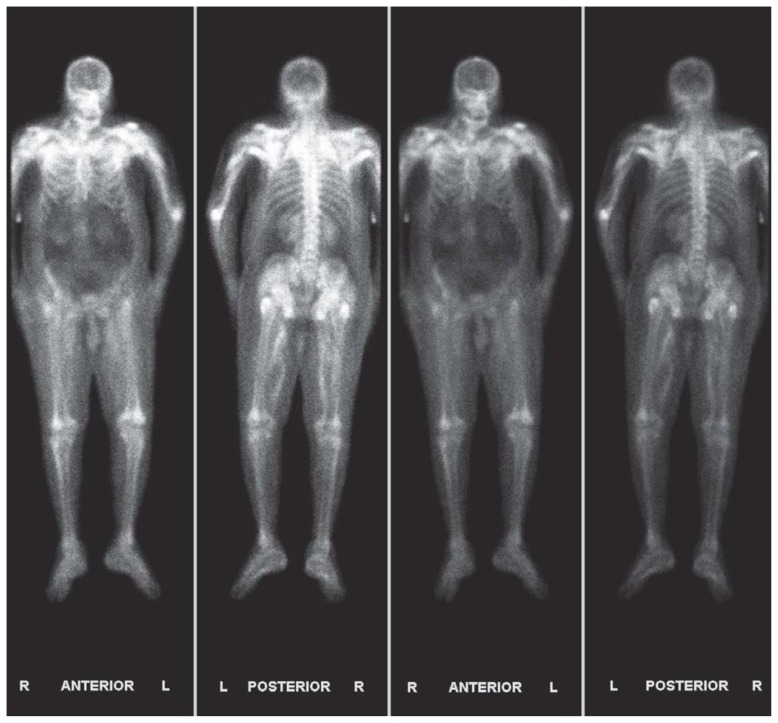
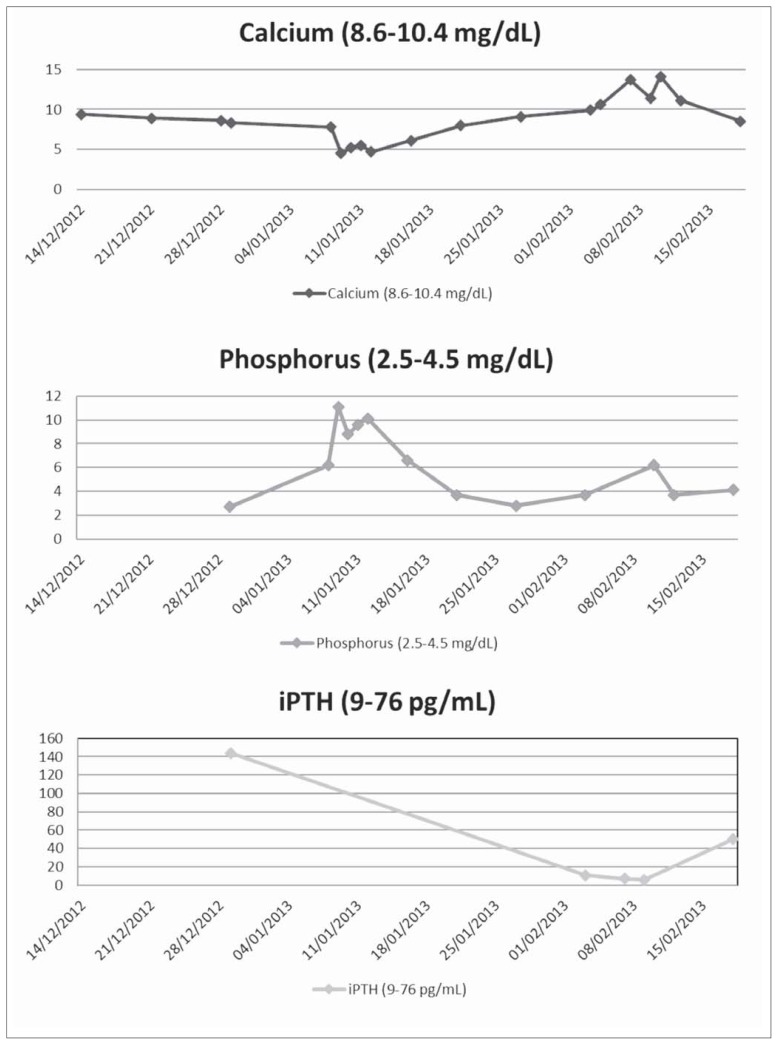
Simvastatin induced rhabdomyolysis with renal failure is a well reported clinical entity with hyperkalemia recognized as a life threatening risk. The risk of delayed hypercalcemia during the recovery of renal function is not well appreciated as this varies in severity and can be caused by multiple mechanisms. We present a patient with high dose simvastatin induced rhabdomyolysis leading to late onset of severe hypercalcemia due to calcium phosphate deposition in muscles diagnosed by distinctive bone scintigraphy. A 60-year-old Asian male was admitted to the hospital for profound weakness one week following the initiation of simvastatin 80 mg daily post myocardial infarction. His clinical course was complicated by contrast nephropathy. One week later, he developed progressive weakness in all his extremities and inability to raise his head and eat. Simvastatin was discontinued at this point. CPK elevation to greater than 425,000 U was found, consistent with rhabdomyolysis. He became oliguric requiring hemodialysis. Muscle biopsy showed severe muscle necrosis and type 2 fiber atrophy. One month later, he developed hypercalcemia with suppressed intact PTH and 1, 25(OH) D levels. Whole body bone scintigraphy showed calcium phosphate deposition throughout his musculature. His calcium levels normalized in 1 week on hemodialysis. This patient's experience illustrates the marked risk of delayed severe hypercalcemia from rhabdomyolysis due to dissolution of myocellular calcium phosphate deposits. It also provides an opportunity to review the different mechanisms of hypercalcemia especially in statin induced rhabdomyolysis. Recognition of this phenomenon is critical for appropriate follow up and treatment of such patients.
Keywords: bone scintigraphy; hypercalcemia; myocellular calcium phosphate deposits; rhabdomyolysis; statins.
Conflict of interest statement
Financial disclosure and conflict of interest None to disclose by any of the Authors.
Figures
References
-
- Giannoglou GD, Chatzizisis YS, Misirli G. The syndrome of rhabdomyolysis: Pathophysiology and diagnosis. Eur J Intern Med. 2007;18(2):90–100. - PubMed
-
- Graziani G, Calvetta A, Cucchiari D, et al. Life-threatening hypercalcemia in patients with rhabdomyolysis-induced oliguric acute renal failure. J Nephrol. 2011;24:128–31. - PubMed
-
- Davidson MH, Clark JA, Glass LM, et al. Statin safety: an appraisal from the adverse event reporting system. Am J Cardiol. 2006;97(8A):32C–43C. - PubMed
-
- Shrestha SM, Berry JL, Davies M, et al. Biphasic hypercalcemia in severe rhabdomyolysis: serial analysis of PTH and vitamin D metabolites. A case report and literature review. Am J Kidney Dis. 2004;43(3):e31–35. - PubMed
Publication types
LinkOut - more resources
Full Text Sources
Other Literature Sources