Initial medication non-adherence: prevalence and predictive factors in a cohort of 1.6 million primary care patients
- PMID: 28229476
- PMCID: PMC5427227
- DOI: 10.1111/bcp.13215
Initial medication non-adherence: prevalence and predictive factors in a cohort of 1.6 million primary care patients
Erratum in
-
Correction.Br J Clin Pharmacol. 2018 Oct;84(10):2450. doi: 10.1111/bcp.13729. Epub 2018 Aug 15. Br J Clin Pharmacol. 2018. PMID: 30216957 Free PMC article. No abstract available.
Abstract
Aims: Adherence to medicines is vital in treating diseases. Initial medication non-adherence (IMNA) - defined as not obtaining a medication the first time it is prescribed - has been poorly explored. Previous studies show IMNA rates between 6 and 28% in primary care (PC). The aims of this study were to determine prevalence and predictive factors of IMNA in the most prescribed and expensive pharmacotherapeutic groups in the Catalan health system.
Methods: This is a retrospective, register-based cohort study which linked the Catalan PC System (Spain) prescription and invoicing databases. Medication was considered non-initiated when it was not collected from the pharmacy by the end of the month following the one in which it was prescribed. IMNA prevalence was calculated using July 2013-June 2014 prescription data. Predictive factors related to patients, general practitioners and PC centres were identified through multilevel logistic regression analyses. Missing data were attributed using simple imputation.
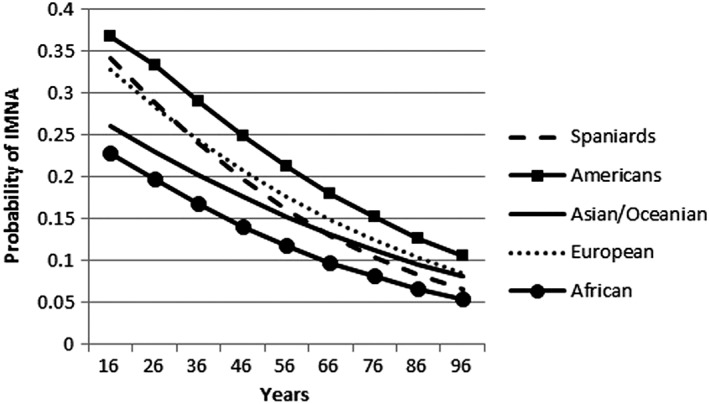
Results: Some 1.6 million patients with 2.9 million prescriptions were included in the study sample. Total IMNA prevalence was 17.6% of prescriptions. The highest IMNA rate was observed in anilides (22.6%) and the lowest in angiotensin-converting-enzyme (ACE) inhibitors (7.4%). Predictors of IMNA are younger age, American nationality, having a pain-related or mental disorder and being treated by a substitute/resident general practitioner in a resident-training centre.
Conclusions: The rate of IMNA is high when all medications are taken into account. Attempts to strengthen trust in resident general practitioners and improve motivation to initiate a needed medication in the general young and older immigrant population should be addressed in Catalan PC.
Keywords: adherence; big data; clinical pharmacology; pharmacoepidemiology; primary care.
© 2017 The British Pharmacological Society.
Figures
References
-
- Marks DF, Murray M, Evans B, Estacio EV. Medication Taking: Adherence and Resistance. In: Health Psychology: Theory, Research and Practice, 3rd edn. London: Sage Publications, 2010; 410–436.
-
- da Costa FA, Pedro AR, Teixeira I, Bragança F, da Silva JA, Cabrita J. Primary non‐adherence in Portugal: findings and implications. Int J Clin Pharm 2015; 37: 626–635. - PubMed
-
- Cramer JA. A systematic review of adherence with medications for diabetes. Diabetes Care 2004; 27: 1218–1224. - PubMed
-
- DiMatteo MR. Variations in patients’ adherence to medical recommendations: a quantitative review of 50 years of research. Med Care 2004; 42: 200–209. - PubMed
-
- Ismaila A, Corriveau D, Vaillancourt J, Parsons D, Dalal A, Su Z, et al. Impact of adherence to treatment with tiotropium and fluticasone propionate/salmeterol in chronic obstructive pulmonary diseases patients. Curr Med Res Opin 2014; 30: 1427–1436. - PubMed
Publication types
MeSH terms
LinkOut - more resources
Full Text Sources
Other Literature Sources
Miscellaneous