. 2017 Feb 23;12(2):e0172506.
doi: 10.1371/journal.pone.0172506. eCollection 2017.

Effects of ADAMTS14 genetic polymorphism and cigarette smoking on the clinicopathologic development of hepatocellular carcinoma

Affiliations

Effects of ADAMTS14 genetic polymorphism and cigarette smoking on the clinicopathologic development of hepatocellular carcinoma

Ming-Jen Sheu et al. PLoS One. .

Abstract

Background: ADAMTS14 is a member of the ADAMTS (a disintegrin and metalloproteinase with thrombospondin motifs), which are proteolytic enzymes with a variety of further ancillary domain in the C-terminal region for substrate specificity and enzyme localization via extracellular matrix association. However, whether ADAMTS14 genetic variants play a role in hepatocellular carcinoma (HCC) susceptibility remains unknown.

Methodology/principal findings: Four non-synonymous single-nucleotide polymorphisms (nsSNPs) of the ADAMTS14 gene were examined from 680 controls and 340 patients with HCC. Among 141 HCC patients with smoking behaviour, we found significant associations of the rs12774070 (CC+AA vs CC) and rs61573157 (CT+TT vs CC) variants with a clinical stage of HCC (OR: 2.500 and 2.767; 95% CI: 1.148-5.446 and 1.096-6.483; P = 0.019 and 0.026, respectively) and tumour size (OR: 2.387 and 2.659; 95% CI: 1.098-5.188 and 1.055-6.704; P = 0.026 and 0.034, respectively), but not with lymph node metastasis or other clinical statuses. Moreover, an additional integrated in silico analysis proposed that rs12774070 and rs61573157 affected essential post-translation O-glycosylation site within the 3rd thrombospondin type 1 repeat and a novel proline-rich region embedded within the C-terminal extension, respectively.

Conclusions: Taken together, our results suggest an involvement of ADAMTS14 SNP rs12774070 and rs61573157 in the liver tumorigenesis and implicate the ADAMTS14 gene polymorphism as a predict factor during the progression of HCC.


Conflict of interest statement

Competing Interests: The authors have declared that no competing interests exist.

Figures

Fig 1
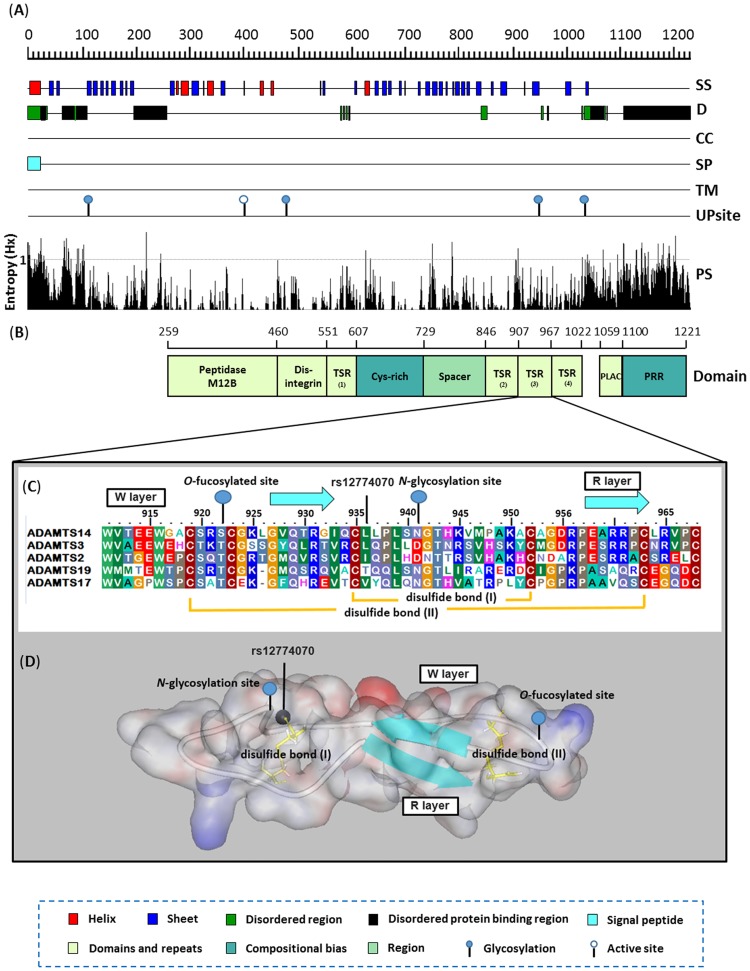
Fig 1. Proteome annotation diagram of ADAMTS14 nsSNP rs12774070 by in silico approaches.
(A) The ADAMTS14 protein is first evaluated by sequence-based annotated methods with secondary structure (PSIPRED [SS]), disordered region (DISOPRED [D]), coiled region (COILS [CC]), signal peptides (SignalP [SP]) and transmembrane helices (TMHMM [TM]). In additional, active sites and glycoprotein sites are retrieved from UniProtKB database [UP sites]. (B) Indicating the level of conservation of residues by PSI-BLAST for each position using BioEdit Entropy algorithm [PS]. (C) Schematic representation of the full-length human ADMDTS14 protein, domain symbols are drawn approximately to scale. Amino acids are colored according to residue type: blue, positive; red, negative; light blue, small; green, hydrophobic; light green, aromatic; brown, cysteine and gray, polar. The rectangles represent the key domain structures, Peptidase M12B (IPR013273), Disintegrin (IPR018358), Cys-rich (IPR006586), Spacer (IPR010294), PLAC (IPR010909), Pro-rich (IPR026086) and four TSR (IPR000884) processed by InterPro database. (D) The residues are conserved throughout five procollagen aminopropeptidase subfamily of ADAMTS proteases, including ADAMTS2 (NP_055059.2), ADAMTS3 (NP_055058.2), ADAMTS14 (NP_631894.2), ADAMTS17 (NP_620688.2) and ADAMTS19 (NP_598377.4), as shown by alignment of the protein sequences with Clustal Omega software. Numbering is for human ADAMTS14. The two tryptophans (Trp911 and Trp916) and two arginines (Arg960 and Arg961) that form W layers and R layers, respectively. Protein surface diagram depicts the homology model of 3rd TSR domain of ADAMTS14. The ribbon indicates the Cα carbon of the 3rd TSR domain characterized in this study. The blue ribbon, green sphere, red spheres and yellow sticks indicate the β-strands structure, rs12774070, potential N-linked, O-linked glycosylation sites and disulfide bonds, respectively.
Fig 2
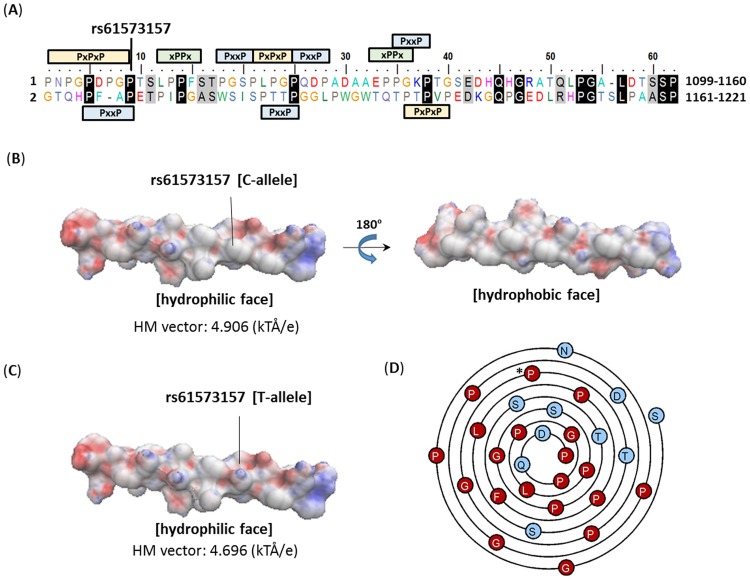
Fig 2. Amphipathic helix structure of a duplication of a 60-amino acid proline-rich domain at C-terminal ADAMTS14.
(A) Alignment of a 60-amino acid duplication proline-rich repeats of the amphipathic helix (residues 1099–1160 and 1161–1121) present in with Clustal Omega software. The lines about the repeat 1 and below the repeat 2 show the three types of consensus linear motifs (PxPxP, PxxP and xPPx, where P is proline and x is any amino acid), respectively. The shading show the conserved residues and numbering is for the two repeats. Amino acids are colored according to residue type: blue, positive; red, negative; light blue, small; green, hydrophobic; light green, aromatic; brown, cysteine; and gray, polar. (B) C-allele and (C) T-allele of polymorphic ADAMTS14 nsSNP rs61573157 regular α-helical conformation of Proline-rich domain. Electrostatic potential in the solvent-accessible surface representations colored code where red and blue represent the net negative and positive charges, respectively. The two structure through the axis of rotation 180 degree to across the opposite of helices. White color represents the total neutral positions. 3D hydrophobic moment vectors were calculated in silico in http://www.ibg.kit.edu/HM/. (D) Wenxiang diagram represents that characterizes the disposition of hydrophobic (red-filled circles) and hydrophilic (blue-filled circles) residues in α-helices. The black star symbol indicated the nsSNP rs61573157.

Similar articles

Cited by

References

    1. Torre LA, Bray F, Siegel RL, Ferlay J, Lortet-Tieulent J, Jemal A. Global cancer statistics, 2012. CA Cancer J Clin. 2015;65(2):87–108. 10.3322/caac.21262 - DOI - PubMed
    1. Bosch FX, Ribes J, Díaz M, Cléries R. Primary liver cancer: Worldwide incidence and trends. Gastroenterology. 2004;127(5):S5–S16. - PubMed
    1. Tsai WL, Chung RT. Viral hepatocarcinogenesis. Oncogene. 2010;29(16):2309–24. 10.1038/onc.2010.36 - DOI - PMC - PubMed
    1. Farazi PA, DePinho RA. Hepatocellular carcinoma pathogenesis: from genes to environment. Nat Rev Cancer. 2006;6(9):674–87. 10.1038/nrc1934 - DOI - PubMed
    1. Wang LY, You SL, Lu SN, Ho HC, Wu MH, Sun CA, et al. Risk of hepatocellular carcinoma and habits of alcohol drinking, betel quid chewing and cigarette smoking: a cohort of 2416 HBsAg-seropositive and 9421 HBsAg-seronegative male residents in Taiwan. Cancer Causes Control. 2003;14(3):241–50. - PubMed