. 2017 Feb 23;12(2):e0172488.
doi: 10.1371/journal.pone.0172488. eCollection 2017.

The moderating role of absorptive capacity and the differential effects of acquisitions and alliances on Big Pharma firms' innovation performance

Affiliations

The moderating role of absorptive capacity and the differential effects of acquisitions and alliances on Big Pharma firms' innovation performance

K D S Fernald et al. PLoS One. .

Abstract

In the context of increased pharmaceutical innovation deficits and Big Pharma blockbusters' patent expirations, this paper examines the moderating role of firms' absorptive capacity in external innovation activities of Big Pharma firms. The study indicates a rising interest of Big Pharma in acquisitions of and alliances with biotechnology companies. Unfortunately, this increased interest is not reflected in the number of new drugs generated by Big Pharma. We find that acquisitions of biotech companies have negatively affected Big Pharma firms' innovation performance on average but these acquisitions might have a positive effect at higher levels of acquiring firms' absorptive capacity. Moreover, also acquisitions of pharma companies and alliances with biotech companies only have a positive effect on innovation performance at sufficiently high levels of absorptive capacity. The moderating role of absorptive capacity implicates that a tight integration of internal R&D efforts and (unrelated) external knowledge is crucial for harnessing complementarity effects.


Conflict of interest statement

Competing Interests: The authors have declared that no competing interests exist.

Figures

Fig 1
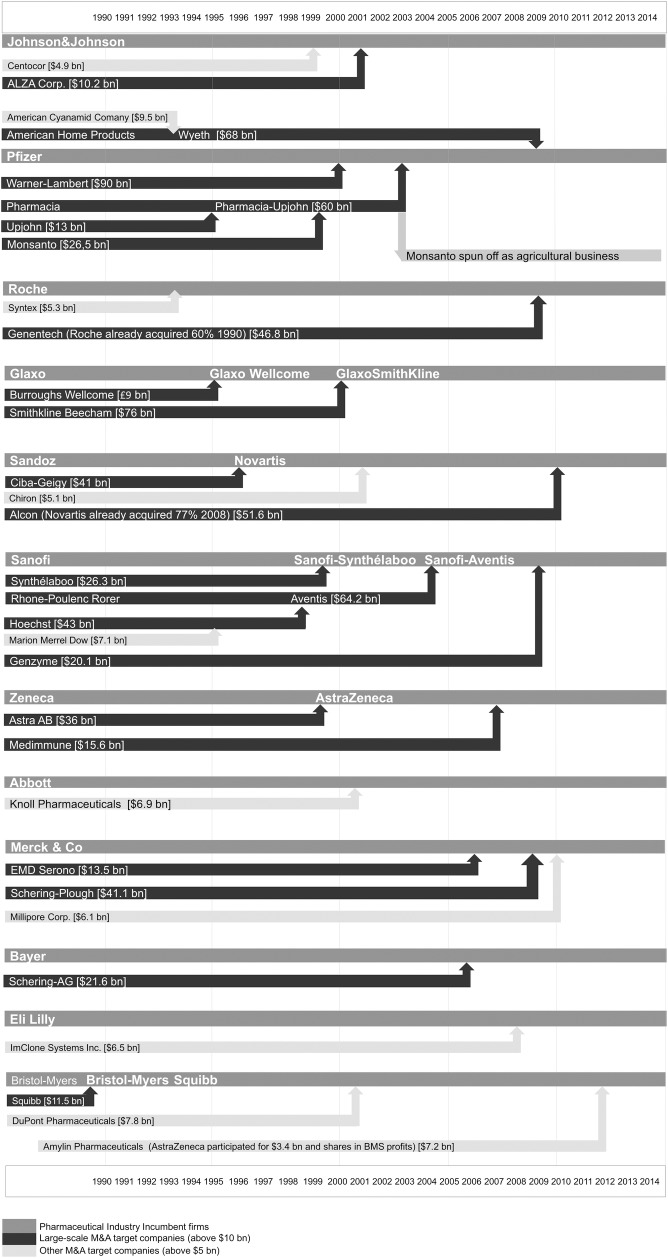
Fig 1. Big Pharma consolidation.
M&As that led to the current 12 largest Big Pharma firms. (source: SDC Platinum Database (ThomsonReuters))
Fig 2
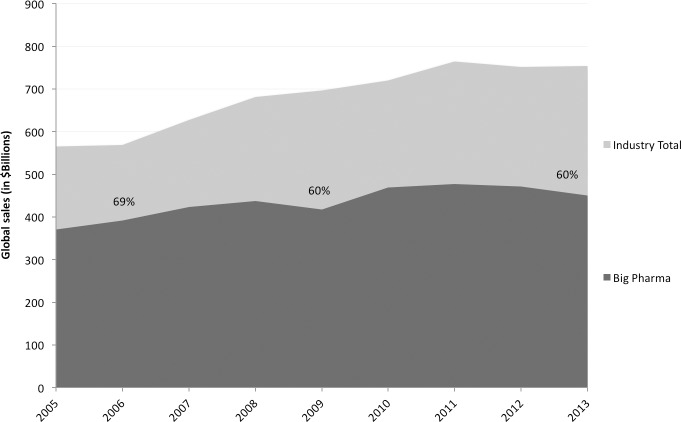
Fig 2. Global pharmaceutical sales (in $Billions).
Showing the proportion of global sales of the Big Pharma firms as illustrated in Fig 1 compared to global industry sales. (source: EvaluatePharma; Datastream(ThomsonReuters))
Fig 3
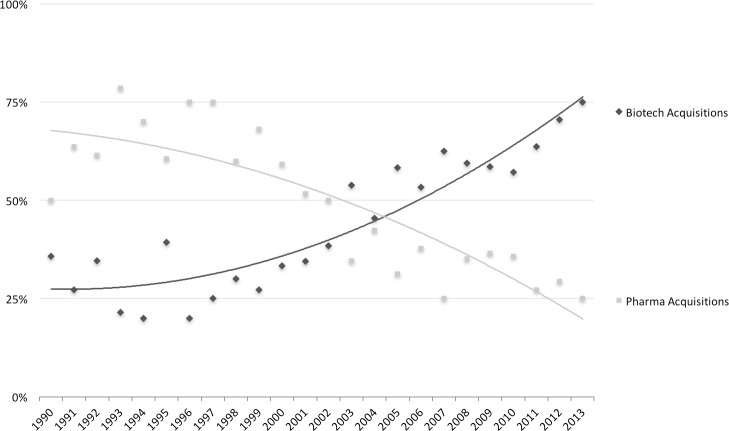
Fig 3. Trends in externally acquired knowledge and assets through acquisitions by big pharma firms between 1990 and 2013.
Showing the acquisitions of ‘Pharma’ targets and ‘Biotech’ targets as a percentage of included acquisitions. (source: SDC Platinum Database (Thomson & Reuters))
Fig 4
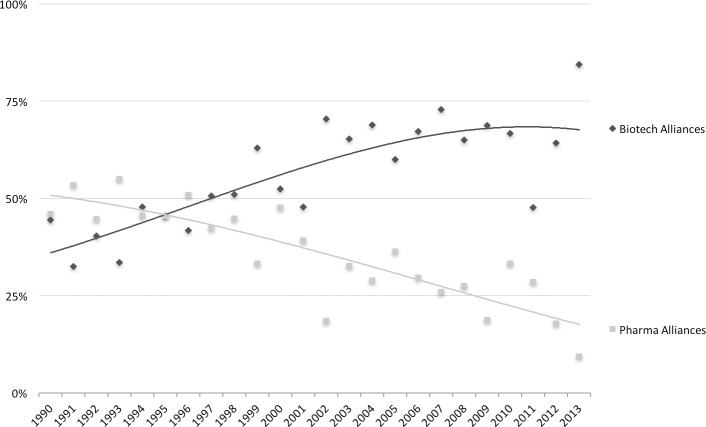
Fig 4. Trends in externally acquired knowledge and assets through alliances of big pharma firms between 1990 and 2013.
Showing access to knowledge/assets in alliances with ‘Pharma’ companies and ‘Biotech’ companies as a percentage of all studied alliances.(source: SDC Platinum Database (Thomson & Reuters))
Fig 5
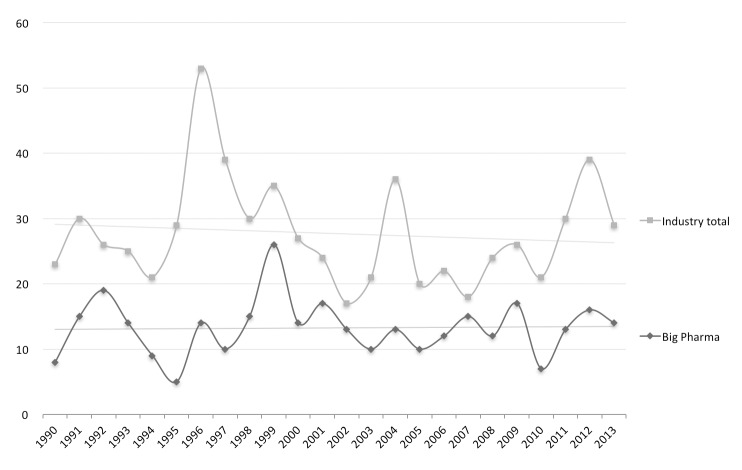
Fig 5. Output in terms of NMEs and BLAs produced by the Big Pharma versus the industry as a whole.
These results represent the output NMEs and BLAs from the 12 largest pharma firms and the output of the industry as a whole based on all drugs approved by the FDA. (source: CDER (Center for Drug Evaluation and Research) and FDA (Food and Drug Administration))

References

    1. DiMasi JA, Hansen RW, Grabowski HG. The price of innovation: new estimates of drug development costs. Journal of health economics. 2003;22(2):151–85. 10.1016/S0167-6296(02)00126-1 - DOI - PubMed
    1. Pronker E, Weenen T, Commandeur H, Osterhaus A, Claassen H. The gold industry standard for risk and cost of drug and vaccine development revisited. Vaccine. 2011;29(35):5846–9. 10.1016/j.vaccine.2011.06.051 - DOI - PubMed
    1. Ashburn TT, Thor KB. Drug repositioning: identifying and developing new uses for existing drugs. Nature reviews Drug discovery. 2004;3(8):673–83. 10.1038/nrd1468 - DOI - PubMed
    1. Pronker ES, Weenen TC, Commandeur H, Claassen EH, Osterhaus AD. Risk in vaccine research and development quantified. PloS one. 2013;8(3):e57755 10.1371/journal.pone.0057755 - DOI - PMC - PubMed
    1. Gassmann O, Reepmeyer G. Organizing pharmaceutical innovation: from science‐based knowledge creators to drug‐oriented knowledge brokers. Creativity and Innovation Management. 2005;14(3):233–45.

LinkOut - more resources