


Perioperative medications for preventing temporarily increased intraocular pressure after laser trabeculoplasty
- PMID: 28231380
- PMCID: PMC5477062
- DOI: 10.1002/14651858.CD010746.pub2
Perioperative medications for preventing temporarily increased intraocular pressure after laser trabeculoplasty
Abstract
Background: Glaucoma is the international leading cause of irreversible blindness. Intraocular pressure (IOP) is the only currently known modifiable risk factor; it can be reduced by medications, incisional surgery, or laser trabeculoplasty (LTP). LTP reduces IOP by 25% to 30% from baseline, but early acute IOP elevation after LTP is a common adverse effect. Most of these IOP elevations are transient, but temporarily elevated IOP may cause further optic nerve damage, worsening of glaucoma requiring additional therapy, and permanent vision loss. Antihypertensive prophylaxis with medications such as acetazolamide, apraclonidine, brimonidine, dipivefrin, pilocarpine, and timolol have been recommended to blunt and treat the postoperative IOP spike and associated pain and discomfort. Conversely, other researchers have observed that early postoperative IOP rise happens regardless of whether people receive perioperative glaucoma medications. It is unclear whether perioperative administration of antiglaucoma medications may be helpful in preventing or reducing the occurrence of postoperative IOP elevation.
Objectives: To assess the effectiveness of medications administered perioperatively to prevent temporarily increased intraocular pressure (IOP) after laser trabeculoplasty (LTP) in people with open-angle glaucoma (OAG).
Search methods: We searched CENTRAL (which contains the Cochrane Eyes and Vision Trials Register) (2016, Issue 11), MEDLINE Ovid (1946 to 18 November 2016), Embase.com (1947 to 18 November 2016), PubMed (1948 to 18 November 2016), LILACS (Latin American and Caribbean Health Sciences Literature Database) (1982 to 18 November 2016), the metaRegister of Controlled Trials (mRCT) (www.controlled-trials.com); last searched 17 September 2013, ClinicalTrials.gov (www.clinicaltrials.gov); searched 18 November 2016 and the WHO International Clinical Trials Registry Platform (ICTRP) (www.who.int/ictrp/search/en); searched 18 November 2016. We did not use any date or language restrictions.
Selection criteria: We included randomized controlled trials (RCTs) in which participants with OAG received LTP. We included trials which compared any antiglaucoma medication with no medication, one type of antiglaucoma medication compared with another type of antiglaucoma medication, or different timings of medication.
Data collection and analysis: Two review authors independently screened records retrieved by the database searches, assessed the risk of bias, and abstracted data. We graded the certainty of the evidence using GRADE.
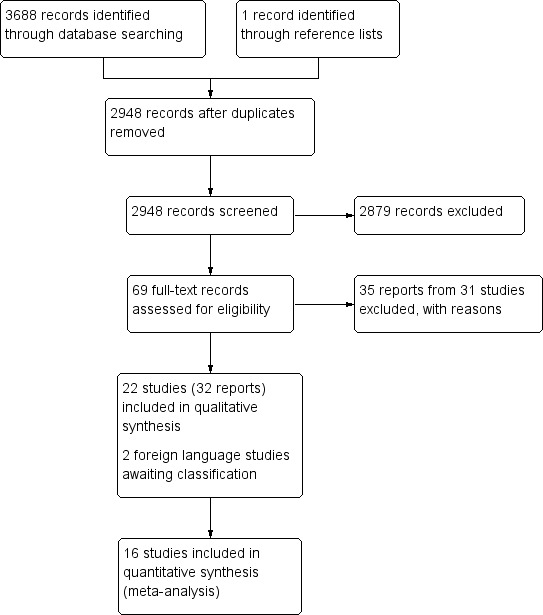
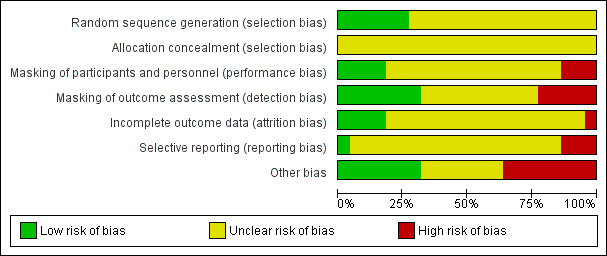
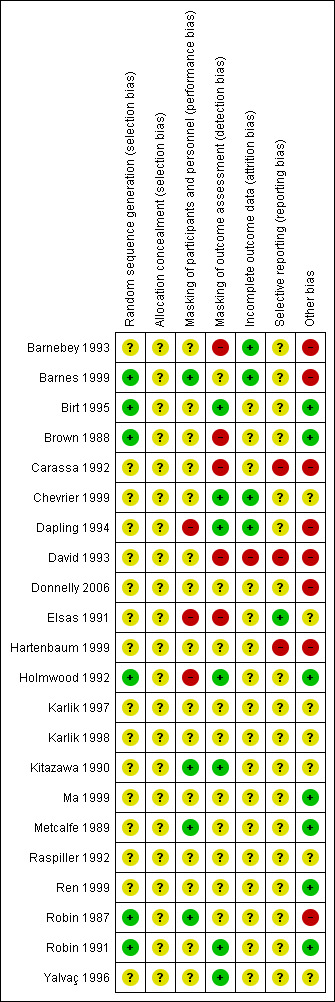
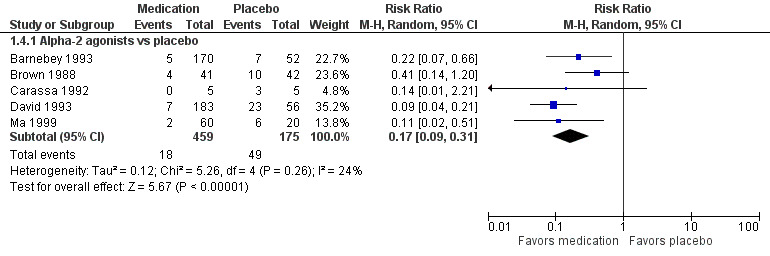
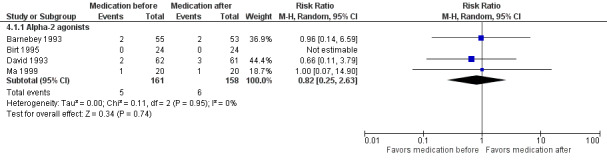
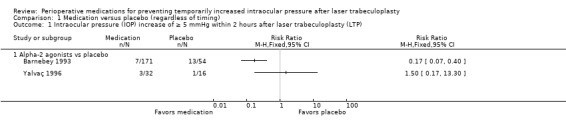
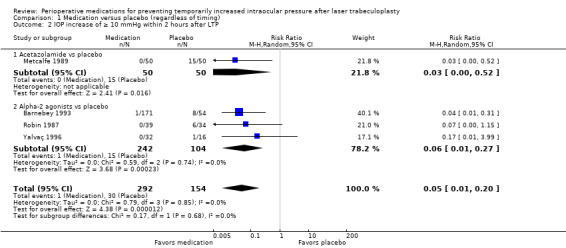
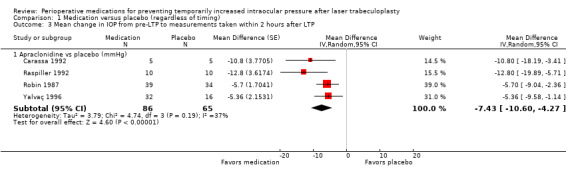
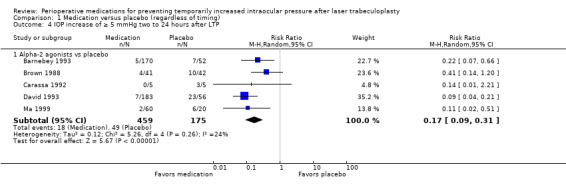
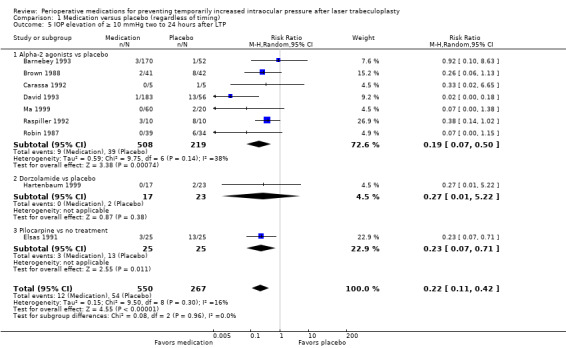
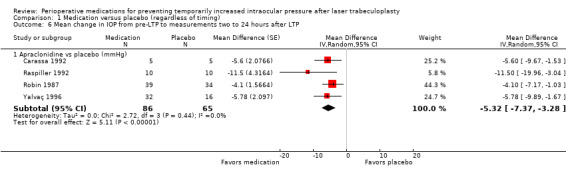
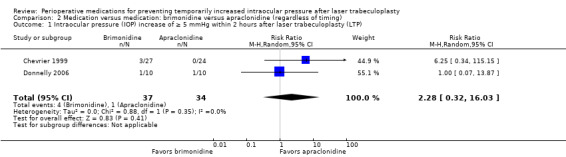
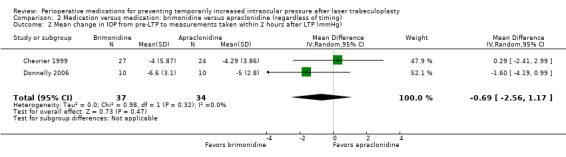
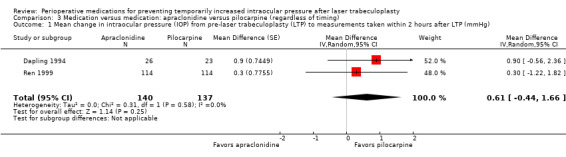
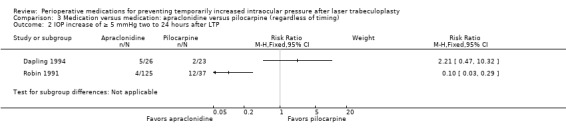
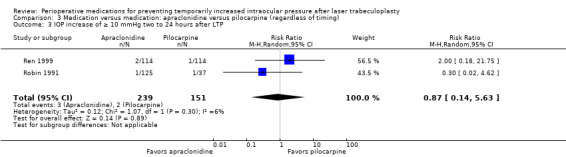
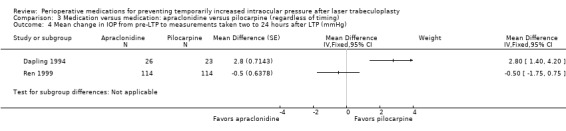
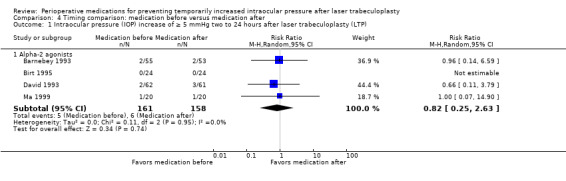
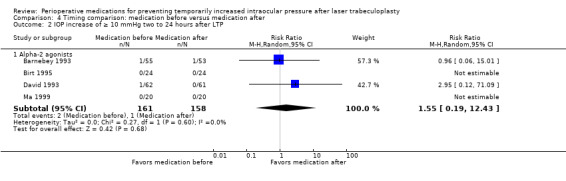
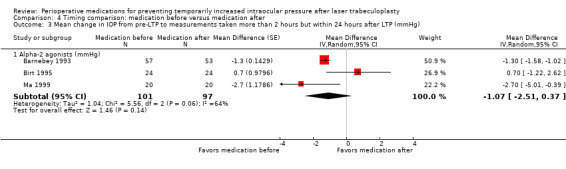
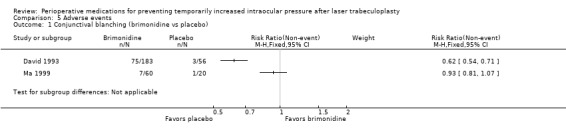
Main results: We included 22 trials that analyzed 2112 participants and identified no ongoing trials. We performed several comparisons of outcomes: one comparison of any antiglaucoma medication versus no medication or placebo, three comparisons of one antiglaucoma medication versus a different antiglaucoma mediation, and one comparison of antiglaucoma medication given before LTP to the same antiglaucoma medication given after LTP. Only one of the included trials used selective laser trabeculoplasty (SLT); the remaining trials used argon laser trabeculoplasty (ALT). Risk of bias issues were primarily in detection bias, reporting bias, and other potential bias due to studies funded by industry. Two potentially relevant studies are awaiting classification due to needing translation.In the comparison of any medication versus no medication/placebo, there was moderate-certainty evidence that the medication group had a lower risk of IOP increase of 10 mmHg or greater within two hours compared with the no medication/placebo group (risk ratio (RR) 0.05, 95% confidence interval (CI) 0.01 to 0.20). This trend favoring medication continued between two and 24 hours, but the evidence was of low and very low-certainty for an IOP increase of 5 mmHg or greater (RR 0.17, 95% CI 0.09 to 0.31) and 10 mmHg or greater (RR 0.22, 95% CI 0.11 to 0.42). Medication was favored over placebo/no medication with moderate-certainty in reducing IOP from the pre-LTP measurements for both within two hours and between two and 24 hours. At two hours, the mean difference (MD) in IOP between the medication group and the placebo/no medication group was -7.43 mmHg (95% CI -10.60 to -4.27); at between two and 24 hours, the medication group had a mean reduction in IOP of 5.32 mmHg more than the mean change in the placebo/no medication group (95% CI -7.37 to -3.28). Conjunctival blanching was an ocular adverse effect that was more common when brimonidine was given perioperatively compared with placebo in three studies.In our comparison of brimonidine versus apraclonidine, neither medication resulted in a lower risk of increased IOP of 5 mmHg or greater two hours of surgery; however, we were very uncertain about the estimate. There may be a greater mean decrease in IOP within two hours after LTP. We were unable to perform any meta-analyses for other review outcomes for this comparison.In our comparison of apraclonidine versus pilocarpine, we had insufficient data to perform meta-analyses to estimate effects on either of the primary outcomes. There was moderate-certainty evidence that neither medication was favored based on the mean change in IOP measurements from pre-LTP to two hours after surgery.In the comparison of medication given before LTP versus the same medication given after LTP, we had insufficient data for meta-analysis of IOP increase within two hours. For the risk of IOP increase of 5 mmHg or greater and 10 mmHg or greater at time points between two and 24 hours, there was no advantage of medication administration before or after LTP regarding the proportion of participants with an IOP spike (5 mmHg or greater: RR 0.82, 95% CI 0.25 to 2.63; 10 mmHg or greater: RR 1.55, 95% CI 0.19 to 12.43). For an IOP increase of 10 mmHg or greater, we had very low-certainty in the estimate, it would likely change with data from new studies.
Authors' conclusions: Perioperative medications are superior to no medication or placebo to prevent IOP spikes during the first two hours and up to 24 hours after LTP, but some medications can cause temporary conjunctival blanching, a short-term cosmetic effect. Overall, perioperative treatment was well tolerated and safe. Alpha-2 agonists are useful in helping to prevent IOP increases after LTP, but it is unclear whether one medication in this class of drugs is better than another. There was no notable difference between apraclonidine and pilocarpine in the outcomes we were able to assess. Future research should include participants who have been using these antiglaucoma medications for daily treatment of glaucoma before LTP was performed.
Conflict of interest statement
LZ none known. JW none known. DM none known.
Figures

Update of
References
References to studies included in this review
Barnebey 1993 {published data only}
-
- Barnebey HS, Robin AL, Zimmerman TJ, Morrison JC, Hersh SB, Lewis RA, et al. The efficacy of brimonidine in decreasing elevations in intraocular pressure after laser trabeculoplasty. Ophthalmology 1993;100(7):1083‐8. - PubMed
-
- Robin AL, Barnebey HS, Zimmerman TJ, Morrison JC, Hersh SB, Lewis RA. The effect of single and multiple doses of 0.5% brimonidine tartrate on IOP elevations following 360° ALT surgery. American Academy of Ophthalmology 1992:86.
-
- The Brimonidine‐ALT Study Group. Effect of brimonidine 0.5% on intraocular pressure spikes following 360° argon laser trabeculoplasty. Ophthalmic Surgery and Lasers 1995;26(5):404‐9. - PubMed
Barnes 1999 {published data only}
-
- Barnes SD, Campagna JA, Dirks MS, Doe EA, Geanon JD. Comparison of brimonidine 0.2% to apraclonidine 1.0% for the control of intraocular pressure spikes after argon laser trabeculoplasty. American Academy of Ophthalmology 1997:174. - PubMed
-
- Barnes SD, Campanga JA, Dirks MS, Doe EA. Control of intraocular pressure elevations after argon laser trabeculoplasty. Comparison of brimonidine 0.2% to apraclonidine 1.0%. Ophthalmology 1999;106(10):2033‐7. - PubMed
-
- Barnes SD, Dirks MS, Doe EA, Campagna JA, Zimmerman T. Control of intraocular pressure spikes after argon laser trabeculoplasty: brimonidine 0.2% vs. apraclonidine 1.0%. Journal of Glaucoma 1999; Vol. 8, issue 1:S15. - PubMed
-
- Dirks M, Conner C, Barnes SD. A cost minimization analysis comparing brimonidine to apraclonidine in IOP control following ALT. Journal of Glaucoma 2000; Vol. 9, issue 1:120.
Birt 1995 {published data only}
-
- Birt CM, Shin DH, Reed SY, McCarty B, Kim C, Frenkel RE. One vs. two doses of 1.0% apraclonidine for prophylaxis of intraocular pressure spike after argon laser trabeculoplasty. Canadian Journal of Ophthalmology 1995;30(5):266‐9. - PubMed
Brown 1988 {published data only}
-
- Brown RH, Stewart RH, Lynch MG, Crandall AS, Mandell AI, Wilensky JT, et al. ALO 2145 reduces the intraocular pressure elevation after anterior segment laser surgery. Ophthalmology 1988;95(3):378‐84. - PubMed
Carassa 1992 {published data only}
-
- Carassa R, Trabucchi G, Fontana P, Brancato R. Apraclonidine (AL 02145) reduces intraocular pressure in patients undergoing anterior segment laser surgery. Italian Journal of Ophthalmology 1992;6(4):249‐53.
Chevrier 1999 {published data only}
-
- Chevrier RL, Assalian A, Duperre J, Lesk MR. Apraclonidine 0.5% versus brimonidine 0.2% for the control of intraocular pressure elevation following anterior segment laser procedures. Ophthalmic Surgery and Lasers 1999;30(3):199‐204. - PubMed
Dapling 1994 {published data only}
David 1993 {published data only}
-
- David R, Spaeth GL, Clevenger CE, Perell HF, Siegel LI, Henry JC, et al. Brimonidine in the prevention of intraocular pressure elevation following argon laser trabeculoplasty. Archives of Ophthalmology 1993;111(10):1387‐90. - PubMed
-
- Spaeth G, David R, Clevenger C, Perell H, Siegel L. The effects of brimonidine tartrate on the incidence of intraocular pressure (IOP) spikes following argon laser trabeculoplasty (ALT). Investigative Ophthalmology and Visual Science 1992; Vol. 33:ARVO E‐Abstract 2340.
-
- The Brimonidine‐ALT Study Group. Effect of brimonidine 0.5% on intraocular pressure spikes following 360° argon laser trabeculoplasty. Ophthalmic Surgery and Lasers 1995;26(5):404‐9. - PubMed
Donnelly 2006 {published data only}
-
- Donnelly SJ, Brooks DB, Fechter HP III, Psolka M. Comparison of the alpha‐2 agonists for prevention of intraocular pressure elevation after selective laser trabeculoplasty. Investigative Ophthalmology and Visual Science 2006;47:ARVO E‐Abstract 4565.
-
- Yakopson VS, Donnelly SJ, Fechter HP, Wilson WF. Brimonidine 0.1% vs apraclonidine 0.5% for prevention of intraocular pressure elevation after selective laser trabeculoplasty. Investigative Ophthalmology and Visual Science 2008; Vol. 49:ARVO E‐Abstract 1234.
Elsas 1991 {published data only}
-
- Elsas T, Johnsen H, Stang O. Pilocarpine to prevent acute pressure increase following primary laser trabeculoplasty. Eye 1991;5(pt. 4):390‐4. - PubMed
Hartenbaum 1999 {published data only}
-
- Hartenbaum D, Wilson H, Maloney S, Vacarelli L, Orillac R, Sharpe E, et al. A randomized study of dorzolamide in the prevention of elevated intraocular pressure after anterior segment laser surgery. Journal of Glaucoma 1999;8(4):273‐5. - PubMed
Holmwood 1992 {published data only}
-
- Holmwood P, Chase D, Ruderman I, Rosenberg L, Krupin T. Effect of apraclonidine dosage on argon laser trabeculoplasty (ALT) induced increase in intraocular pressure (IOP). Investigative Ophthalmology and Visual Science 1991; Vol. 32:ARVO E‐Abstract 1356.
-
- Holmwood PC, Chase RD, Krupin T, Rosenberg LF, Ruderman JM, Tallman BA, et al. Apraclonidine and argon laser trabeculoplasty. American Journal of Ophthalmology 1992;114(1):19‐22. - PubMed
Karlik 1997 {published data only}
-
- Karlik JS, Barber JC, Humphreys A, Dutt RM. The comparison of latanoprost verses apraclonidine as pretreatment in eyes undergoing argon laser trabeculoplasty. Investigative Ophthalmology and Visual Science 1997; Vol. 38:ARVO E‐Abstract 1303.
Karlik 1998 {published data only}
-
- Karlik JS, Baker KS, Dutt RM. Comparison of latanoprost versus apraclonidine as pretreatment in eyes undergoing argon laser trabeculoplasty. Investigative Ophthalmology and Visual Science 1998;39:ARVO E‐Abstract 1173.
Kitazawa 1990 {published data only}
-
- Kitazawa Y, Shimizu U. Apraclonidine hydrochloride suppresses the increase of aqueous flare induced by argon laser trabeculoplasty. Investigative Ophthalmology and Visual Science 1990; Vol. 31:ARVO E‐Abstract 2477.
Ma 1999 {published data only}
-
- Ma YR, Lee BH, Yang KJ, Park YG. The efficacy of 0.2% brimonidine for preventing intraocular pressure rise following argon laser trabeculoplasty. Korean Journal of Ophthalmology 1999;13(2):78‐84. - PubMed
Metcalfe 1989 {published data only}
Raspiller 1992 {published data only}
-
- Raspiller A, Berrod JP. Efficacy and safety of apraclonidine (ALO 2145, 1%) in patients undergoing anterior segment laser surgery. Journal Francais d'Ophtalmologie 1992;15(12):651‐6. - PubMed
Ren 1999 {published data only}
-
- Ren J, Shin DH, Chung HS, Birt CM, Glover BK, Juzych MS, et al. Efficacy of apraclonidine 1% versus pilocarpine 4% for prophylaxis of intraocular pressure spike after argon laser trabeculoplasty. Ophthalmology 1999;106(6):1135‐9. - PubMed
-
- Ren J, Tinoosh F, Chung HS, Birt CM, Glover B. Efficacy of apraclonidine 1% vs. pilocarpine 4% for prophylaxis of intraocular pressure spike after argon laser trabeculoplasty. American Academy of Ophthalmology 1997:195. - PubMed
Robin 1987 {published data only}
-
- Robin AL, Pollack IP, House B, Enger C. Effects of ALO 2145 on intraocular pressure following argon laser trabeculoplasty. Archives of Ophthalmology 1987;105(5):646‐50. - PubMed
Robin 1991 {published data only}
-
- Robin AL. Argon laser trabeculoplasty medical therapy to prevent the intraocular pressure rise associated with argon laser trabeculoplasty. Ophthalmic Surgery 1991;22(1):31‐7. - PubMed
Yalvaç 1996 {published data only}
-
- Yalvaç I, Karagöz Y, Akgün Ü, Kasim R, Duman S. Apraclonidine use in argon laser trabeculoplasty [Argon laser trabeküloplasti'de apraklonidin uygulaması]. Türk Oftalmolojı Dergısı 1994;24(3):282‐5.
-
- Yalvaç IS, Eksioglu U, Karagoz Y, Akgun U, Kasim R, Duman S. Prophylactic use of apraclonidine for intraocular pressure increase after 180‐degree argon laser trabeculoplasty. Annals of Ophthalmology 1996;28(4):240‐3.
References to studies excluded from this review
Ascaso 1992 {published data only}
-
- Ascaso FJ, Castillo JS, Loras E, Minana MI, Palomar A. Effects of topical diclofenac sodium administered before argon laser trabeculoplasty: a double‐blind comparison versus dexamethasone phosphate eye drops. Lasers and Light in Ophthalmology 1992;5(1):29‐33.
Bergamini 1997 {published data only}
-
- Bergamini F, Vigo C, Pissarello R, Brancato C. Evaluation of apraclonidine hydrochloride effects on IOP control after argon laser trabeculoplasty or Nd:YAG laser iridotomy [Valutazione dell'apraclonidina cloridrato nel controllo della IOP dopo ALT o iridotomia Nd:YAG laser]. Annali di Ottalmologia e Clinicia Oculistica 1997;123(1):25‐8.
Bucci 1987 {published data only}
-
- Bucci MG, Cichetti MP, D'Andrea D, Corridore F. Evaluation of the effects of piroxicam e.d. in the intraocular pressure control after argon laser trabeculoplasty [Valutazione degli effetti del piroxicam collirio nel controllo dell pressione oculare dopo trabeculoplastica argon laser]. Annali di Ottalmologia e Clinica Oculistica 1987;113(7):643‐8.
Champagne 2015 {published data only}
-
- Champagne S, Anctil JL, Goyette A, Lajoie C, Marchais B. Influence on intraocular pressure of anti‐inflammatory treatments after selective laser trabeculoplasty [Impact du traitement anti‐inflammatoire post‐trabéculoplastie au laser sélectif sur la tension intraoculaire]. Journal Français d'Ophtalmologie 2015;38(7):588‐94. - PubMed
Chen 2001 {published data only}
-
- Chen TC, Ang RT, Grosskreutz CL, Pasquale LR, Fan JT. Brimonidine 0.2% versus apraclonidine 0.5% for prevention of intraocular pressure elevations after anterior segment laser surgery. Ophthalmology 2001;108(6):1033‐8. - PubMed
Chen 2005 {published data only}
-
- Chen E, Golchin S, Blomdahl S. A comparison between 90 degrees and 180 degrees selective laser trabeculoplasty. Journal of Glaucoma 2004; Vol. 13, issue 1:62‐5. - PubMed
-
- Chen TC. Brimonidine 0.15% versus apraclonidine 0.5% for prevention of intraocular pressure elevation after anterior segment laser surgery. Journal of Cataract and Refractive Surgery 2005;31(9):1707‐12. - PubMed
De Keyser 2017 {published data only}
-
- Keyser M, Belder M, Groot V. Randomized prospective study of the use of anti‐inflammatory drops after selective laser trabeculoplasty. Journal of Glaucoma 2017; Vol. 26, issue 2:e22‐9. - PubMed
Diestelhorst 1995 {published data only}
-
- Diestelhorst M, Thull D, Krieglstein GK. The effect of argon laser trabeculoplasty on the blood‐aqueous barrier and intraocular pressure in human glaucomatous eyes treated with diclofenac 0.1%. Graefes Archive for Clinical and Experimental Ophthalmology 1995;233(9):559‐62. - PubMed
Gelfand 1985 {published data only}
Herbort 1992 {published data only}
-
- Herbort C, Mermoud A, Shnyder C, Pittet N. Effect of the topical nonsteroidal anti‐inflammatory drug (NSAID) diclofenac after argon laser trabeculoplasty (ALT). Investigative Ophthalmology and Visual Science 1992; Vol. 33:ARVO E‐Abstract 2336.
-
- Herbort CP, Mermoud A, Schnyder C, Pittet N. Anti‐inflammatory effect of topical diclofenac sodium (Voltarène Ophta) after argon laser trabeculoplasty: preliminary results of prospective double‐blind method [Effet anti‐inflammatoire du diclofenac sodium topique (Voltarèn® Ophta) après trabéculoplastie au laser argon (TLA): résultats préliminaires d'une étude prospective en double‐insu]. Klinische Monatsblätter für Augenheilkunde 1992;200(5):358‐61. - PubMed
Herbort 1993 {published data only}
-
- Herbort CP, Mermoud A, Schnyder C, Pittet N. Anti‐inflammatory effect of diclofenac drops after argon laser trabeculoplasty. Archives of Ophthalmology 1993;111(4):481‐3. - PubMed
Hurvitz 1994 {published data only}
-
- Hurvitz LM. A randomized prospective study of apraclonidine 1/2% vs 1% in preventing post‐laser IOP rise. American Academy of Ophthalmology 1994:129.
Jinapriya 2014 {published data only}
-
- Jinapriya D, D'Souza M, Hollands H, El‐Defrawy S, Irrcher I, Smallman D, et al. Anti‐inflammatory therapy after selective laser trabeculoplasty. A randomized, double‐masked, placebo‐controlled clinical trial. Ophthalmology 2014;121(12):2356‐61. - PubMed
Kim 1998 {published data only}
-
- Kim YY, Glover BK, Shin DH, Lee D, Frenkel RE, Abreu MM. Effect of topical anti‐inflammatory treatment on the long‐term outcome of laser trabeculoplasty. Fluorometholone‐Laser Trabeculoplasty Study Group. American Journal of Ophthalmology 1998;126(5):721‐3. - PubMed
Krupin 1992 {published data only}
-
- Feitl M, Krupin T, Stank T. Apraclonidine pretreatment decreases the acute intraocular pressure (IOP) rise after argon laser trabeculoplasty (ALT) or laser iridectomy (LPI). Investigative Ophthalmology and Visual Science 1991; Vol. 32:ARVO E‐Abstract 1355.
-
- Krupin T, Stank T, Feitl ME. Apraclonidine pretreatment decreases the acute intraocular pressure rise after laser trabeculoplasty or iridotomy. Journal of Glaucoma 1992;1(2):79‐86.
León‐Alcántara 1995 {published data only}
-
- León‐Alcántara LM, Aguilar‐Muñoz JO, Carrillo Ruiz de Chávez R, Berges Salgado G, Harleben M, Maqueo M. Evaluation of the efficacy of apraclonidine chlorhydrate 1% in patients who underwent anterior segment laser surgery [Eficacia y seguridad de la solución oftálmica de hidrocloruro de apraclonidina al 1% en pacientes sometidos a cirugía del segmento anterior con láser]. Revista Mexicana de Oftalmología 1995;69(3):109‐16.
Leung 1986 {published data only}
-
- Leung KW, Gillies WE. The detection and management of the acute rise in intraocular pressure following laser trabeculoplasty. Australian and New Zealand Journal of Ophthalmology 1986;14(3):259‐62. - PubMed
Ottaiano 1989 {published data only}
-
- Ottaiano JA. The topic therapy with fluorometholone 0.1% and indomethacin 1% in iridotomy by argon laser [Estudo comparativo da terapêutica tópica com fluorometolona a 0,1 e indometacina a 1 em olhos submetidos à iridotomia por laser de argônio]. Arquivos Brasileiros de Oftalmologia 1989;52(6):211‐4.
Ottaiano 1996 {published data only}
-
- Ottaiano JA, Castro Moreira JB, Fudo A, Ueda EM, Bosso EP, Martin RT. Topical 1% apraclonidine in the argon laser trabeculoplasty [Apraclonidine a 1% em olhos submetidos à trabeculoplastia por laswer de argônio]. Arquivos Brasileiros de Oftalmologia 1996;59(3):299‐306.
Pappas 1985 {published data only}
-
- Pappas HR, Berry DP, Partamian L, Hertzmark E, Epstein DL. Topical indomethacin therapy before argon laser trabeculoplasty. American Journal of Ophthalmology 1985;99(5):571‐5. - PubMed
Patel 1998 {published data only}
-
- Patel HC, Ren J, Shin DH, Chung HS, Hong YJ, Rho SH, et al. Comparative efficacies of apraclonidine, brimonidine, pilocarpine, and latanoprost in prophylaxis of IOP spikes following ALT or YAG capsulotomy. Investigative Ophthalmology and Visual Science 1998;39(4):S 2196.
Realini 2010 {published data only}
-
- Realini T, Charlton J, Hettlinger M. The impact of anti‐inflammatory therapy on intraocular pressure reduction following selective laser trabeculoplasty. Ophthalmic Surgery, Lasers and Imaging 2010;41(1):100‐3. - PubMed
-
- Realini T, Charlton J, Hettlinger M. The role of prednisolone acetate in the postoperative period following selective laser trabeculoplasty. Investigative Ophthalmology and Visual Science 2007; Vol. 48:ARVO E‐Abstract 5674.
Rosenberg 1995 {published data only}
-
- Rosenberg LF, Krupin T, Ruderman J, McDaniel DL, Siegfried C, Karalekas DP, et al. Apraclonidine and anterior segment laser surgery. Comparison of 0.5% versus 1.0% apraclonidine for prevention of postoperative intraocular pressure rise. Ophthalmology 1995;102(9):1312‐8. - PubMed
Shin 1996 {published data only}
-
- Shin DJ, Frenkel RE, David R, Cheetham JK. Effect of topical anti‐inflammatory treatment on the outcome of laser trabeculoplasty. The Fluorometholone‐Laser Trabeculoplasty Study Group. American Journal of Ophthalmology 1996;122(3):349‐54. - PubMed
Stingu 2001 {published data only}
-
- Stîngu C, Cristescu A, Dârâban C, Ioniţă M, Serghiescu S. Iopidine in the control of intraocular pressure after glaucoma laser treatment [Iopidina în controlul cresterilor presionale după proceduri antiglaucomatoase laser]. Oftalmologia 2001;54(4):32‐5. - PubMed
Swendris 1991a {published data only}
-
- Swendris RP, Shin DH, Hong YJ. Apraclonidine versus timolol pretreatment in the prevention of intraocular pressure spikes following argon laser trabeculoplasty. Investigative Ophthalmology and Visual Science 1991; Vol. 32:ARVO E‐Abstract 1358.
Swendris 1991b {published data only}
-
- Swendris RP, Shin DH, Khatana AK, Hong YJ. Medical pretreatment to prevent the acute intraocular pressure elevation after laser trabeculoplasty. American Academy of Ophthalmology 1991:108.
Threlkeld 1996 {published data only}
-
- Threlkeld AB, Assalian AA, Allingham RR, Shields MB. Apraclonidine 0.5% versus 1% for controlling intraocular pressure elevation after argon laser trabeculoplasty. Ophthalmic Surgery and Lasers 1996;27(8):657‐60. - PubMed
Vickerstaff 2015 {published data only}
Weinreb 1983 {published data only}
-
- Weinreb RN, Robin AL, Baerveldt G, Drake MV, Blumenthal M, Wilensky J. Flurbiprofen pretreatment in argon laser trabeculoplasty for primary open‐angle glaucoma. Archives of Ophthalmology 1983;102(11):1629‐32. - PubMed
West 1992 {published data only}
-
- West RH. The effect of topical corticosteroids on laser‐induced peripheral anterior synechiae. Australian and New Zealand Journal of Ophthalmology 1992;20(4):305‐9. - PubMed
References to studies awaiting assessment
Božić 2011 {published data only}
-
- Božić M, Hentova‐Senćanić P, Kontić D, Marković V, Marjanović I. Prevention of intraocular pressure elevation after argon laser trabeculoplasty in primary open angle glaucoma [Превенција наглог повећања интраокуларногпритиска после лечења примарног глаукомаотвореног угла трабекулопластиком аргонскимласером]. Journal of the Serbian Medical Society 2011;139(1‐2):12‐7. - PubMed
Ha 1991 {published data only}
-
- Ha I, Hong J. The effects of 1% apraclonidine in preventing the intraocular pressure rise following argon laser surgery in glaucoma. Journal of the Korean Ophthalmological Society 1991;32(1):68‐73.
Additional references
American Academy of Ophthalmology 2015
-
- American Academy of Ophthalmology Preferred Practice Pattern Glaucoma Panel. Primary Open‐Angle Glaucoma PPP ‐ 2015. Ophthalmology 2015.
Barkana 2007
-
- Barkana Y, Belkin M. Selective laser trabeculoplasty. Survey of Ophthalmology 2007;52(6):634‐54. - PubMed
Bradley 2000
-
- Bradley JM, Anderssohn AM, Colvis CM, Parshley DE, Zhu XH, Ruddat MS, et al. Mediation of laser trabeculoplasty‐induced matrix metalloproteinase expression by IL‐1beta and TNFalpha. Investigative Ophthalmology and Visual Science 2000;41(2):422‐30. - PubMed
Bylsma 1988
-
- Bylsma SS, Samples JR, Acott TS, Buskirk EM. Trabecular cell division after argon laser trabeculoplasty. Archives of Ophthalmology 1988;106(4):544‐7. - PubMed
Chandler 1997
-
- Chandler PA, Grant WM. Chandler and Grant's Glaucoma. 4th Edition. Baltimore, MD: Williams and Wilkins, 1997.
Chung 1998
-
- Chung PY, Schuman JS, Netland PA, Lloyd‐Muhammad RA, Jacobs DS. Five‐year results of a randomized, prospective, clinical trial of diode vs argon laser trabeculoplasty for open‐angle glaucoma. American Journal of Ophthalmology 1998;126(2):185‐90. - PubMed
Deeks 2011
-
- Deeks JJ, Higgins JP, Altman DG. Chapter 9: Analysing data and undertaking meta‐analyses. In: Higgins JP, Green S editor(s), Cochrane Handbook for Systematic Reviews of Interventions Version 5.1.0 (updated March 2011). The Cochrane Collaboration, 2011. Available from handbook.cochrane.org.
Ederer 2004
-
- Ederer F, Gaasterland DA, Dally LG, Kim J, VanVeldhuisen PC, Blackwell B, et al. The Advanced Glaucoma Intervention Study (AGIS): 13. Comparison of treatment outcomes within race: 10‐year results. Ophthalmology 2004;111(4):651‐64. - PubMed
Englert 1997
-
- Englert JA, Cox TA, Allingham RR, Shields MB. Argon vs diode laser trabeculoplasty. American Journal of Ophthalmology 1997;124(5):627‐31. - PubMed
Glanville 2006
GLT 1990
-
- The Glaucoma Laser Trial Research Group. The Glaucoma Laser Trial (GLT). 2. Results of argon laser trabeculoplasty versus topical medicines. Ophthalmology 1990;97(11):1403‐13. - PubMed
GRADEpro 2014 [Computer program]
-
- GRADE Working Group, McMaster University. GRADEpro GDT. Version accessed 15 December 2016. Hamilton (ON): GRADE Working Group, McMaster University, 2014.
Harasymowycz 2005
-
- Harasymowycz PJ, Papamatheakis DG, Latina M, Leon M, Lesk MR, Damji KF. Selective laser trabeculoplasty (SLT) complicated by intraocular pressure elevation in eyes with heavily pigmented trabecular meshworks. American Journal of Ophthalmology 2005;139(6):1110‐3. - PubMed
Higgins 2011a
-
- Higgins JP, Altman DG, Sterne JAC. Chapter 8: Assessing risk of bias in included studies. In: Higgins JP, Green S editor(s). Cochrane Handbook for Systematic Reviews of Interventions Version 5.1.0 (updated March 2011). The Cochrane Collaboration, 2011. Available from handbook.cochrane.org.
Higgins 2011b
-
- Higgins JP, Deeks JJ, Altman DG. Chapter 16: Special topics in statistics. In: Higgins JP, Green S editor(s), Cochrane Handbook for Systematic Reviews of Interventions Version 5.1.0 (updated March 2011). The Cochrane Collaboration, 2011. Available from handbook.cochrane.org.
Levene 1983
-
- Levene R. Major early complications of laser trabeculoplasty. Ophthalmic Surgery 1983;14(11):947‐53. - PubMed
Melamed 1985
-
- Melamed S, Pei J, Epstein DL. Short‐term effect of argon laser trabeculoplasty in monkeys. Archives of Ophthalmology 1985;103(10):1546‐52. - PubMed
Melamed 1986
-
- Melamed S, Pei J, Epstein DL. Delayed response to argon laser trabeculoplasty in monkeys. Morphological and morphometric analysis. Archives of Ophthalmology 1986;104(7):1078‐83. - PubMed
Meyer 1990
-
- Meyer E, Gdal‐On M. Ultra‐structural study of argon laser trabeculoplasty in open‐angle glaucoma. Glaucoma 1990;12(3):84‐7.
RevMan 2014 [Computer program]
-
- Nordic Cochrane Centre, The Cochrane Collaboration. Review Manager (RevMan). Version 5.3. Copenhagen: Nordic Cochrane Centre, The Cochrane Collaboration, 2014.
Robin 1988
Rolim de Moura 2007
Samples 2011
-
- Samples JR, Singh K, Lin SC, Francis BA, Hodapp E, Jampel HD, et al. Laser trabeculoplasty for open‐angle glaucoma: a report by the American Academy of Ophthalmology. Ophthalmology 2011;118(11):2296‐302. - PubMed
Schadlu 1998
-
- Schadlu R, Maus TL, Nau CB, Brubaker RF. Comparison of the efficacy of apraclonidine and brimonidine as aqueous suppressants in humans. Archives of Ophthalmology 1998;116(11):1441‐4. - PubMed
Spurny 1984
-
- Spurny RC, Lederer CM. Krypton laser trabeculoplasty. A clinical report. Archives of Ophthalmology 1984;102(11):1626‐8. - PubMed
Stein 2007
-
- Stein JD, Challa P. Mechanisms of action and efficacy of argon laser trabeculoplasty and selective laser trabeculoplasty. Current Opinion in Ophthalmology 2007;18(2):140‐5. - PubMed
Tham 2014
-
- Tham YC, Li X, Wong TY, Quigley HA, Aung T, Cheng CY. Global prevalence of glaucoma and projections of glaucoma burden through 2040: a systematic review and meta‐analysis. Ophthalmology 2014;121(11):2081‐90. - PubMed
The Brimonidine‐ALT Study Group
-
- The Brimonidine‐ALT Study Group. Effect of brimonidine 0.5% on intraocular pressure spikes following 360% argon laser trabeculoplasty. Ophthalmic Surgery and Lasers 1995;26(5):404‐9. - PubMed
Tsai 2006
-
- Tsai JC. Medication adherence in glaucoma: approaches for optimizing patient compliance. Current Opinion in Ophthalmology 2006;17(2):190‐5. - PubMed
Wong 2015
-
- Wong M, Lee J, Choy B, Chan J, Lai J. Systematic review and meta‐analysis on the efficacy of selective laser trabeculoplasty in open‐angle glaucoma. Survey of Ophthalmology 2015;60(1):36‐50. - PubMed
References to other published versions of this review
Publication types
MeSH terms
Substances
Grants and funding
LinkOut - more resources
Full Text Sources
Other Literature Sources
Medical
Research Materials
