


Prasugrel suppresses development of lithium-induced nephrogenic diabetes insipidus in mice
- PMID: 28233082
- PMCID: PMC5432483
- DOI: 10.1007/s11302-017-9555-6
Prasugrel suppresses development of lithium-induced nephrogenic diabetes insipidus in mice
Abstract
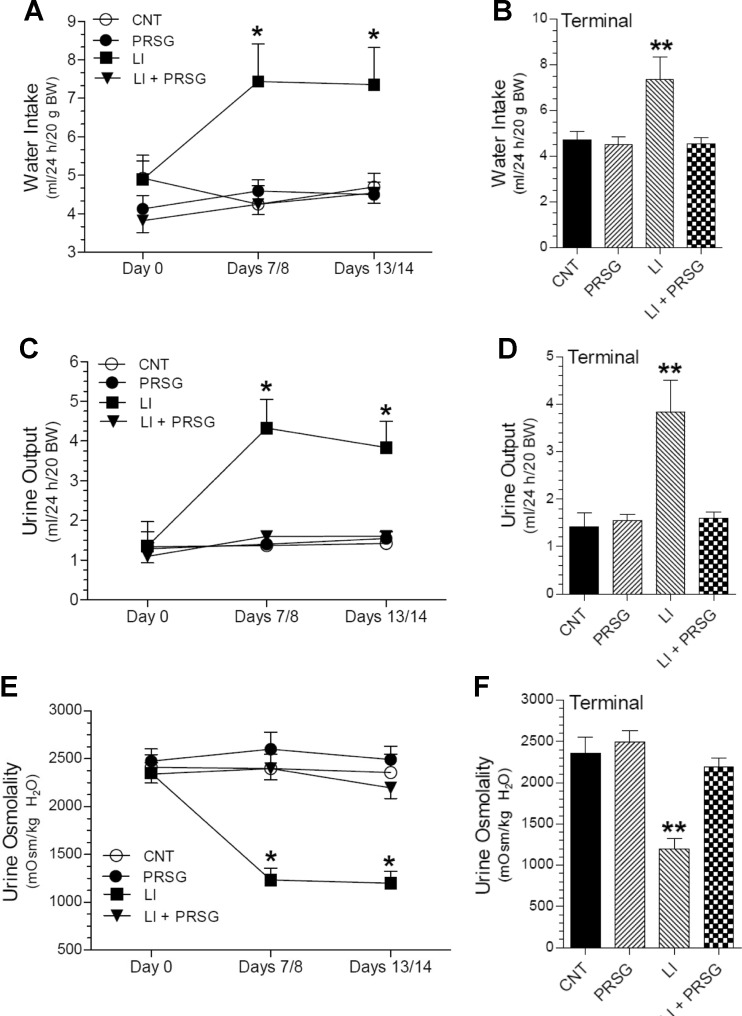
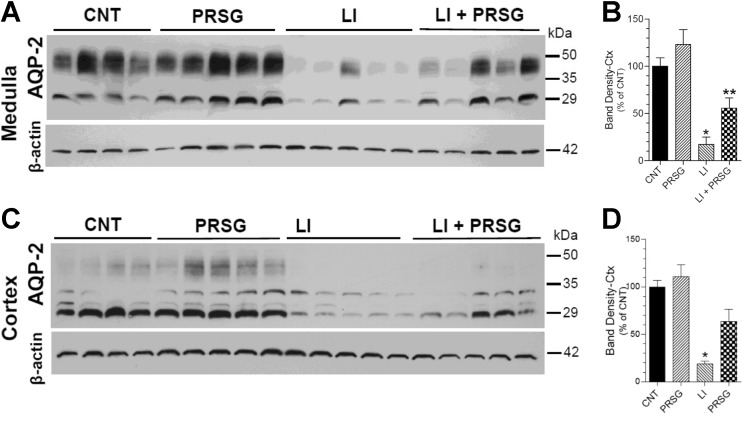
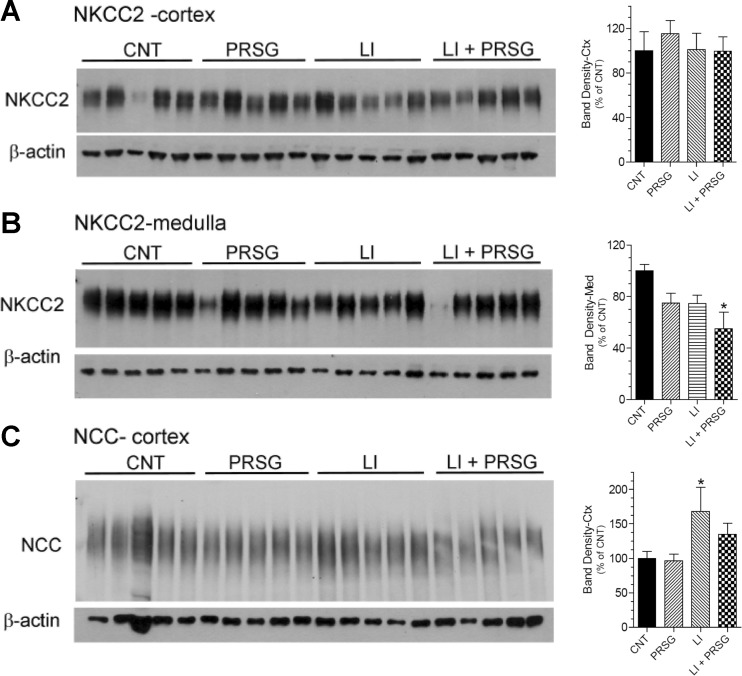
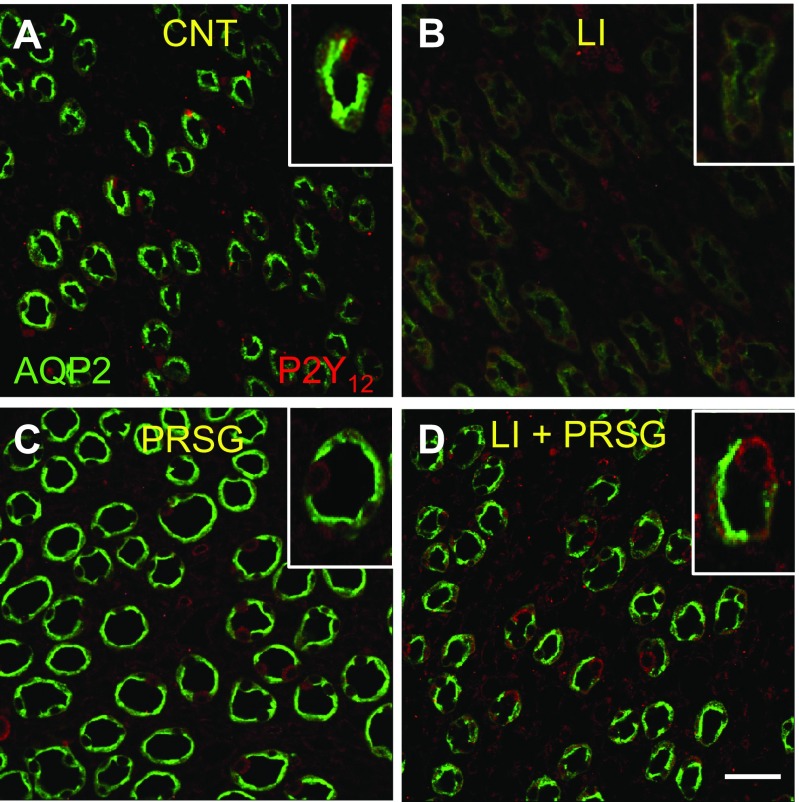
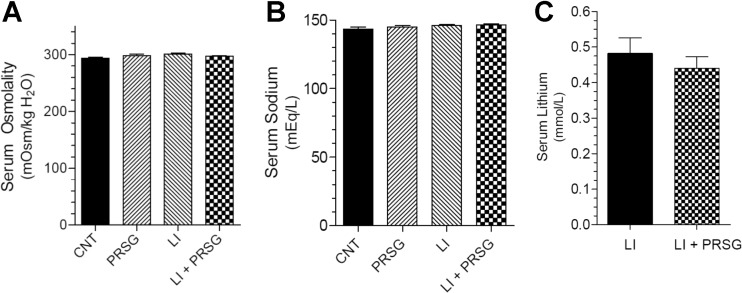
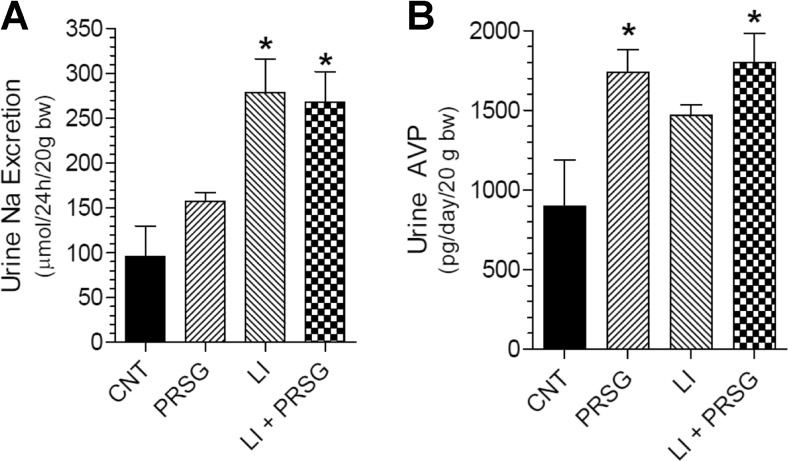
Previously, we localized ADP-activated P2Y12 receptor (R) in rodent kidney and showed that its blockade by clopidogrel bisulfate (CLPD) attenuates lithium (Li)-induced nephrogenic diabetes insipidus (NDI). Here, we evaluated the effect of prasugrel (PRSG) administration on Li-induced NDI in mice. Both CLPD and PRSG belong to the thienopyridine class of ADP receptor antagonists. Groups of age-matched adult male B6D2 mice (N = 5/group) were fed either regular rodent chow (CNT), or with added LiCl (40 mmol/kg chow) or PRSG in drinking water (10 mg/kg bw/day) or a combination of LiCl and PRSG for 14 days and then euthanized. Water intake and urine output were determined and blood and kidney tissues were collected and analyzed. PRSG administration completely suppressed Li-induced polydipsia and polyuria and significantly prevented Li-induced decreases in AQP2 protein abundance in renal cortex and medulla. However, PRSG either alone or in combination with Li did not have a significant effect on the protein abundances of NKCC2 or NCC in the cortex and/or medulla. Immunofluorescence microscopy revealed that PRSG administration prevented Li-induced alterations in cellular disposition of AQP2 protein in medullary collecting ducts. Serum Li, Na, and osmolality were not affected by the administration of PRSG. Similar to CLPD, PRSG administration had no effect on Li-induced increase in urinary Na excretion. However, unlike CLPD, PRSG did not augment Li-induced increase in urinary arginine vasopressin (AVP) excretion. Taken together, these data suggest that the pharmacological inhibition of P2Y12-R by the thienopyridine group of drugs may potentially offer therapeutic benefits in Li-induced NDI.
Keywords: Arginine vasopressin; Diabetes insipidus; Extracellular nucleotides; Nephrogenic; Polyuria; Purinergic receptors.
Conflict of interest statement
Conflict of interest
Yue Zhang declares that s/he has no conflict of interest.
János Peti-Peterdi declares that s/he has no conflict of interest.
Anna U. Brandes declares that s/he has no conflict of interest.
Anne Riquier-Brison declares that s/he has no conflict of interest.
Noel G. Carlson declares that s/he has no conflict of interest.
Christa E. Müller declares that s/he has no conflict of interest.
Carolyn M. Ecelbarger declares that s/he has no conflict of interest.
Bellamkonda K. Kishore declares that s/he has no conflict of interest.
Parts of this work were presented at the Experiment mal Biology 2016 meeting organized by FASEB, April 2016 in San Diego, CA, and appeared as a printed abstract in the proceedings of that meeting [44].
Ethical approval
The animal procedures were approved by the Institutional Animal Care and Use Committee (IACUC) of the Veterans Affairs Salt Lake City Health Care System, Salt Lake City, Utah.
Figures
References
-
- Zhang Y, Sands JM, Kohan DE, Nelson RD, Martin CF, Carlson NG, Kamerath CD, Ge Y, Klein JD, Kishore BK. Potential role of purinergic signaling in urinary concentration in inner medulla: insights from P2Y2 receptor gene knockout mice. Am J Physiol Renal Physiol. 2008;295:F1715–F1724. doi: 10.1152/ajprenal.90311.2008. - DOI - PMC - PubMed
Publication types
MeSH terms
Substances
Grants and funding
LinkOut - more resources
Full Text Sources
Other Literature Sources
Miscellaneous
