


Continued Endemic Wild Poliovirus Transmission in Security-Compromised Areas - Nigeria, 2016
- PMID: 28233765
- PMCID: PMC5657850
- DOI: 10.15585/mmwr.mm6607a2
Continued Endemic Wild Poliovirus Transmission in Security-Compromised Areas - Nigeria, 2016
Abstract
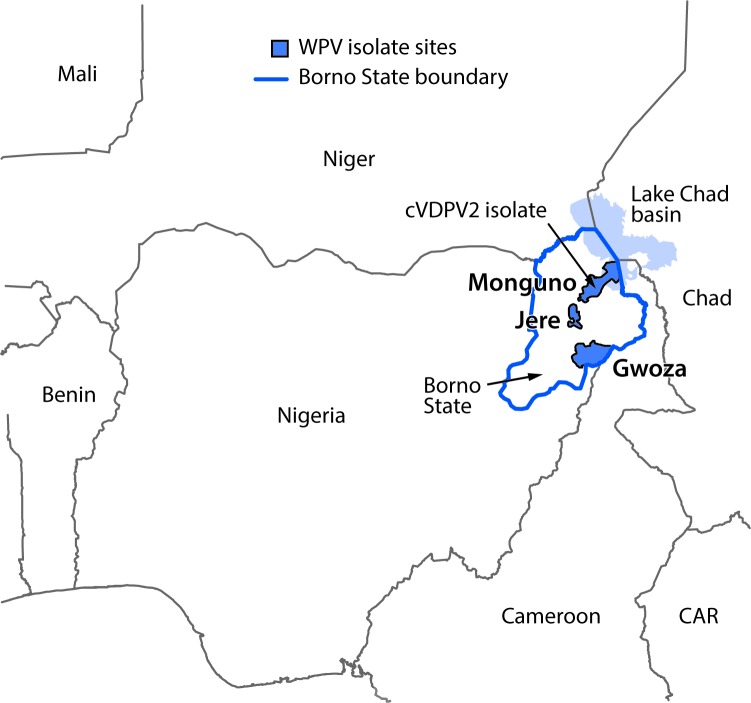
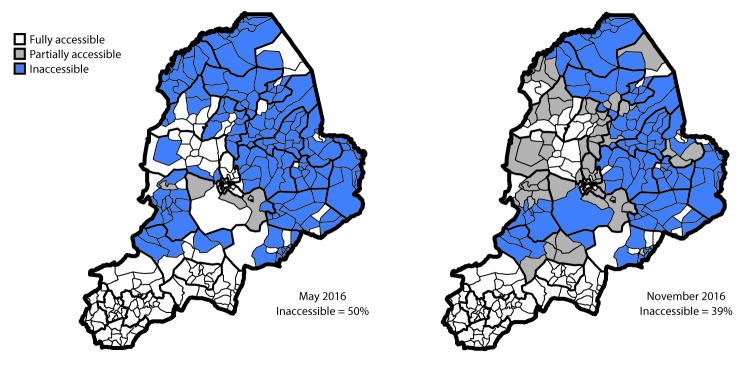
On August 10, 2016, 2 years after the most recent wild poliovirus (WPV) case was reported in Nigeria (in July 2014) (1), two WPV cases were reported in the northeastern state of Borno, which has been severely affected by insurgency-related insecurity since 2013. On September 9 and 26, 2016, two additional WPV cases were reported in Borno in children whose families migrated from security-compromised, inaccessible areas of the state. All four cases were WPV serotype 1 (WPV1), with genetic differences indicating prolonged undetected transmission. A large-scale emergency response plan was developed and implemented. The plan initially called for vaccination of 815,791 children during August 15-18 in five local government areas (LGAs) in the immediate vicinity of the first two WPV cases. Subsequently, the plan was expanded to regionally synchronized supplementary immunization activities (SIAs), conducted during August 27-December 6 in five Lake Chad basin countries at increased risk for national and regional WPV1 transmission (Cameroon, Central African Republic, Chad, Niger, and Nigeria). In addition, retrospective searches for missed cases of acute flaccid paralysis (AFP), enhanced environmental surveillance for polioviruses, and polio surveillance system reviews were conducted. Prolonged undetected WPV1 transmission in Borno State is a consequence of low population immunity and severe surveillance limitations associated with insurgency-related insecurity and highlights the risk for local and international WPV spread (2). Increasing polio vaccination coverage and implementing high-quality polio surveillance, especially among populations in newly secured and difficult-to-access areas in Borno and other Lake Chad basin areas are urgently needed.
Figures
References
-
- World Health Organization. WHO removes Nigeria from polio-endemic list. Geneva, Switzerland: World Health Organization; 2015. http://www.who.int/mediacentre/news/releases/2015/nigeria-polio/en/
-
- United Nations Office for the Coordination of Humanitarian Affairs. Nigeria: humanitarian dashboard. New York, NY: United Nations Office for the Coordination of Humanitarian Affairs; 2016. http://www.unocha.org/nigeria
-
- World Health Organization. Humanitarian health action: WHO grade 3 and grade 2 emergencies. Geneva, Switzerland: World Health Organization; 2015. http://www.who.int/hac/donorinfo/g3_contributions/en/
-
- United Nations World Food Programme. Nigeria emergency. New York, NY: United Nations World Food Programme; 2016. https://www.wfp.org/emergencies/nigeria
MeSH terms
Substances
LinkOut - more resources
Full Text Sources
Other Literature Sources
Medical
