. 2017 Feb 24;12(2):e0173044.
doi: 10.1371/journal.pone.0173044. eCollection 2017.

Altered vasoreactivity in neonatal rats with pulmonary hypertension associated with bronchopulmonary dysplasia: Implication of both eNOS phosphorylation and calcium signaling

Affiliations

Altered vasoreactivity in neonatal rats with pulmonary hypertension associated with bronchopulmonary dysplasia: Implication of both eNOS phosphorylation and calcium signaling

Eric Dumas de la Roque et al. PLoS One. .

Abstract

Bronchopulmonary dysplasia (BPD) consists of an arrest of pulmonary vascular and alveolar growth, with persistent hypoplasia of the pulmonary microvasculature and alveolar simplification. In 25 to 40% of the cases, BPD is complicated by pulmonary hypertension (BPD-PH) that significantly increases the risk of morbidity. In vivo studies suggest that increased pulmonary vascular tone could contribute to late PH in BPD. Nevertheless, an alteration in vasoreactivity as well as the mechanisms involved remain to be confirmed. The purpose of this study was thus to assess changes in pulmonary vascular reactivity in a murine model of BPD-PH. Newborn Wistar rats were exposed to either room air (normoxia) or 90% O2 (hyperoxia) for 14 days. Exposure to hyperoxia induced the well-known features of BPD-PH such as elevated right ventricular systolic pressure, right ventricular hypertrophy, pulmonary vascular remodeling and decreased pulmonary vascular density. Intrapulmonary arteries from hyperoxic pups showed decreased endothelium-dependent relaxation to acetylcholine without any alteration of relaxation to the NO-donor sodium nitroprusside. This functional alteration was associated with a decrease of lung eNOS phosphorylation at the Ser1177 activating site. In pups exposed to hyperoxia, serotonin and phenylephrine induced exacerbated contractile responses of intrapulmonary arteries as well as intracellular calcium response in pulmonary arterial smooth muscle cells (PASMC). Moreover, the amplitude of the store-operated Ca2+ entry (SOCE), induced by store depletion using a SERCA inhibitor, was significantly greater in PASMC from hyperoxic pups. Altogether, hyperoxia-induced BPD-PH alters the pulmonary arterial reactivity, with effects on both endothelial and smooth muscle functions. Reduced activating eNOS phosphorylation and enhanced Ca2+ signaling likely account for alterations of pulmonary arterial reactivity.


Conflict of interest statement

Competing Interests: The authors have declared that no competing interests exist.

Figures

Fig 1
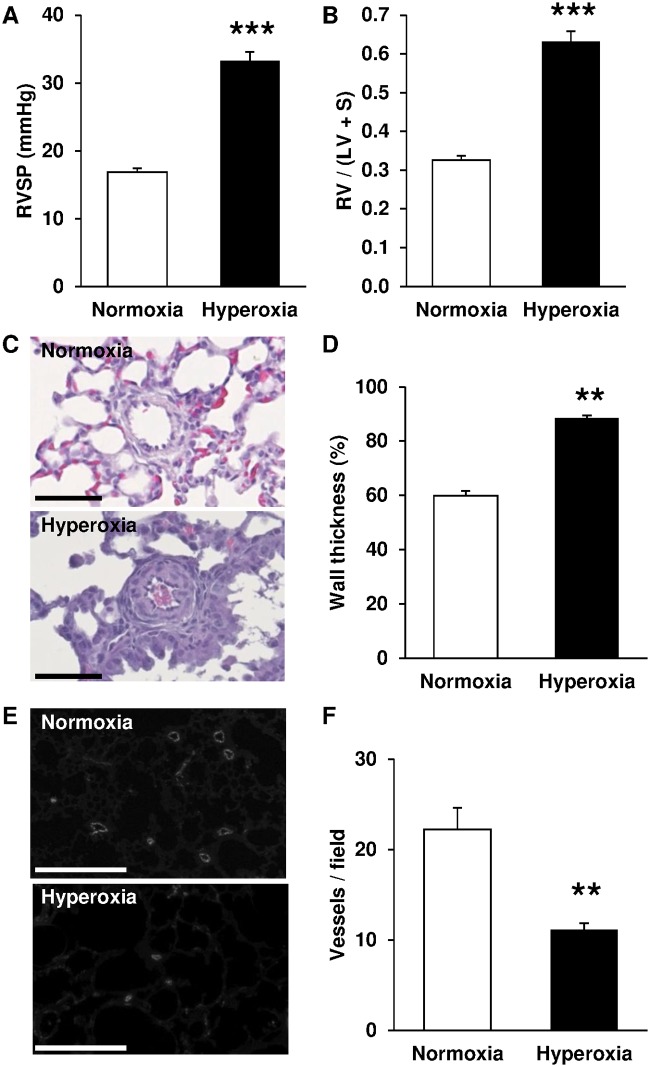
Fig 1. Exposure to hyperoxia induces features of BPD-PH in newborn rats.
(A) Right ventricle systolic pressure (RSVP) was significantly increased by hyperoxia (n = 18) compared with normoxia (n = 9). (B) Fulton’s index (RV / (LV + S)) was significantly increased by hyperoxia (n = 24) compared with normoxia (n = 23). (C) Representative hematoxylin and eosin stained lung sections (scale bar = 50 μm). (D) Arterial wall thickness was significantly increased by hyperoxia (n = 4) compared with normoxia (n = 6). (E) Representative immunostaining of vWF in lung sections (scale bar = 250 μm). (F) Vessel density was significantly decreased by hyperoxia (n = 9) compared with normoxia (n = 9). ** P < 0.01; *** P < 0.001.
Fig 2
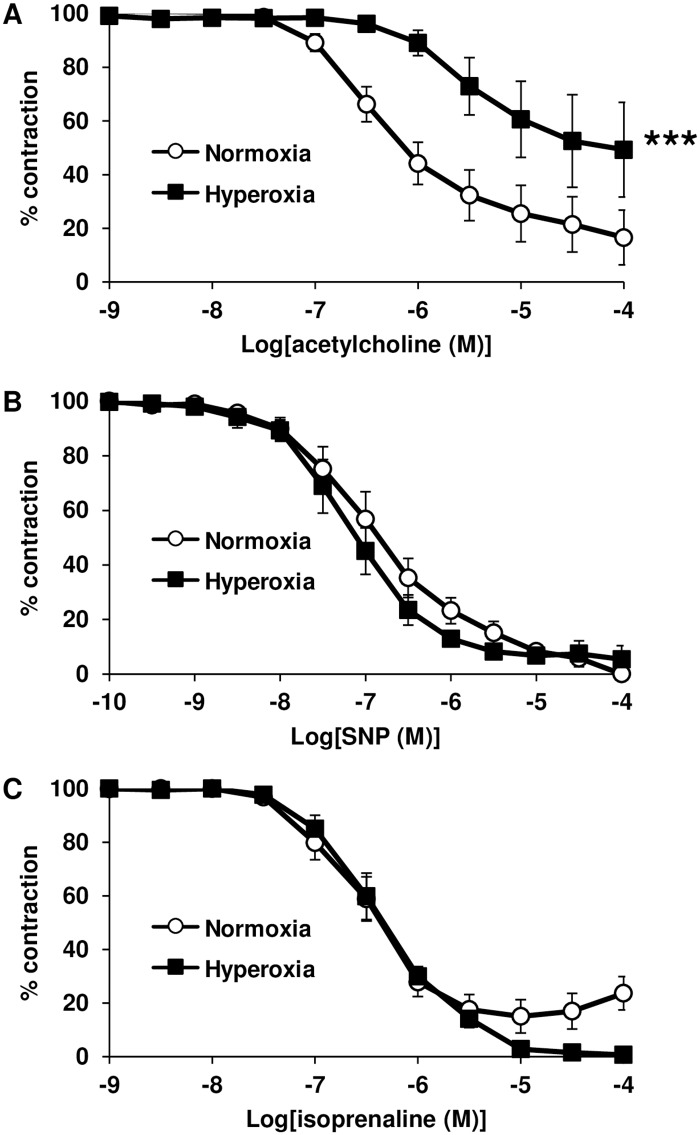
Fig 2. Chronic hyperoxia decreases relaxant response to acetylcholine in intrapulmonary arteries of newborn rats.
(A) Arterial relaxant response to acetylcholine was significantly decreased by hyperoxia (n = 8 vessels from 3 animals) compared with normoxia (n = 15 vessels from 5 animals). (B) Arterial relaxant response to SNP was unaltered by hyperoxia (n = 9 vessels from 3 animals) compared with normoxia (n = 7 vessels from 3 animals). (C) Arterial relaxant response to isoprenaline was unaltered by hyperoxia (n = 8 vessels from 3 animals) compared with normoxia (n = 15 vessels from 5 animals). *** P < 0.001.
Fig 3
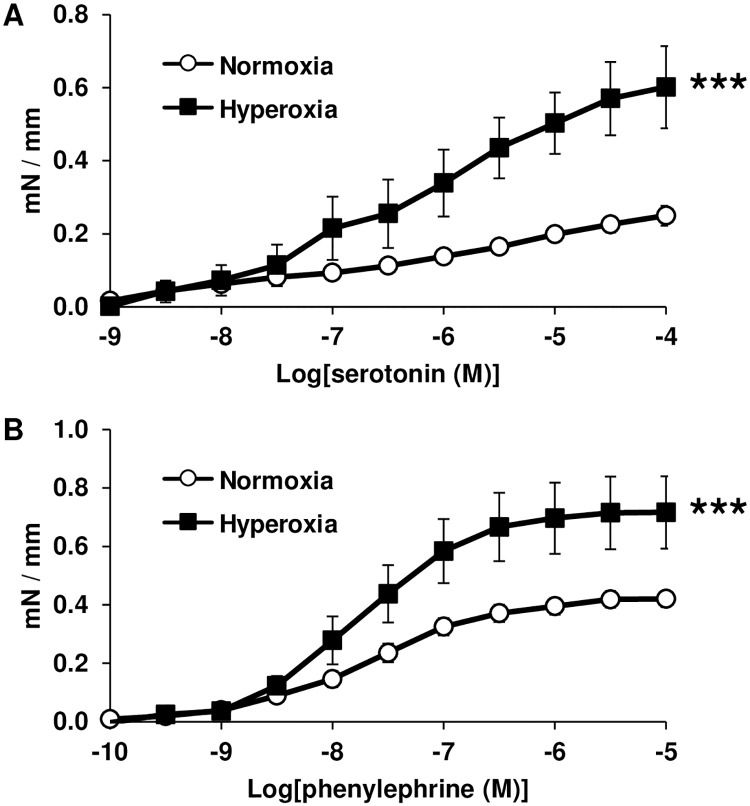
Fig 3. Chronic hyperoxia increases contractile response in intrapulmonary arteries of newborn rats.
(A) Arterial contractile response to serotonin was significantly increased by hyperoxia (n = 8 vessels from 3 animals) compared with normoxia (n = 20 vessels from 6 animals). (B) Arterial contractile response to phenylephrine was significantly increased by hyperoxia (n = 11 vessels from 4 animals) compared with normoxia (n = 20 vessels from 6 animals). *** P < 0.001.
Fig 4
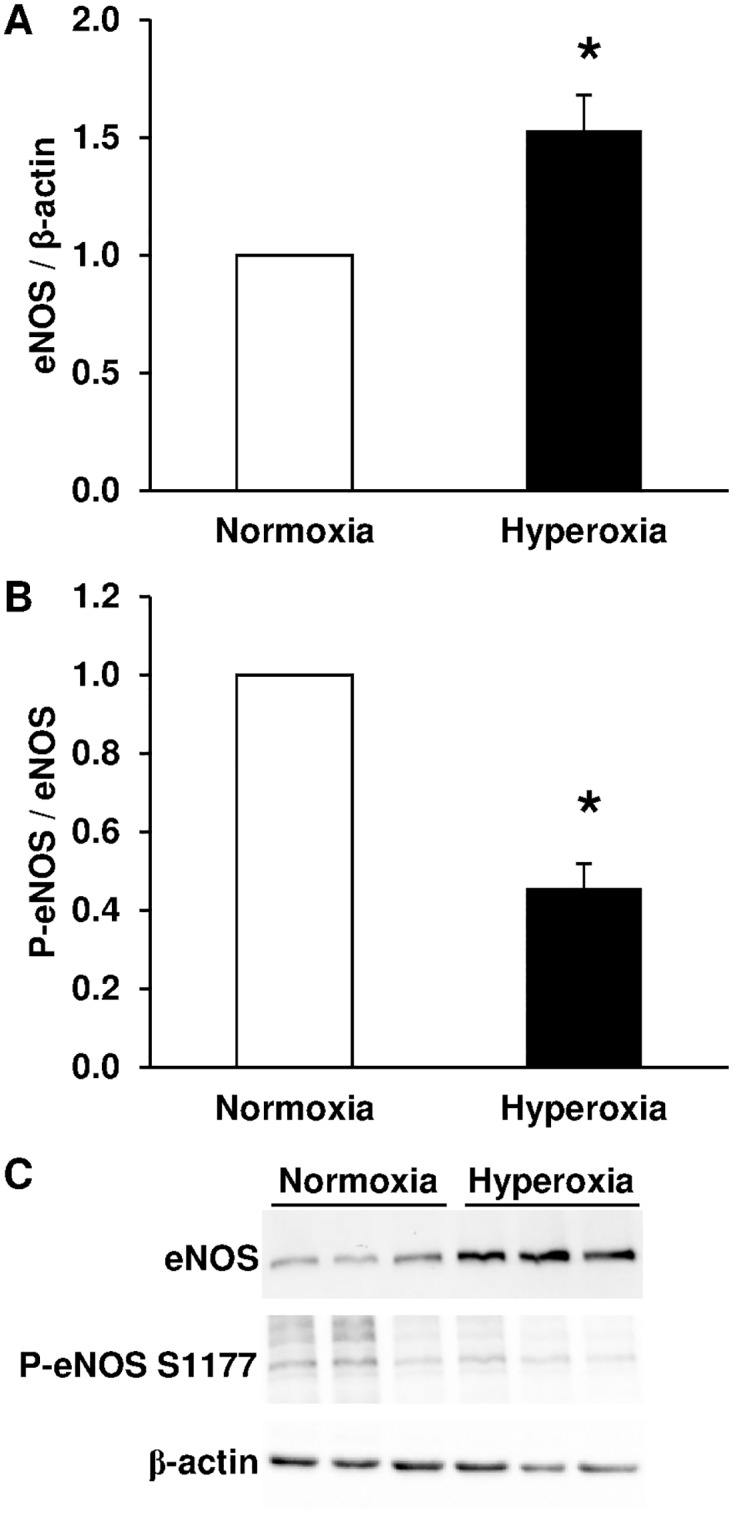
Fig 4. Chronic hyperoxia increases eNOS total expression but decreases eNOS phosphorylation in lungs from newborn rats.
(A) eNOS total expression was significantly increased by hyperoxia (n = 8) compared with normoxia (n = 8). (B) eNOS phosphorylation at Ser1177 was significantly decreased by hyperoxia (n = 8) compared with normoxia (n = 8). (C) Representative Western-blots for total eNOS, eNOS phosphorylation at Ser1177 and β-actin. * P < 0.05.
Fig 5
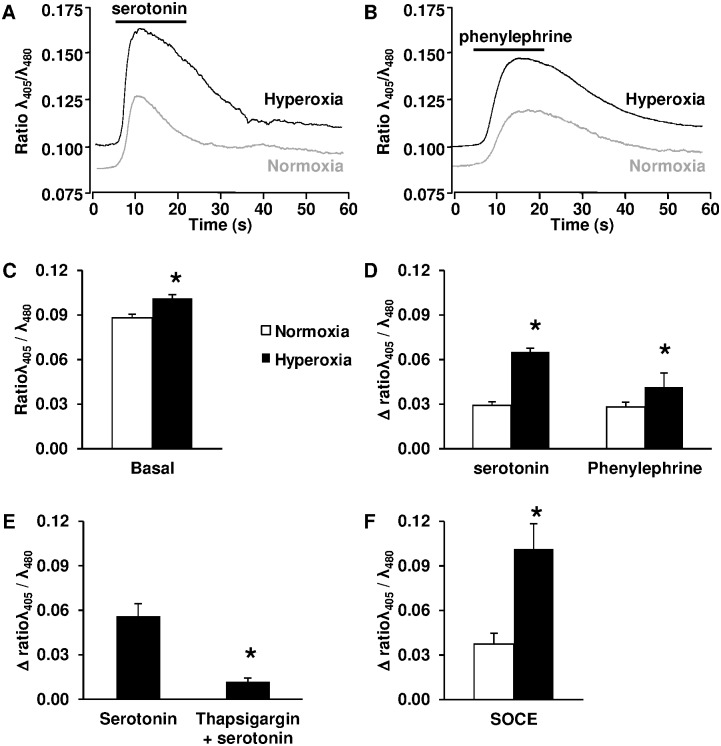
Fig 5. Chronic hyperoxia increases basal [Ca2+]cyt and Ca2+ response in PASMC from newborn rats.
(A) Representative Ca2+ response to serotonin in PASMC. (B) Representative Ca2+ response to phenylephrine in PASMC. (C) Basal [Ca2+]cyt was significantly increased in PASMC from hyperoxic pups (n = 90) compared with normoxia (n = 90). (D) Ca2+ response to serotonin and phenylephrine were significantly increased in PASMC from hyperoxic pups (n = 35 and 20, respectively) compared with PASMC from normoxic pups (n = 33 and 20, respectively). (E) Ca2+ response to serotonin in PASMC from hyperoxic pups was significantly decreased by thapsigargin (n = 6). (F) SOCE was significantly increased in PASMC from hyperoxic pups (n = 11) compared with PASMC from normoxic pups (n = 12). * P < 0.05.

References

    1. Smith LJ, McKay KO, van Asperen PP, Selvadurai H, Fitzgerald DA. Normal development of the lung and premature birth. Paediatr Respir Rev 2010;11: 135–142. 10.1016/j.prrv.2009.12.006 - DOI - PubMed
    1. Baker CD, Alvira CM. Disrupted lung development and bronchopulmonary dysplasia: opportunities for lung repair and regeneration. Curr Opin Pediatr 2014;26: 306–314. 10.1097/MOP.0000000000000095 - DOI - PMC - PubMed
    1. Berkelhamer SK, Mestan KK, Steinhorn RH. Pulmonary hypertension in bronchopulmonary dysplasia. Semin Perinatol 2013;37: 124–131. 10.1053/j.semperi.2013.01.009 - DOI - PMC - PubMed
    1. Bhatt AJ, Pryhuber GS, Huyck H, Watkins RH, Metlay LA, Maniscalco WM. Disrupted pulmonary vasculature and decreased vascular endothelial growth factor, Flt-1, and TIE-2 in human infants dying with bronchopulmonary dysplasia. Am J Respir Crit Care Med 2001;164: 1971–1980. 10.1164/ajrccm.164.10.2101140 - DOI - PubMed
    1. Coalson JJ. Pathology of new bronchopulmonary dysplasia. Semin Neonatol 2003;8: 73–81. - PubMed

MeSH terms