


Early detection and management of symptoms using an interactive smartphone application (Interaktor) during radiotherapy for prostate cancer
- PMID: 28236145
- PMCID: PMC5445148
- DOI: 10.1007/s00520-017-3625-8
Early detection and management of symptoms using an interactive smartphone application (Interaktor) during radiotherapy for prostate cancer
Abstract
Purpose: Patients undergoing radiotherapy for prostate cancer suffer from a variety of symptoms which influence health-related quality of life. We have developed an application (Interaktor) for smartphones and tablets for early detection, reporting and management of symptoms, and concerns during treatment for prostate cancer. The study evaluates the effect on symptom burden and quality of life when using the application for real-time symptom assessment and management during radiotherapy for localized prostate cancer.
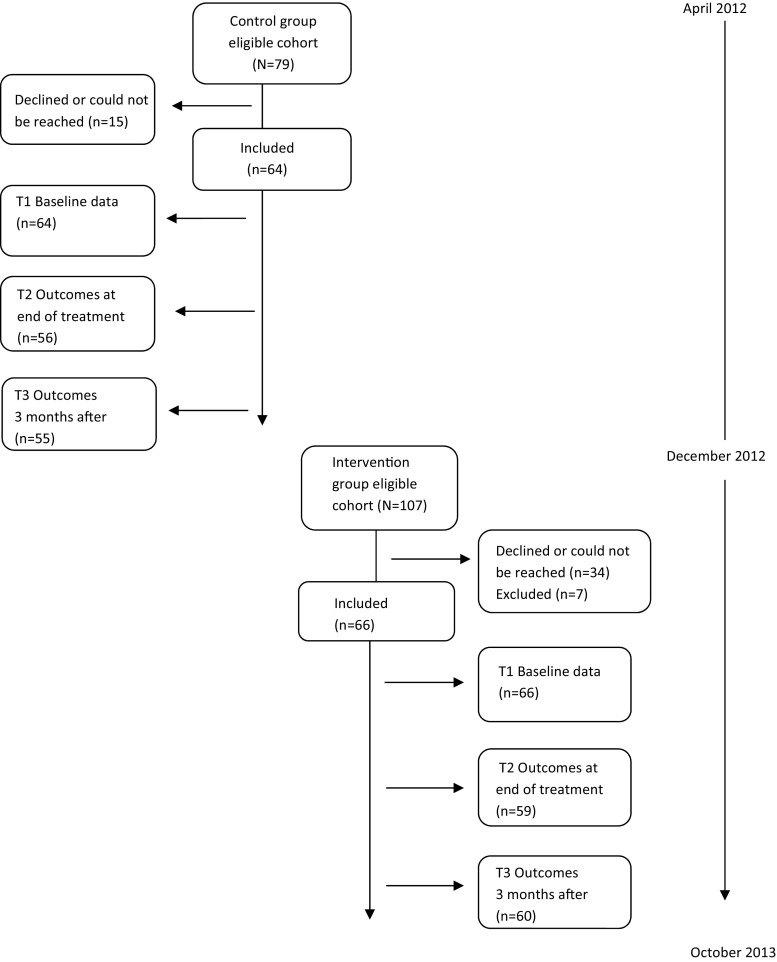
Methods: A non-randomized controlled study was used at two university hospitals in Sweden where 64 patients constituted a control group and 66 patients made up an intervention group. The intervention group was asked to report symptoms via the application daily during the treatment as well as 3 weeks after. The EORTC QLQ-C30 and its module PR25 and the Sense of Coherence questionnaire were administered at three time points in both groups.
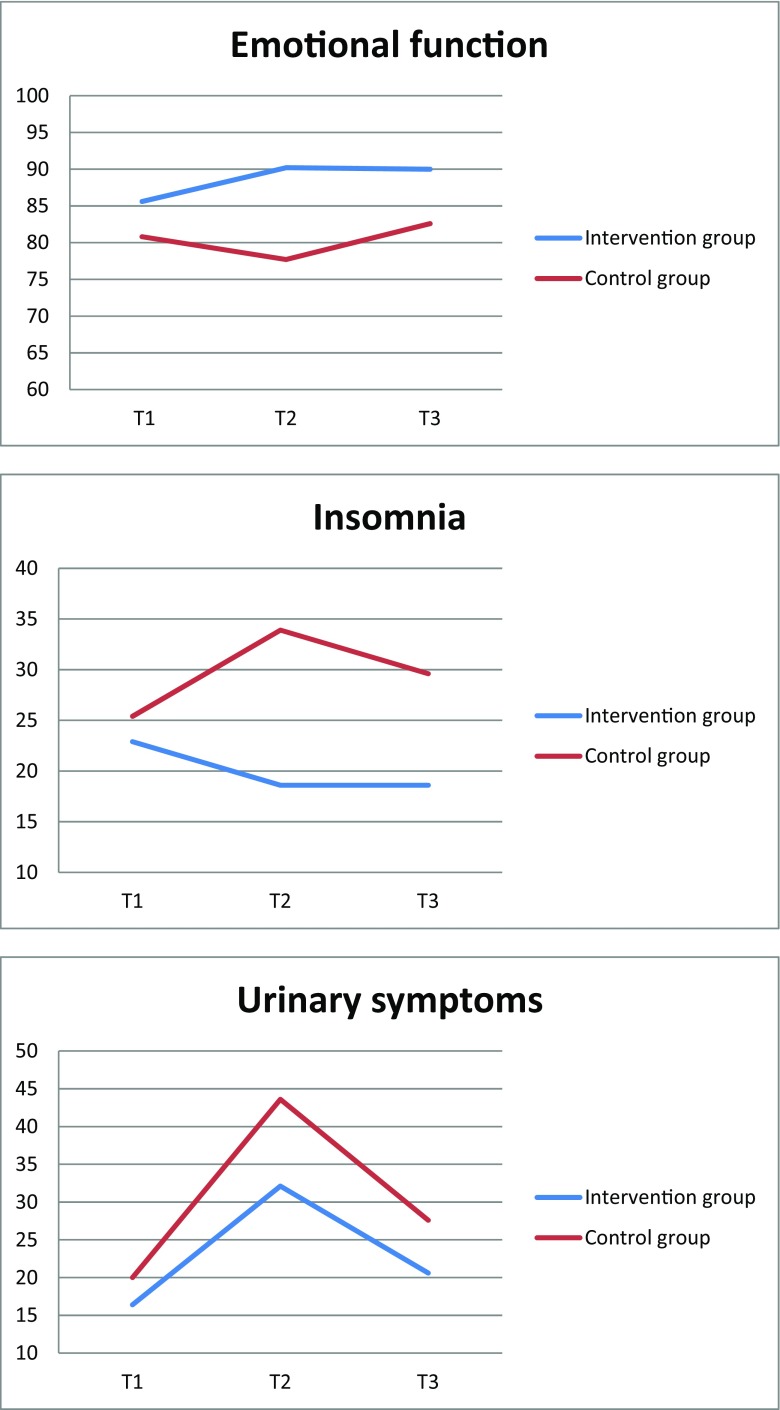
Results: The intervention group rated significantly lower levels of fatigue and nausea at the end of radiotherapy. Moreover, they had significantly less burden in emotional functioning, insomnia, and urinary-related symptoms at the end of treatment as well as 3 months later compared with the control group. In the multivariate analyses, with education and sense of coherence as covariates, the intervention group still significantly rated emotional functioning (p = 0.007), insomnia (p = 0.017), and urinary-related symptoms (p = 0.008) as better than the control group at T2.
Conclusion: Study findings suggest that Interaktor could be an efficient mHealth tool for facilitating supportive care needs during cancer treatment.
Keywords: Interactive smartphone application; Prostate cancer; Radiotherapy; Symptom management; Symptom reporting.
Conflict of interest statement
The authors declare that they have no conflicts of interest. The first author has full control of all primary data and agrees to allow the journal to review the data if requested.
Figures
References
-
- LaSpina M, Haas GP. Update on the diagnosis and management of prostate cancer. Can J Urol. 2008;15(Suppl 1):3–13. - PubMed
-
- Fransson P, Lund JA, Damber JE, Klepp O, Wiklund F, Fossa S, Widmark A, Scandinavian Prostate Cancer Group S. Swedish Association for Urological O Quality of life in patients with locally advanced prostate cancer given endocrine treatment with or without radiotherapy: 4-year follow-up of SPCG-7/SFUO-3, an open-label, randomised, phase III trial. Lancet Oncol. 2009;10(4):370–380. doi: 10.1016/S1470-2045(09)70027-0. - DOI - PubMed
-
- Blomberg K, Wengström Y, Sundberg K, Browall M, Isaksson AK, Nyman MH, Langius-Eklöf A. Symptoms and self-care strategies during and six months after radiotherapy for prostate cancer - scoping the perspectives of patients, professionals and literature. Eur J Oncol Nurs. 2016;21:139–145. doi: 10.1016/j.ejon.2015.09.004. - DOI - PubMed
MeSH terms
LinkOut - more resources
Full Text Sources
Other Literature Sources
Medical
