


Reward processing and mood-related symptoms: An RDoC and translational neuroscience perspective
- PMID: 28237133
- PMCID: PMC6661152
- DOI: 10.1016/j.jad.2017.02.001
Reward processing and mood-related symptoms: An RDoC and translational neuroscience perspective
Abstract
Background: Two objectives of the NIMH Research Domain Criteria (RDoC) initiative are to identify (a) mechanisms that are common to multiple psychiatric disorders, and (b) mechanisms that are unique to specific psychiatric symptoms, and that reflect markers of differential risk for these symptoms. With respect to these objectives, a brain-behavior dimension that has received considerable attention and that is directly relevant to the Positive Valence Systems domain of the RDoC initiative involves reward processing.
Methods: The present review paper first examines the relationship between reward processing and mood-related symptoms from an RDoC perspective. We then place this work in a larger context by examining the relationship between reward processing abnormalities and psychiatric symptoms defined broadly, including mood-related symptoms, schizophrenia, and addiction.
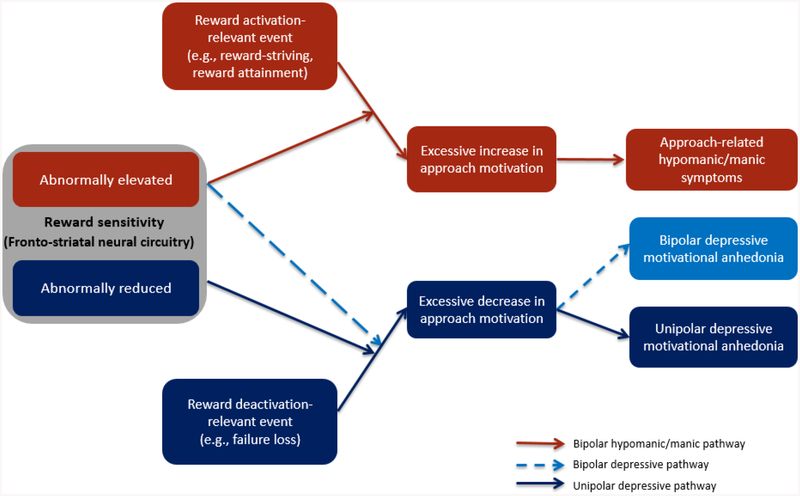
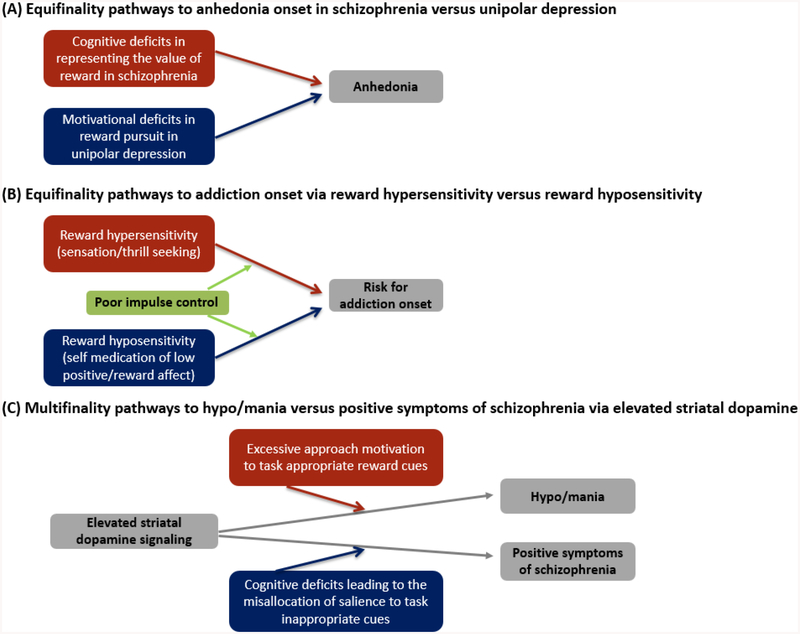
Results: Our review suggests that reward hyposensitivity relates to a subtype of anhedonia characterized by motivational deficits in unipolar depression, and reward hypersensitivity relates to a cluster of hypo/manic symptoms characterized by excessive approach motivation in the context of bipolar disorder. Integrating this perspective with research on reward processing abnormalities in schizophrenia and addiction, we further argue that the principles of equifinality and multifinality may be preferable to a transdiagnostic perspective for conceptualizing the relationship between reward processing and psychiatric symptoms defined broadly.
Conclusion: We propose that vulnerability to either motivational anhedonia or approach-related hypo/manic symptoms involve extreme and opposite profiles of reward processing. We further propose that an equifinality and multifinality perspective may serve as a useful framework for future research on reward processing abnormalities and psychiatric symptoms.
Keywords: Anhedonia; Approach-motivation; Dopamine; Hypo/mania; RDoC; Reward processing.
Copyright © 2017. Published by Elsevier B.V.
Figures
References
-
- Abler B, Erk S, & Walter H (2007). Human reward system activation is modulated by a single dose of olanzapine in healthy subjects in an event-related, double-blind, placebo-controlled fMRI study. Psychopharmacology, 191, 823–833. - PubMed
-
- Allen JJ, Iacono WG, Depue RA, & Arbisi P (1993). Regional electroencephalographic asymmetries in bipolar seasonal affective disorder before and after exposure to bright light. Biological Psychiatry, 33, 642–646. - PubMed
-
- Alloy LB, Abramson LY, Urošević S, Walshaw PD, Nusslock R, & Neeren AM (2005). The psychosocial context of bipolar disorder: Environmental, cognitive, and developmental risk factors. Clinical Psychology Review, 25, 1043–1075. - PubMed
Publication types
MeSH terms
Grants and funding
LinkOut - more resources
Full Text Sources
Other Literature Sources
Medical
