


Acquisition of Involuntary Spinal Locomotion (Spinal Walking) in Dogs with Irreversible Thoracolumbar Spinal Cord Lesion: 81 Dogs
- PMID: 28238221
- PMCID: PMC5354022
- DOI: 10.1111/jvim.14651
Acquisition of Involuntary Spinal Locomotion (Spinal Walking) in Dogs with Irreversible Thoracolumbar Spinal Cord Lesion: 81 Dogs
Abstract
Background: Spinal walking (SW) is described as the acquisition of an involuntary motor function in paraplegic dogs and cats without pain perception affected by a thoracolumbar lesion. Whereas spinal locomotion is well described in cats that underwent training trials after experimental spinal cord resection, less consistent information is available for dogs.
Hypothesis: Paraplegic dogs affected by a thoracolumbar complete spinal cord lesion undergoing intensive physical rehabilitation could acquire an autonomous SW gait under field conditions.
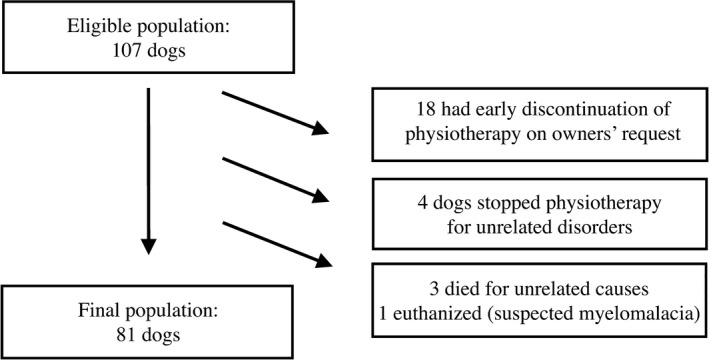
Animals: Eighty-one acute paraplegic thoracolumbar dogs without pelvic limb pain perception.
Methods: Retrospective study of medical records of dogs selected for intensive rehabilitation treatment in paraplegic dogs with absence of pain perception on admission and during the whole treatment. Binary regression and multivariate logistic regression were used to analyze potential associations with the development of SW.
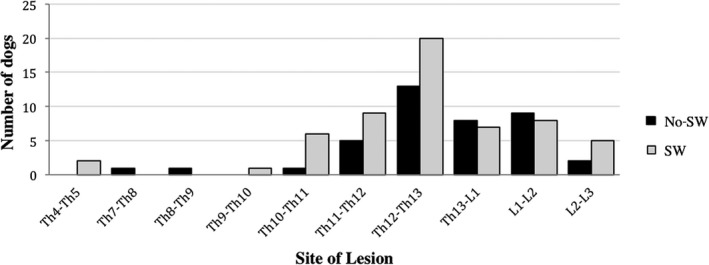
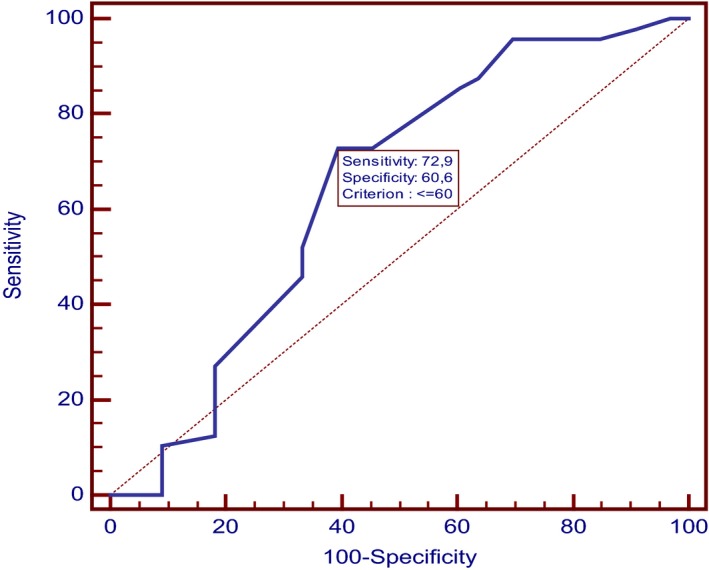
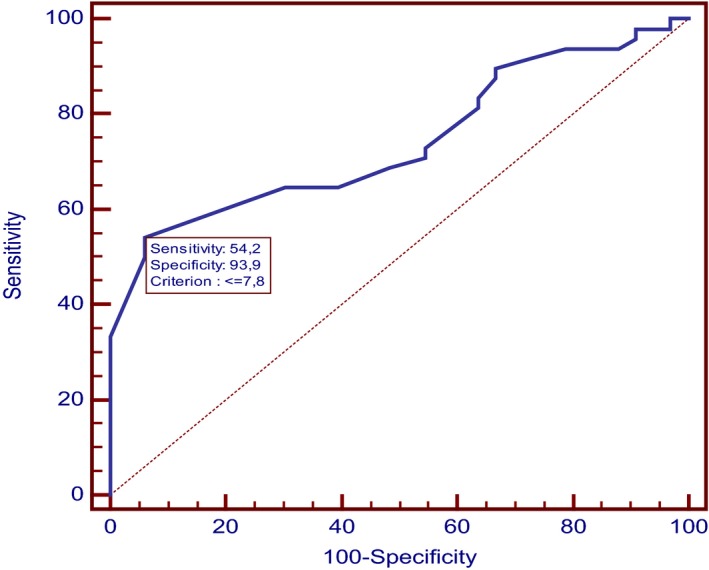
Results: Autonomous SW was achieved in 48 dogs (59%). Median time to achieve SW was of 75.5 days (range: 16-350 days). On univariate analysis, SW gait was associated with younger age (P = .002) and early start of physiotherapy (P = .024). Multivariate logistic regression showed that younger age (≤60 months) and lightweight (≤7.8 kg) were positively associated with development of SW (P = .012 and P < .001, respectively). BCS, full-time hospitalization, and type and site of the lesion were not significantly associated with development of SW.
Conclusions: Dogs with irreversible thoracolumbar lesion undergoing intensive physiotherapic treatment can acquire SW. Younger age and lightweight are positively associated with the development of SW gait.
Keywords: dog; pain perception; paraplegia; physiotherapy.
Copyright © 2017 The Authors. Journal of Veterinary Internal Medicine published by Wiley Periodicals, Inc. on behalf of the American College of Veterinary Internal Medicine.
Figures
References
-
- Olby NJ, Levine J, Harris T, et al. Long‐term functional outcome of dogs with severe injuries of the thoracolumbar spinal cord: 87 cases (1996–2001). J Am Vet Med Assoc 2003;222:762–769. - PubMed
-
- Brisson BA. Intervertebral disc disease in dogs. Vet Clin Small Anim 2010;40:829–858. - PubMed
-
- Ferreira AJA, Correia JHD, Jaggy A. Thoracolumbar disc disease in 71 paraplegic dogs: Influence of rate of onset and duration of clinical signs on treatment results. J Small Anim Pract 2002;43:158–163. - PubMed
-
- Butterworth SJ, Denny HR. Follow‐up study of 100 cases with thoracolumbar disc protrusions treated by lateral fenestration. J Small Anim Pract 1991;32:443–447.
-
- De Lahunta A. General sensory system: General proprioception and general somatic afferent In: De Lahunta A., Glass E., Kent M., ed. Veterinary Neuroanatomy and Clinical Neurology, 4th ed. Philadelphia: Saunders Elsevier; 2015;237–256
MeSH terms
LinkOut - more resources
Full Text Sources
Other Literature Sources
Medical
Miscellaneous
