


Hispanic Mothers' Views of the Fathers' Role in Promoting Healthy Behaviors at Home: Focus Group Findings
- PMID: 28238895
- PMCID: PMC5446926
- DOI: 10.1016/j.jand.2017.01.005
Hispanic Mothers' Views of the Fathers' Role in Promoting Healthy Behaviors at Home: Focus Group Findings
Abstract
Background: Overweight and obesity prevention interventions rarely take into account the unique role of fathers in promoting healthy home environments.
Objective: To use qualitative methodology to examine the views of Hispanic mothers of children aged 2 to 5 years regarding fathers' roles in promoting healthy behaviors at home.
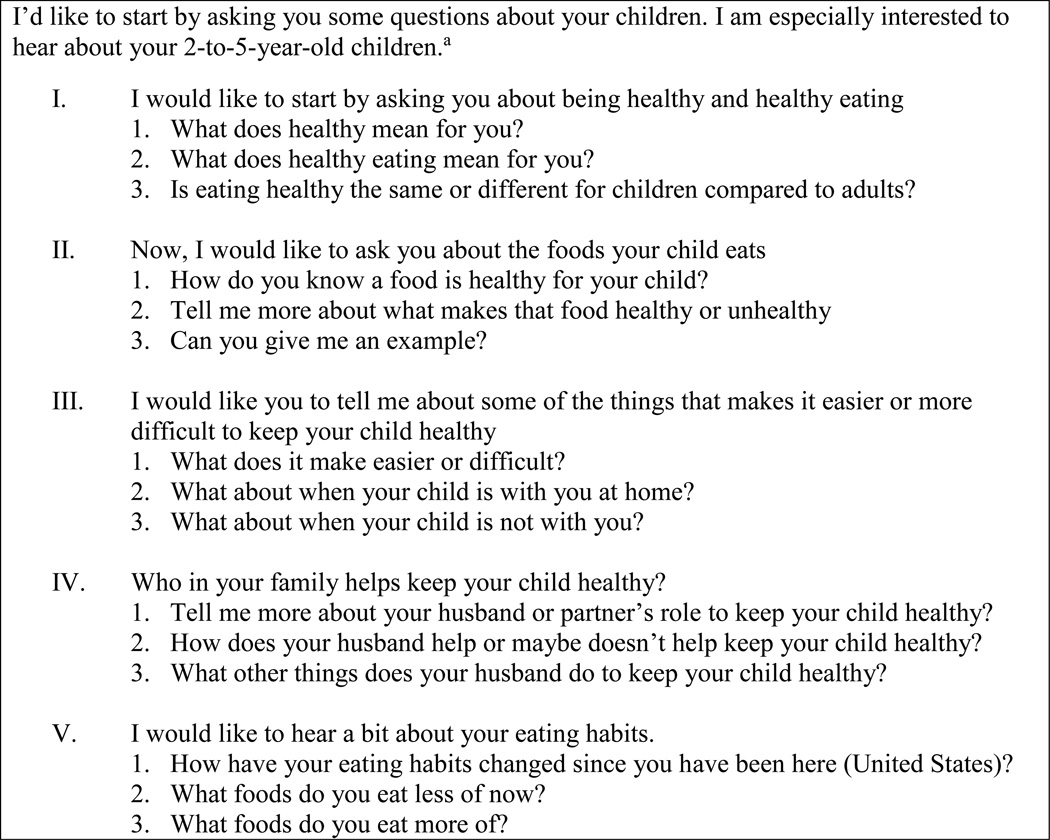
Design: Nine focus groups were conducted in Spanish with Hispanic mothers of preschool-aged children (N=55) from October to December 2015.
Participants/settings: Hispanic mothers were recruited from churches, community agencies, and preschools located in five Zip codes in the southwest part of Oklahoma City, OK.
Analysis: Questions examined the views of Hispanic mothers regarding fathers' roles in promoting healthy behaviors at home. Focus groups were audiorecorded, transcribed in Spanish, translated into English, and coded and analyzed for themes by two coders using NVivo version 10 software.
Results: Four themes were identified: fathers' disagreement with mothers about food preferences and preparation, fathers' support for child's healthy eating, fathers' support for child's physical activity, and fathers' lack of support for a healthy home food environment. Fathers' traditional expectations about the type of foods and portion sizes adults should eat conflicted with mothers' meal preparations. Mothers reported that, although they favored eating low-calorie meals, the meals fathers preferred eating were high-calorie meals (eg, quesadillas). In general, fathers supported healthy eating and physical activity behaviors for their children. Supportive behaviors for children included preparing healthy meals, using healthier cooking methods, grocery shopping with their children for healthy foods, and asking the child to participate in household chores and/or play sports. Fathers' unsupportive behaviors included bringing high-calorie foods, such as pizza, and sugary drinks into the home, using sweets and savory foods for emotion regulation, and displaying an indulgent parental feeding style.
Conclusions: Mothers' views of fathers' perceived roles in child eating and physical activity, and maintaining a healthy eating environment, have important implications for the success of promoting healthy behaviors in the homes of Hispanic families.
Keywords: Family; Fathers; Healthy eating; Hispanic; Preschoolers.
Copyright © 2017 Academy of Nutrition and Dietetics. Published by Elsevier Inc. All rights reserved.
Conflict of interest statement
Conflict of interest: The authors have no conflicts of interest to disclose.
Figures
References
-
- Rosenkranz RR, Dzewaltowski DA. Model of the home food environment pertaining to childhood obesity. Nutr Rev. 2008;66(3):123–140. - PubMed
-
- Evans A, Chow S, Jennings R, et al. Traditional foods and practices of Spanish-speaking Latina mothers influence the home food environment: implications for future interventions. J Am Diet Assoc. 2011;111(7):1031–1038. - PubMed
-
- Dave JM, Evans AE, Pfeiffer KA, Watkins KW, Saunders RP. Correlates of availability and accessibility of fruits and vegetables in homes of low-income Hispanic families. Health Educ Res. 2010;25(1):97–108. - PubMed
MeSH terms
Grants and funding
LinkOut - more resources
Full Text Sources
Other Literature Sources
