


In-The-Moment Dissociation, Emotional Numbing, and Sexual Risk: The Influence of Sexual Trauma History, Trauma Symptoms, and Alcohol Intoxication
- PMID: 28239507
- PMCID: PMC5321660
- DOI: 10.1037/a0039978
In-The-Moment Dissociation, Emotional Numbing, and Sexual Risk: The Influence of Sexual Trauma History, Trauma Symptoms, and Alcohol Intoxication
Abstract
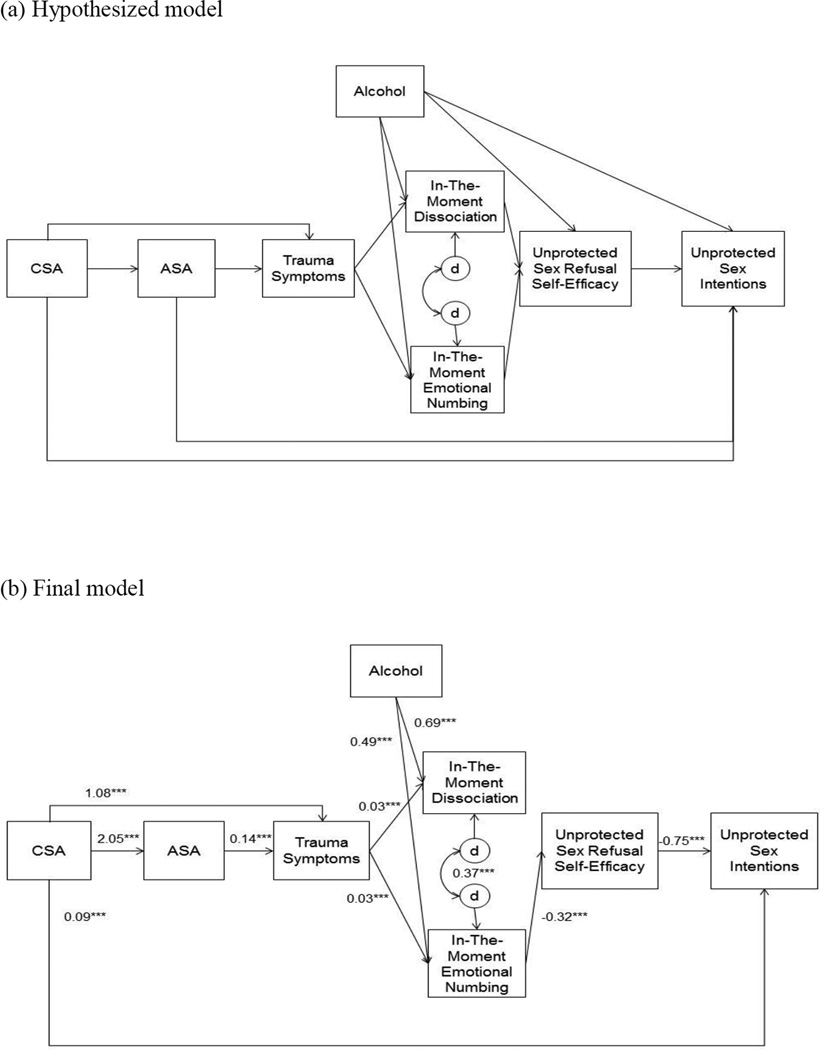
Objective: Prior research on the effects of sexual trauma has examined dissociation but not emotional numbing during sex and has relied exclusively on retrospective surveys. The present experiment examined associations among distal factors of childhood sexual abuse (CSA), adolescent/adult sexual assault (ASA), and trauma symptoms and the proximal factor of acute alcohol intoxication on in-the-moment dissociation, emotional numbing, and sexual risk intentions.
Method: Young adult female drinkers (N = 436) at elevated sexual risk were randomized to receive alcohol (target peak breath alcohol concentration = .10%) or no alcohol. They then read an eroticized sexual scenario and reported on their dissociation and emotional numbing experiences, unprotected sex refusal self-efficacy, and unprotected sex intentions.
Results: Path analysis revealed that CSA was indirectly associated with increased unprotected sex intentions through increased ASA severity, increased trauma-related symptoms, increased emotional numbing, and decreased unprotected sex refusal self-efficacy. Further, alcohol intoxication was indirectly associated with increased unprotected sex intentions through increased emotional numbing and decreased unprotected sex refusal self-efficacy.
Conclusions: Emotional numbing, but not dissociation, was associated with unprotected sex intentions and may be one potential target for interventions aimed at reducing HIV/STI-related risk among women with a history of sexual trauma.
Keywords: Alcohol Intoxication; Childhood Sexual Abuse; Dissociation; Emotional Numbing; HIV/STI Risk; Sexual Assault.
Figures
References
-
- American Psychiatric Association. Diagnostic and statistical manual of mental disorders: DSM-IV-TR. American Psychiatric Association; 2000.
-
- Basile KC, Chen J, Black MC, Saltzman LE. Prevalence and characteristics of sexual violence victimization among U.S. adults, 2001–2003. Violence and Victims. 2007;22:437–448. - PubMed
-
- Bird ER, Seehuus M, Clifton J, Rellini AH. Archives of Sexual Behavior. Advance online publication; 2013. Dec 3, Dissociation during sex and sexual arousal in women with and without a history of childhood sexual abuse. - PubMed
-
- Black MC, Basile KC, Breiding MJ, Smith SG, Walters ML, Merrick MT, …Stevens MR. The National Intimate Partner and Sexual Violence Survey (NISVS): 2010 summary report. Atlanta, GA: National Center for Injury Prevention and Control, Centers for Disease Control and Prevention; 2011. Retrieved from http://www.cdc.gov/violenceprevention/pdf/nisvs_report2010-a.pdf.
-
- Briere J. Trauma Symptom Inventory professional manual. Odessa, FL: Psychological Assessment Resources; 1995.
Grants and funding
LinkOut - more resources
Full Text Sources
Other Literature Sources