


Reproducibility of tract-based white matter microstructural measures using the ENIGMA-DTI protocol
- PMID: 28239525
- PMCID: PMC5318368
- DOI: 10.1002/brb3.615
Reproducibility of tract-based white matter microstructural measures using the ENIGMA-DTI protocol
Abstract
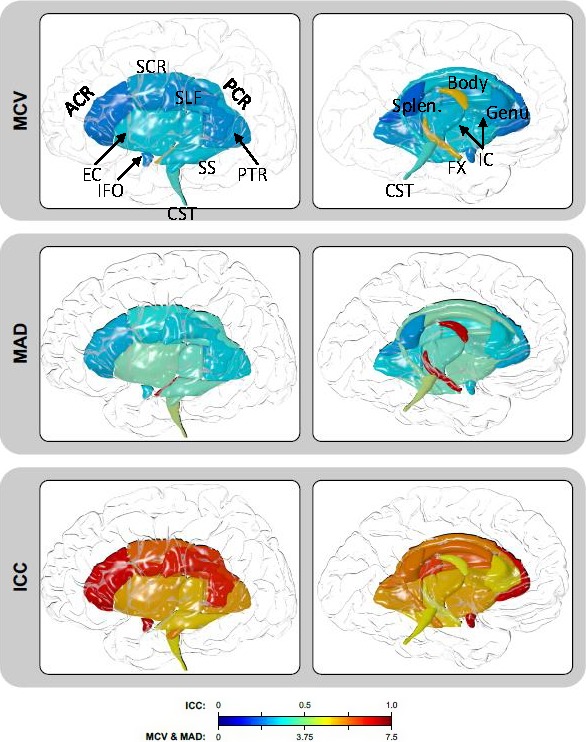
Background: In preparation for longitudinal analyses of white matter development in youths with family histories of substance use disorders (FH+) or without such histories (FH-), we examined the reproducibility and reliability of global and regional measures of fractional anisotropy (FA) values, measured using the Enhancing Neuro Imaging Genetics Through Meta Analysis (ENIGMA)-diffusion tensor imaging (DTI) protocol. Highly reliable measures are necessary to detect any subtle differences in brain development.
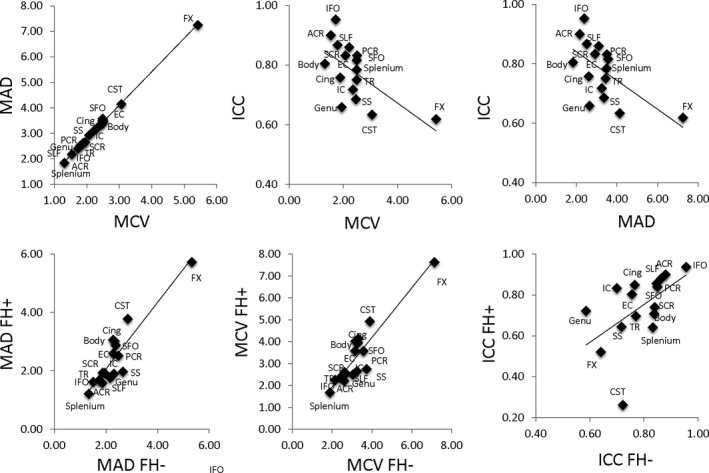
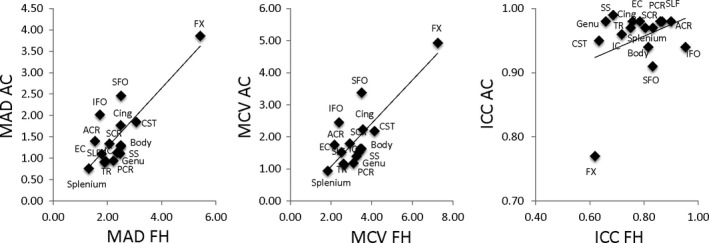
Methods: First, we analyzed reproducibility data in a sample of 12 healthy young adults (ages 20-28) imaged three times within a week. Next, we calculated the same metrics in data collected 1-year apart in the sample of 68 FH+ and 21 FH- adolescents. This is a timeframe where within subject changes in white matter microstructure are small compared to between subject variance. Reproducibility was estimated by examining mean coefficients of variation (MCV), mean absolute differences (MAD), and intraclass correlations (ICC) for global and tract-specific FA values.
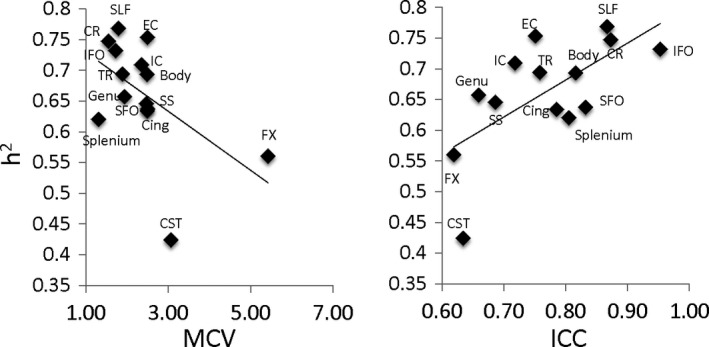
Results: We found excellent reproducibility for whole-brain DTI-FA values and most of the white matter tracts, except for the corticospinal tract and the fornix in both adults and youths. There was no significant effect of FH-group on reproducibility (p = .4). Reproducibility metrics were not significantly different between adolescents and adults (all p > .2). In post hoc analyses, the reproducibility metrics for regional FA values showed a strong positive correlation (r = .6) with the regional FA heritability measures previously reported by ENIGMA-DTI.
Conclusion: Overall, this study demonstrated an excellent reproducibility of ENIGMA-DTI FA, positing it as viable analysis tools for longitudinal studies and other protocols that repeatedly assess white matter microstructure.
Keywords: ENIGMA‐DTI; diffusion tensor imaging; fractional anisotropy; reproducibility; white matter microstructure.
Figures
References
-
- Acheson, A. , Wijtenburg, S. A. , Rowland, L. M. , Bray, B. C. , Gaston, F. , Mathias, C. W. , … Dougherty, D. M. (2014a). Combining diffusion tensor imaging and magnetic resonance spectroscopy to study reduced frontal white matter integrity in youths with family histories of substance use disorders. Human Brain Mapping, 35, 5877–5887. - PMC - PubMed
-
- Bach, M. , Laun, F. B. , Leemans, A. , Tax, C. M. , Biessels, G. J. , Stieltjes, B. , & Maier‐Hein, K. H. (2014). Methodological considerations on tract‐based spatial statistics (TBSS). NeuroImage, 100, 358–369. - PubMed
Publication types
MeSH terms
Grants and funding
LinkOut - more resources
Full Text Sources
Other Literature Sources
Medical
Miscellaneous
