


Ketone Body Infusion With 3-Hydroxybutyrate Reduces Myocardial Glucose Uptake and Increases Blood Flow in Humans: A Positron Emission Tomography Study
- PMID: 28242634
- PMCID: PMC5524028
- DOI: 10.1161/JAHA.116.005066
Ketone Body Infusion With 3-Hydroxybutyrate Reduces Myocardial Glucose Uptake and Increases Blood Flow in Humans: A Positron Emission Tomography Study
Abstract
Background: High levels of ketone bodies are associated with improved survival as observed with regular exercise, caloric restriction, and-most recently-treatment with sodium-glucose linked transporter 2 inhibitor antidiabetic drugs. In heart failure, indices of ketone body metabolism are upregulated, which may improve energy efficiency and increase blood flow in skeletal muscle and the kidneys. Nevertheless, it is uncertain how ketone bodies affect myocardial glucose uptake and blood flow in humans. Our study was therefore designed to test whether ketone body administration in humans reduces myocardial glucose uptake (MGU) and increases myocardial blood flow.
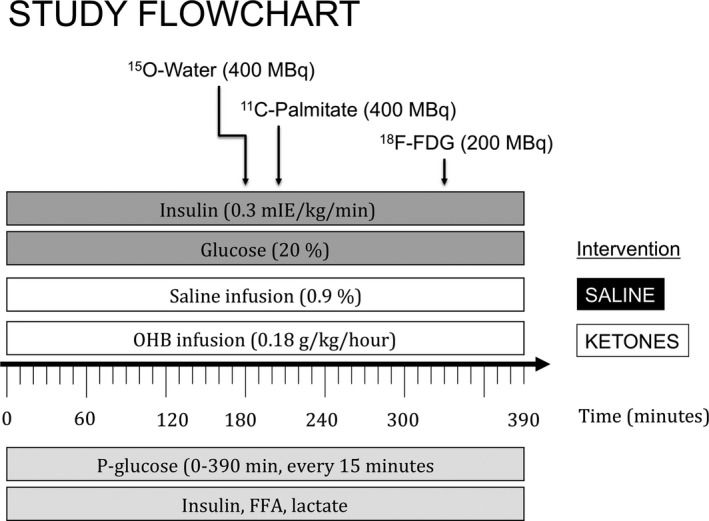
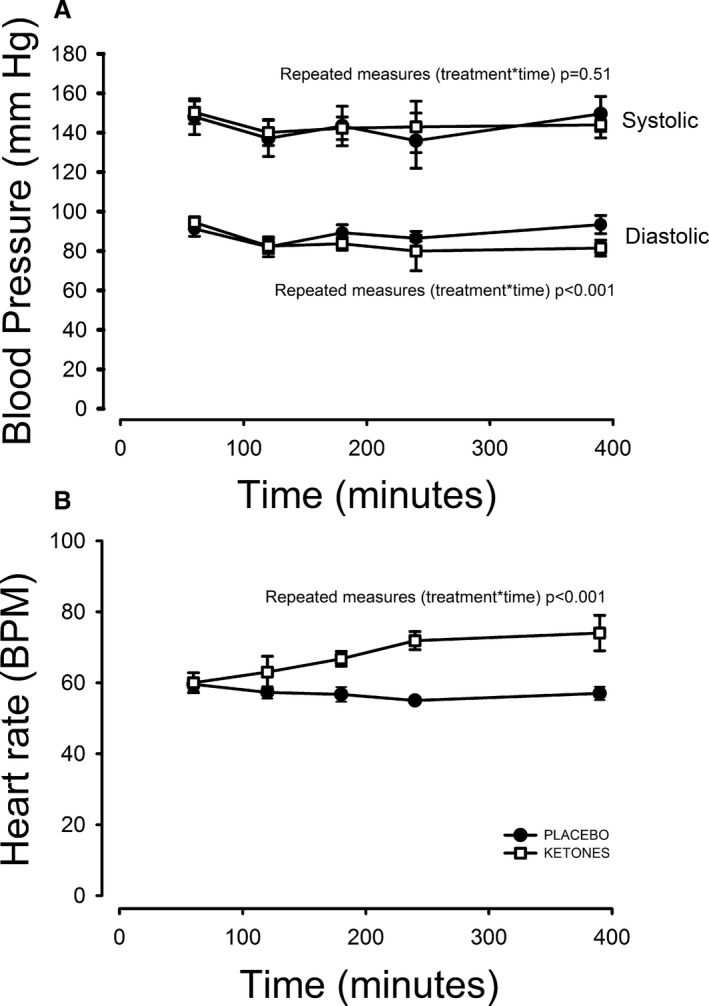
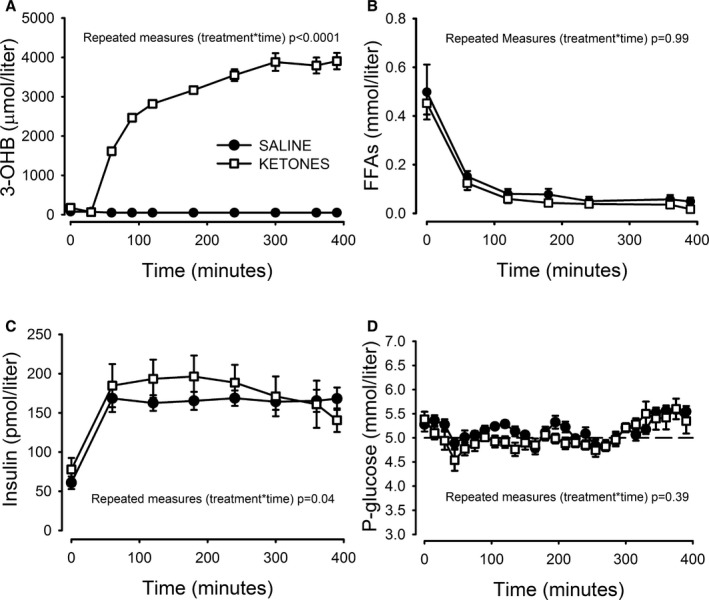
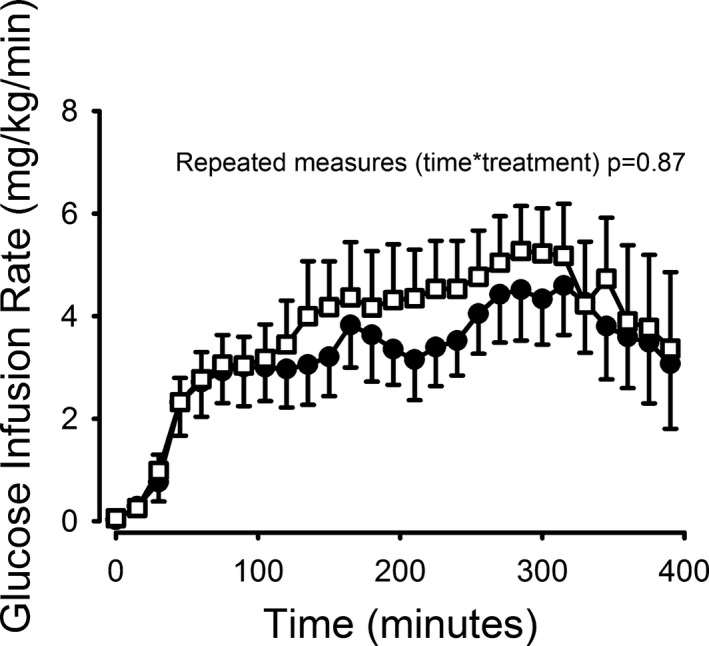
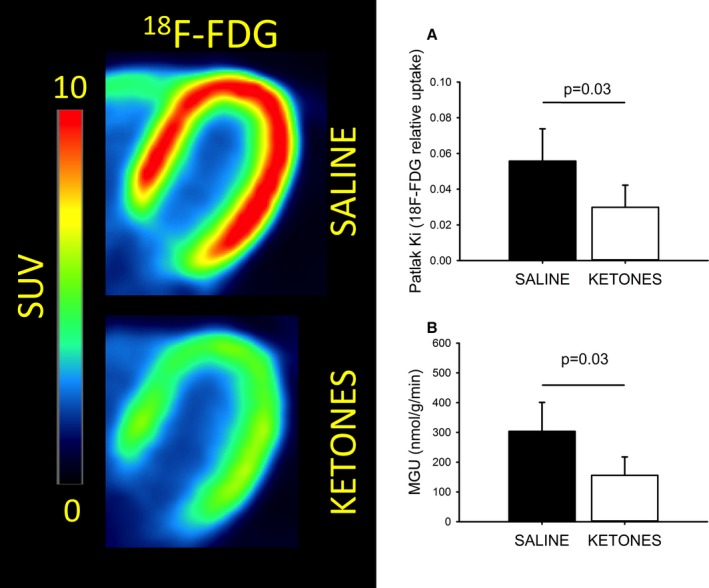
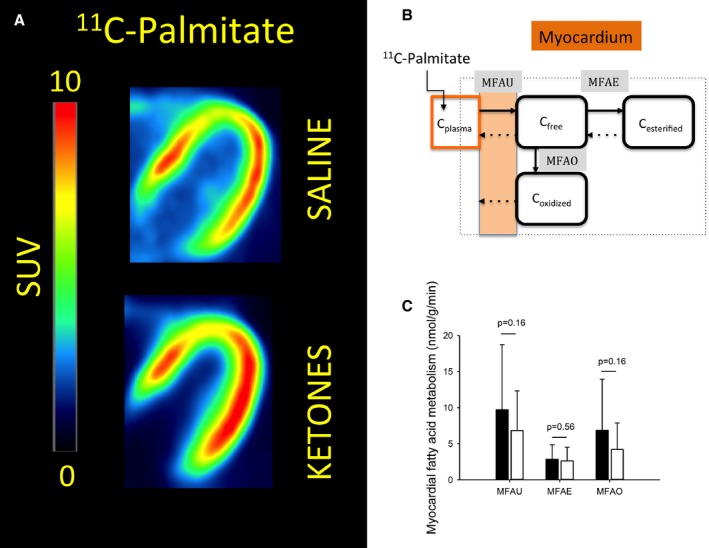
Methods and results: Eight healthy subjects, median aged 60 were randomly studied twice: (1) During 390 minutes infusion of Na-3-hydroxybutyrate (KETONE) or (2) during 390 minutes infusion of saline (SALINE), together with a concomitant low-dose hyperinsulinemic-euglycemic clamp to inhibit endogenous ketogenesis. Myocardial blood flow was measured by 15O-H2O positron emission tomography/computed tomography, myocardial fatty acid metabolism by 11C-palmitate positron emission tomography/computed tomography and MGU by 18F-fluorodeoxyglucose positron emission tomography/computed tomography. Similar euglycemia, hyperinsulinemia, and suppressed free fatty acids levels were recorded on both study days; Na-3-hydroxybutyrate infusion increased circulating Na-3-hydroxybutyrate levels from zero to 3.8±0.5 mmol/L. MGU was halved by hyperketonemia (MGU [nmol/g per minute]: 304±97 [SALINE] versus 156±62 [KETONE], P<0.01), whereas no effects were observed on palmitate uptake oxidation or esterification. Hyperketonemia increased heart rate by ≈25% and myocardial blood flow by 75%.
Conclusions: Ketone bodies displace MGU and increase myocardial blood flow in healthy humans; these novel observations suggest that ketone bodies are important cardiac fuels and vasodilators, which may have therapeutic potentials.
Keywords: 11C‐palmitate; 18F‐fluorodeoxyglucose; cardiac metabolism; hyperketonemia; myocardial glucose uptake; myocardial perfusion; nuclear medicine; positron emission tomography/computed tomography.
© 2017 The Authors. Published on behalf of the American Heart Association, Inc., by Wiley Blackwell.
Figures
References
-
- Ferrannini E, Mark M, Mayoux E. CV protection in the EMPA‐REG Outcome Trial: a “thrifty substrate” hypothesis. Diabetes Care. 2016;39:1108–1114. - PubMed
-
- Cahill GF Jr. Fuel metabolism in starvation. Annu Rev Nutr. 2006;26:1–22. - PubMed
-
- Kashiwaya Y, Sato K, Tsuchiya N, Thomas S, Fell DA, Veech RL, Passonneau JV. Control of glucose utilization in working perfused rat heart. J Biol Chem. 1994;269:25502–25514. - PubMed
-
- Veech RL. The therapeutic implications of ketone bodies: the effects of ketone bodies in pathological conditions: ketosis, ketogenic diet, redox states, insulin resistance, and mitochondrial metabolism. Prostaglandins Leukot Essent Fatty Acids. 2004;70:309–319. - PubMed
MeSH terms
Substances
LinkOut - more resources
Full Text Sources
Other Literature Sources
Medical
