


Acceptability and Preferences among Men and Women for Male Involvement in Antenatal Care
- PMID: 28243473
- PMCID: PMC5294384
- DOI: 10.1155/2017/4758017
Acceptability and Preferences among Men and Women for Male Involvement in Antenatal Care
Abstract
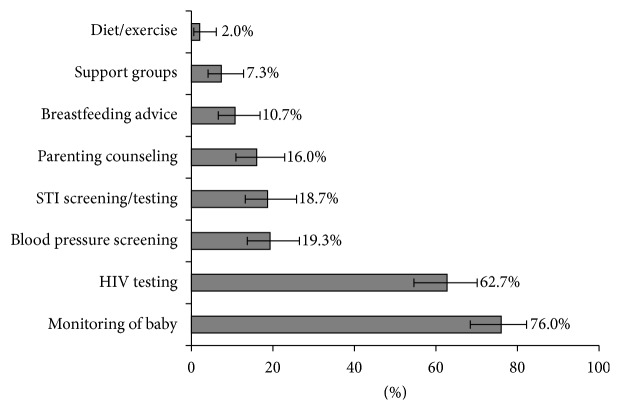
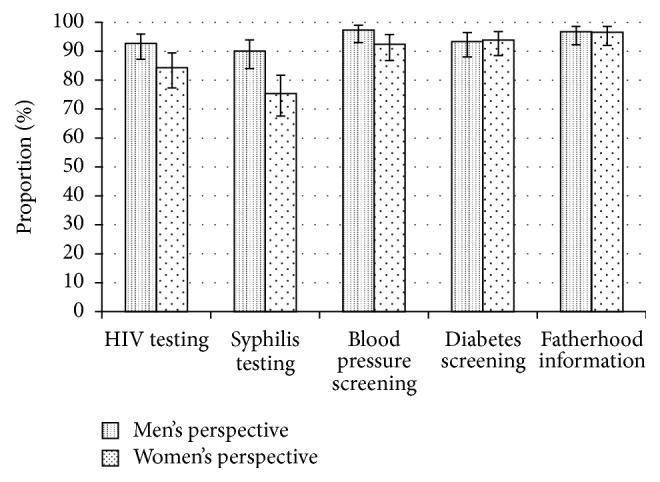
Introduction. Male involvement in antenatal care (ANC) has been associated with improved prevention of mother-to-child transmission outcomes in Sub-Saharan Africa; yet it remains uncommon. We assess acceptability of male involvement from the male and female perspectives and potential incentives for men to attend ANC. Methods. Adult pregnant women and men attending primary healthcare at Witkoppen Health and Welfare Centre in Johannesburg, South Africa, from October 2013 to January 2014, were recruited using stratified random sampling to ensure equal representation across gender and HIV status. Results. 300/332 individuals (93.8%) offered participation consented. Among the 150 women, 97% had a partner; the majority (92%) preferred partner attendance at ANC, and 14% reported partner attendance during this pregnancy. The 150 men had low knowledge of services rendered at ANC outside of pregnancy monitoring, and few (19%) had previously attended ANC. Blood pressure screening, fatherhood information, and HIV testing were identified by men as incentives for attendance. Women and men expressed high willingness to, respectively, deliver (95%) and respond (97%) to ANC letter invitations. Conclusion. Invitation letters to promote male involvement in ANC are highly acceptable to pregnant women and men. Focusing invitation messages on fatherhood and primary healthcare rather than HIV testing may provide greater motivation for male involvement.
Conflict of interest statement
The authors have no competing interests to report.
Figures
References
MeSH terms
Grants and funding
LinkOut - more resources
Full Text Sources
Other Literature Sources
Medical
