


Anterior hippocampal dysconnectivity in posttraumatic stress disorder: a dimensional and multimodal approach
- PMID: 28244983
- PMCID: PMC5545643
- DOI: 10.1038/tp.2017.12
Anterior hippocampal dysconnectivity in posttraumatic stress disorder: a dimensional and multimodal approach
Abstract
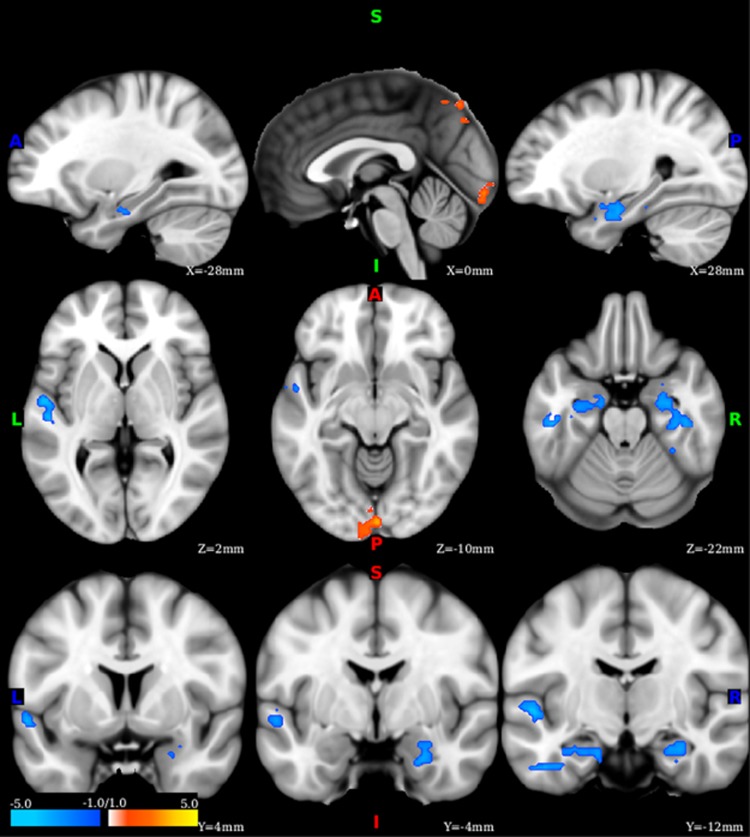
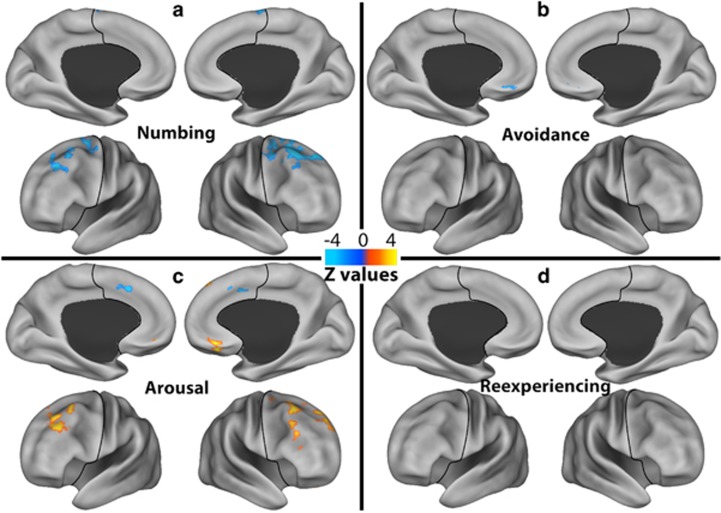
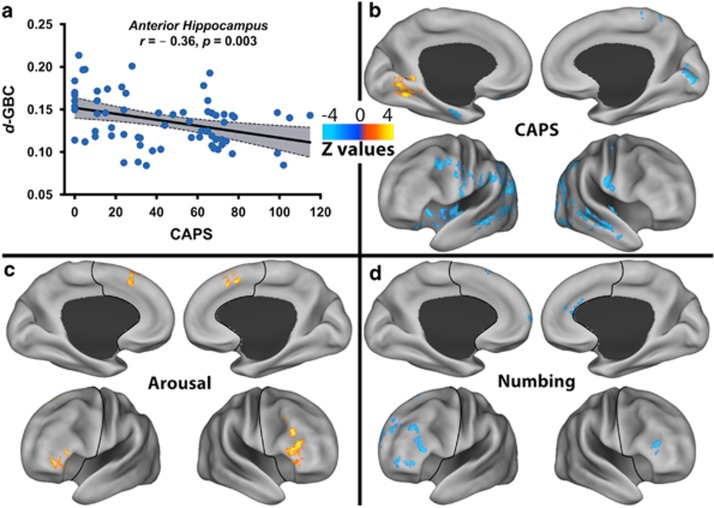
The anterior hippocampus (aHPC) has a central role in the regulation of anxiety-related behavior, stress response, emotional memory and fear. However, little is known about the presence and extent of aHPC abnormalities in posttraumatic stress disorder (PTSD). In this study, we used a multimodal approach, along with graph-based measures of global brain connectivity (GBC) termed functional GBC with global signal regression (f-GBCr) and diffusion GBC (d-GBC), in combat-exposed US Veterans with and without PTSD. Seed-based aHPC anatomical connectivity analyses were also performed. A whole-brain voxel-wise data-driven investigation revealed a significant association between elevated PTSD symptoms and reduced medial temporal f-GBCr, particularly in the aHPC. Similarly, aHPC d-GBC negatively correlated with PTSD severity. Both functional and anatomical aHPC dysconnectivity measures remained significant after controlling for hippocampal volume, age, gender, intelligence, education, combat severity, depression, anxiety, medication status, traumatic brain injury and alcohol/substance comorbidities. Depression-like PTSD dimensions were associated with reduced connectivity in the ventromedial and dorsolateral prefrontal cortex. In contrast, hyperarousal symptoms were positively correlated with ventromedial and dorsolateral prefrontal connectivity. We believe the findings provide first evidence of functional and anatomical dysconnectivity in the aHPC of veterans with high PTSD symptomatology. The data support the putative utility of aHPC connectivity as a measure of overall PTSD severity. Moreover, prefrontal global connectivity may be of clinical value as a brain biomarker to potentially distinguish between PTSD subgroups.
Conflict of interest statement
CGA has served as consultant and/or on advisory boards for Genentech and Janssen. JHK is a consultant for AbbVie, Amgen, Astellas Pharma Global Development, AstraZeneca Pharmaceuticals, Biomedisyn Corporation, Bristol-Myers Squibb, Eli Lilly and Company, Euthymics Bioscience, Neurovance, FORUM Pharmaceuticals, Janssen Research & Development, Lundbeck Research USA, Novartis Pharma AG, Otsuka America Pharmaceutical, Sage Therapeutics, Sunovion Pharmaceuticals and Takeda Industries; is on the Scientific Advisory Board for Lohocla Research Corporation, Mnemosyne Pharmaceuticals, Naurex and Pfizer; is a stockholder in Biohaven Medical Sciences; holds stock options in Mnemosyne Pharmaceuticals; holds patents for Dopamine and Noradrenergic Reuptake Inhibitors in Treatment of Schizophrenia, US Patent No. 5,447,948 (issued 5 September 1995), and Glutamate Modulating Agents in the Treatment of Mental Disorders, US Patent No. 8778979 (issued 15 July 2014); and filed a patent for Intranasal Administration of Ketamine to Treat Depression, US Application No. 14/197767 (filed on 5 March 2014); US application or Patent Cooperation Treaty international application No. 14/306382 (filed on 17 June 2014). The remaining authors declare no conflict of interest.
Figures
References
-
- Bullmore E, Sporns O. Complex brain networks: graph theoretical analysis of structural and functional systems. Nat Rev Neurosci 2009; 10: 186–198. - PubMed
-
- Koch SB, van Zuiden M, Nawijn L, Frijling JL, Veltman DJ, Olff M. Aberrant Resting-state brain activity in posttraumatic stress disorder: a meta-analysis and systematic review. Depress Anxiety 2016; 33: 592–605. - PubMed
Publication types
MeSH terms
Grants and funding
LinkOut - more resources
Full Text Sources
Other Literature Sources
Medical
