


Harmful Effects of Hyperoxia in Postcardiac Arrest, Sepsis, Traumatic Brain Injury, or Stroke: The Importance of Individualized Oxygen Therapy in Critically Ill Patients
- PMID: 28246487
- PMCID: PMC5299175
- DOI: 10.1155/2017/2834956
Harmful Effects of Hyperoxia in Postcardiac Arrest, Sepsis, Traumatic Brain Injury, or Stroke: The Importance of Individualized Oxygen Therapy in Critically Ill Patients
Abstract
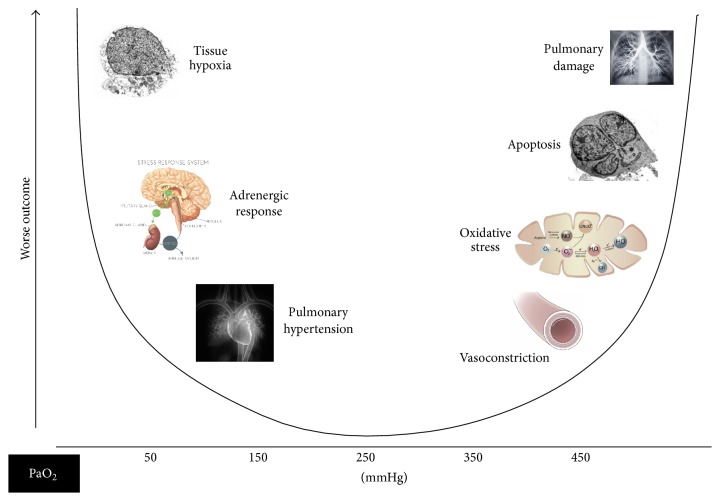
The beneficial effects of oxygen are widely known, but the potentially harmful effects of high oxygenation concentrations in blood and tissues have been less widely discussed. Providing supplementary oxygen can increase oxygen delivery in hypoxaemic patients, thus supporting cell function and metabolism and limiting organ dysfunction, but, in patients who are not hypoxaemic, supplemental oxygen will increase oxygen concentrations into nonphysiological hyperoxaemic ranges and may be associated with harmful effects. Here, we discuss the potentially harmful effects of hyperoxaemia in various groups of critically ill patients, including postcardiac arrest, traumatic brain injury or stroke, and sepsis. In all these groups, there is evidence that hyperoxia can be harmful and that oxygen prescription should be individualized according to repeated assessment of ongoing oxygen requirements.
Conflict of interest statement
The authors declare that there are no competing interests regarding the publication of this paper.
Figures
References
-
- Parke R. L., Eastwood G. M., McGuinness S. P. Oxygen therapy in non-intubated adult intensive care patients: a point prevalence study. Critical Care and Resuscitation. 2013;15(4):287–293. - PubMed
Publication types
MeSH terms
Substances
LinkOut - more resources
Full Text Sources
Other Literature Sources
Medical
