. 2017 Mar 1;13(3):e1006651.
doi: 10.1371/journal.pgen.1006651. eCollection 2017 Mar.

A de novo variant in the ASPRV1 gene in a dog with ichthyosis

Affiliations

A de novo variant in the ASPRV1 gene in a dog with ichthyosis

Anina Bauer et al. PLoS Genet. .

Abstract

Ichthyoses are a heterogeneous group of inherited cornification disorders characterized by generalized dry skin, scaling and/or hyperkeratosis. Ichthyosis vulgaris is the most common form of ichthyosis in humans and caused by genetic variants in the FLG gene encoding filaggrin. Filaggrin is a key player in the formation of the stratum corneum, the uppermost layer of the epidermis and therefore crucial for barrier function. During terminal differentiation of keratinocytes, the precursor profilaggrin is cleaved by several proteases into filaggrin monomers and eventually processed into free amino acids contributing to the hydration of the cornified layer. We studied a German Shepherd dog with a novel form of ichthyosis. Comparing the genome sequence of the affected dog with 288 genomes from genetically diverse non-affected dogs we identified a private heterozygous variant in the ASPRV1 gene encoding "aspartic peptidase, retroviral-like 1", which is also known as skin aspartic protease (SASPase). The variant was absent in both parents and therefore due to a de novo mutation event. It was a missense variant, c.1052T>C, affecting a conserved residue close to an autoprocessing cleavage site, p.(Leu351Pro). ASPRV1 encodes a retroviral-like protease involved in profilaggrin-to-filaggrin processing. By immunofluorescence staining we showed that the filaggrin expression pattern was altered in the affected dog. Thus, our findings provide strong evidence that the identified de novo variant is causative for the ichthyosis in the affected dog and that ASPRV1 plays an essential role in skin barrier formation. ASPRV1 is thus a novel candidate gene for unexplained human forms of ichthyoses.


Conflict of interest statement

The authors have declared that no competing interests exist.

Figures
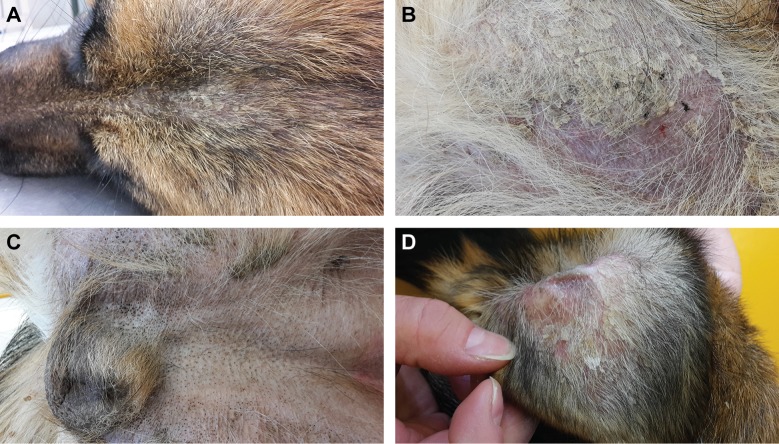
Fig 1
Fig 1. Clinical phenotype of the affected German Shepherd.
(A) Hypotrichosis and scaly skin. (B) Alopecic region of the thigh with erythema and scales. (C) Comedones in the inguinal region. (D) Pinna with scales and erythema.
Fig 2
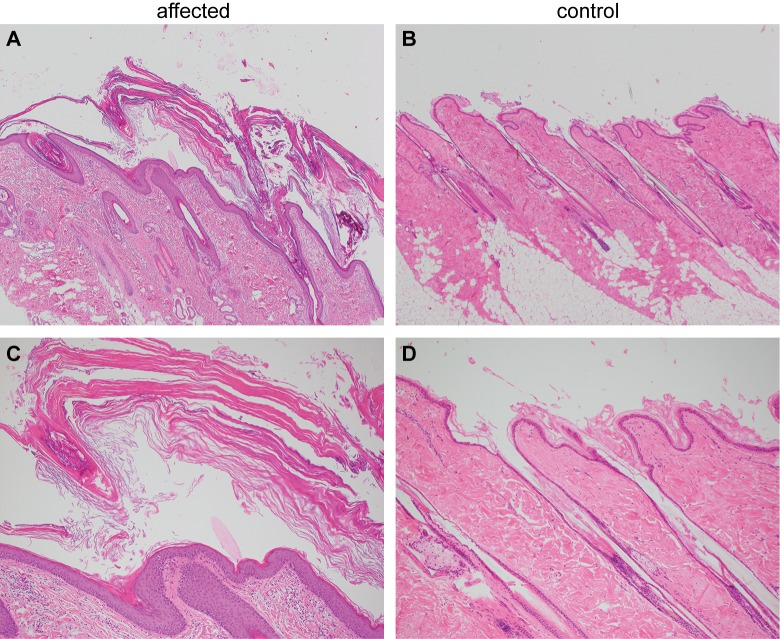
Fig 2. Histopathological findings in skin of the ichthyotic dog and a control dog.
(A) Skin of the ichthyotic dog with severe laminar to compact orthokeratotic hyperkeratosis extending in the follicular infundibula and covering a mildly hyperplastic epidermis. Hematoxylin and Eosin 40x. (B) Skin of a normal dog with normal thickness of the epidermis covered by basket-weave orthokeratotic keratin. Hematoxylin and Eosin 40x. (C,D) Skin sections of the same dogs as in A and B at higher magnification (100x).
Fig 3
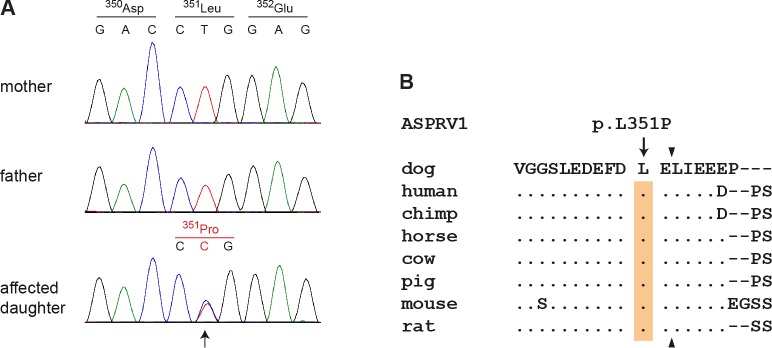
Fig 3. Sanger electropherograms of the ASPRV1:c.1052T>C variant and evolutionary conservation of leucine 351 in the ASPRV1 protein.
(A) A genomic ASPRV1 fragment was amplified by PCR and sequenced with the Sanger method. The figure shows genotypes of the affected daughter and both her non-affected parents. The position of the variant is indicated by an arrow. Note that the variant C-allele is only present in the daughter, but absent from both parents indicating a de novo mutation event. (B) The leucine residue at position 351 of the canine ASPRV1 protein is strictly conserved in several species and located close to the C-terminal auto cleavage site, which is indicated by arrowheads. The multiple alignment was done using accessions XP_013972931.1 (Canis lupus familiaris), NP_690005.2 (Homo sapiens), XP_525777.1 (Pan troglodytes), XP_014586589.1 (Equus caballus), XP_003586694.1 (Bos taurus), XP_003354829.2 (Sus scrofa), NP_080690.2 (Mus musculus) and XP_008761336.1 (Rattus norwegicus). A full-length alignment of the proteins from selected species is given in S1 Fig.
Fig 4
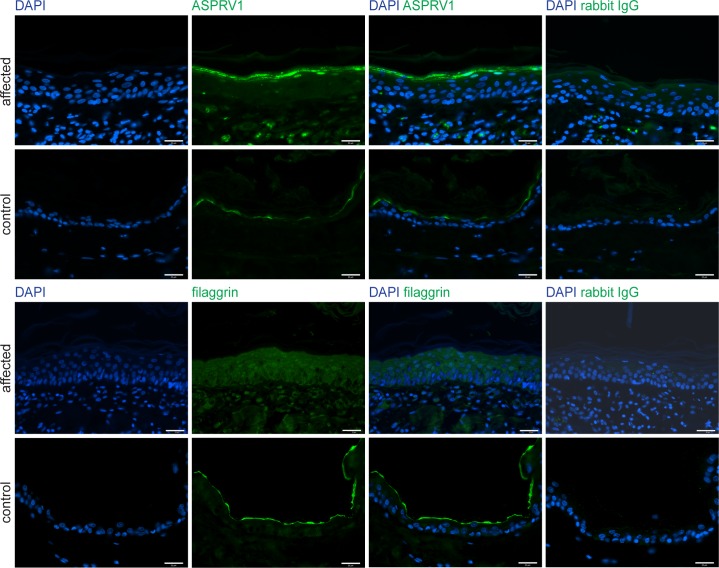
Fig 4. ASPRV1 and filaggrin protein expression.
Skin sections of the case and a non-affected control dog were stained for immunofluorescence with an anti-ASPRV1 or anti-filaggrin antibody, respectively. The ASPRV1 signal was stronger in the affected dog than in the control dog. The typical specific expression pattern of filaggrin, a line at the border between stratum granulosum and stratum corneum, was observed in the control dog (bottom panels) but not in the affected dog (third row of panels). Specificity of the antibodies was demonstrated by using rabbit IgG as primary antibody (last column). Scale bars: 25 μm.

References

    1. Takeichi T, Akiyama M (2016) Inherited ichthyosis: Non-syndromic forms. J Dermatol 43: 242–251. 10.1111/1346-8138.13243 - DOI - PubMed
    1. Oji V, Tadini G, Akiyama M, Blanchet Bardon C, Bodemer C, Bourrat E, et al. (2010) Revised nomenclature and classification of inherited ichthyoses: results of the First Ichthyosis Consensus Conference in Soreze 2009. J Am Acad Dermat 63: 607–641. - PubMed
    1. Wells RS, Kerr CB (1966) Clinical features of autosomal dominant and sex-linked ichthyosis in an English population. Br Med J 1: 947–950. - PMC - PubMed
    1. Smith FJ, Irvine AD, Terron-Kwiatkowski A, Sandilands A, Campbell LE, Zhao Y, et al. (2006) Loss-of-function mutations in the gene encoding filaggrin cause ichthyosis vulgaris. Nat Genet 38: 337–342. 10.1038/ng1743 - DOI - PubMed
    1. Candi E, Schmidt R, Melino G (2005) The cornified envelope: a model of cell death in the skin. Nat Rev Mol Cell Biol 6: 328–340. 10.1038/nrm1619 - DOI - PubMed

MeSH terms