Review
. 2017 Aug;1868(1):69-92.
doi: 10.1016/j.bbcan.2017.02.003. Epub 2017 Feb 27.

Biological determinants of radioresistance and their remediation in pancreatic cancer

Affiliations
Review

Biological determinants of radioresistance and their remediation in pancreatic cancer

Parthasarathy Seshacharyulu et al. Biochim Biophys Acta Rev Cancer. 2017 Aug.

Abstract

Despite recent advances in radiotherapy, a majority of patients diagnosed with pancreatic cancer (PC) do not achieve objective responses due to the existence of intrinsic and acquired radioresistance. Identification of molecular mechanisms that compromise the efficacy of radiation therapy and targeting these pathways is paramount for improving radiation response in PC patients. In this review, we have summarized molecular mechanisms associated with the radio-resistant phenotype of PC. Briefly, we discuss the reversible and irreversible biological consequences of radiotherapy, such as DNA damage and DNA repair, mechanisms of cancer cell survival and radiation-induced apoptosis following radiotherapy. We further describe various small molecule inhibitors and molecular targeting agents currently being tested in preclinical and clinical studies as potential radiosensitizers for PC. Notably, we draw attention towards the confounding effects of cancer stem cells, immune system, and the tumor microenvironment in the context of PC radioresistance and radiosensitization. Finally, we discuss the need for examining selective radioprotectors in light of the emerging evidence on radiation toxicity to non-target tissue associated with PC radiotherapy.


Conflict of interest statement

Conflict of interest

None

Figures

Figure 1
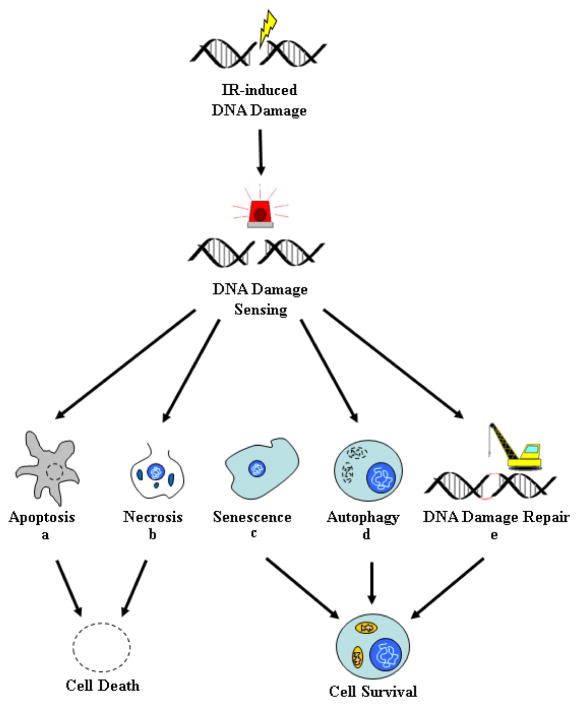
Figure 1. Cellular Response to Ionizing Radiation
In response to ionization radiation, a normal or cancer cell undergoes DNA damage in the form of either single strand breaks (SSB) or double strand breaks (DSB). DNA damage is sensed by the cell, resulting in progression down to any one of five biological outcomes: Apoptosis (a), Necrosis (b), Senescence (c), Autophagy (d), and/or DNA repair and survival (e). Genetic and epigenetic alterations in pathways regulating these responses can lead to radiation resistance. Following irradiation, the DNA breaks are recognized by ATM and ATR kinases, which in turn can either engage the apoptotic machinery or else protect the cell by activation of compensatory mechanisms (e.g. cell arrest and DNA repair). (a) Apoptosis is a form of programmed cell death initiated by caspases and regulated by members of the Bcl-2 family of proteins (intrinsic pathway) or members of the death receptors (extrinsic pathway). Many cancer cells have lost their ability to undergo apoptosis, thereby making them less susceptible to IR-induced apoptosis. (b) Necrosis is a form of cell death characterized by disruptions of the plasma membrane, autolysis, and breakdown of cellular organelles. The cell’s fate to undergo necrosis versus apoptosis depends on the dose of radiation, with the higher doses inducing necrosis. (c) IR-induced DNA damage can also lead to the induction of senescence. Senescence is a viable state of permanent cell cycle arrest characterized by markers of cellular aging (e.g. SA-β-galactosidase expression, increased production of matrix metalloproteinase (MMP), and decreased synthesis of extracellular matrix proteins). (d) Autophagy is a stress response characterized by the intracellular degradation of cytoplasmic constituents by the lysosomes. Autophagy can contribute to survival by the replacement of structures damaged by ROS, but the process can also contribute to cell death if autophagy is left uncontrolled. When a cell is irradiated, autophagosomes are formed that fuse with the lysosome to form autophagolysosomes. The autophagolysosomes auto-digest the damaged cell organelles and protein content for recycling. Autophagy may also be linked to radioresistance as this mechanism can be both pro-survival and pro-death depending on the conditions. (e) Activation of the ATM and ATR kinases can lead to activation of cell cycle checkpoints, formation of DNA damage foci, and recruitment of DNA repair machinery, which then act conjointly to protect the cells from the effects of radiation.
Figure 2
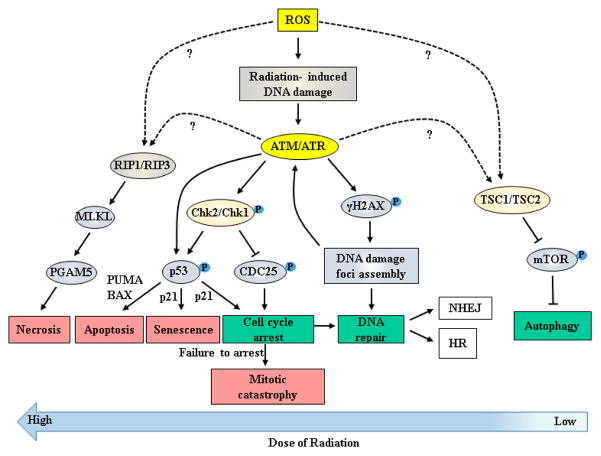
Figure 2. Biological consequences and its associated signaling mechanism(s) in response to the high and low levels of ionizing radiation
Ionizing radiation leads to the production of reactive oxygen species (ROS), which then react with cellular constituents to damage membranes, proteins, and genetic material. At the DNA level, the ROS create single- and double-stranded breaks in the genome (SSB, DSB). Detection of these breaks by surveillance systems results in the activation of the ATM and ATR kinases, which serve as central coordinators of the cellular response to IR. Activation of these kinases after IR and activation of their downstream effector kinases, the Chk2 and Chk1 kinases respectively, contributes to the induction of apoptosis (via activation of p53 and induction of pro-apoptotic Bcl-2 family members PUMA and BAX), induction of senescence (at least in part through the induction of p21 by p53, along with delayed induction of p16), or else transient cell cycle arrest (via p53-mediated induction of p21 and phosphorylation/inactivation of the CDC25 phosphatases). The induction of senescence and cell cycle arrest protect from mitotic catastrophe by blocking entry of cells with DSB in either the S and M phases of the cell cycle. Activation of the ATM and ATR kinases also causes phosphorylation of the H2AX histone variant, which then acts as a seed for the formation of DNA damage foci. These foci serve to amplify and coordinate the DNA damage response in addition to facilitating the recruitment of the DNA repair machinery. Repair of DSB can then proceed through use of homologous recombination (HR) or non-homologous end joining (NHEJ), depending on the phase of the cell cycle. Finally, through mechanisms that have not yet been completely elucidated, IR-induced ROS formation can also lead to necrosis via activation of the RIP1/RIP3 complex or else activation of autophagy via inhibition of the mTOR complex. This activation of autophagy can either promote or inhibit survival, depending on the conditions. Genetic and epigenetic alterations in the pathways that control these different responses can contribute to the development of radiation resistance.
Figure 3
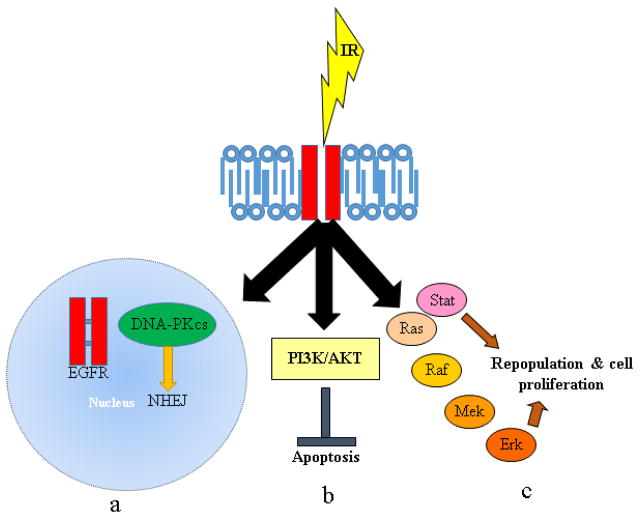
Figure 3. EGFR-mediated responses to radiation
Three distinct mechanisms contribute to the EGFR-mediated radioresistance in cancer cells (a) In response to irradiation, EGFR activity is induced in a ligand-independent manner which in turn leads to activation of downstream signaling which is primarily involved in the DNA repair mechanism. The putative nuclear localization sequence (NLS) present in the EGFR can be recognized by karyopherin further leading to nuclear import. In the nucleus, EGFR physically interacts with the catalytic subunit of DNA-dependent protein kinase (DNA-PKCs) to regulate the non-homologous end joining DNA repair pathway. (b) As a consequence of IR, EGFR autophosphorylates and activates its corresponding downstream signaling cascades, such as PI3K/AKT and RAS/RAF/ERK pathways to regulate survival signaling (indirectly inhibiting apoptosis) and directly promoting proliferation of irradiated cells. (c) The phosphorylated tyrosine residues in EGFR can also function as an adaptor molecule for the JAK/STAT pathway.

References

    1. Siegel RL, Miller KD, Jemal A. Cancer Statistics, 2017. CA Cancer J Clin. 2017;67:7–30. - PubMed
    1. Siegel RL, Miller KD, Jemal A. Cancer statistics, 2016. CA Cancer J Clin. 2016;66:7–30. - PubMed
    1. National Cancer Institute. Surveillance Epidemiology and End Results Cancer Statistics Review 1975–2006. 2011
    1. Barugola G, Falconi M, Bettini R, Boninsegna L, Casarotto A, Salvia R, Bassi C, Pederzoli P. The determinant factors of recurrence following resection for ductal pancreatic cancer. JOP. 2007;8:132–140. - PubMed
    1. Barugola G, Partelli S, Marcucci S, Sartori N, Capelli P, Bassi C, Pederzoli P, Falconi M. Resectable pancreatic cancer: who really benefits from resection? Ann Surg Oncol. 2009;16:3316–3322. - PubMed

Publication types

MeSH terms