


Awareness, knowledge and practice of dyslipidaemia management among postgraduate primary care trainees in Malaysia: a cross-sectional study
- PMID: 28249849
- PMCID: PMC5353319
- DOI: 10.1136/bmjopen-2016-013573
Awareness, knowledge and practice of dyslipidaemia management among postgraduate primary care trainees in Malaysia: a cross-sectional study
Abstract
Objectives: Dyslipidaemia is one of the main risk factors for cardiovascular disease, the leading cause of death in Malaysia. This study assessed the awareness, knowledge and practice of lipid management among primary care physicians undergoing postgraduate training in Malaysia.
Design: Cross sectional study.
Setting: Postgraduate primary care trainees in Malaysia.
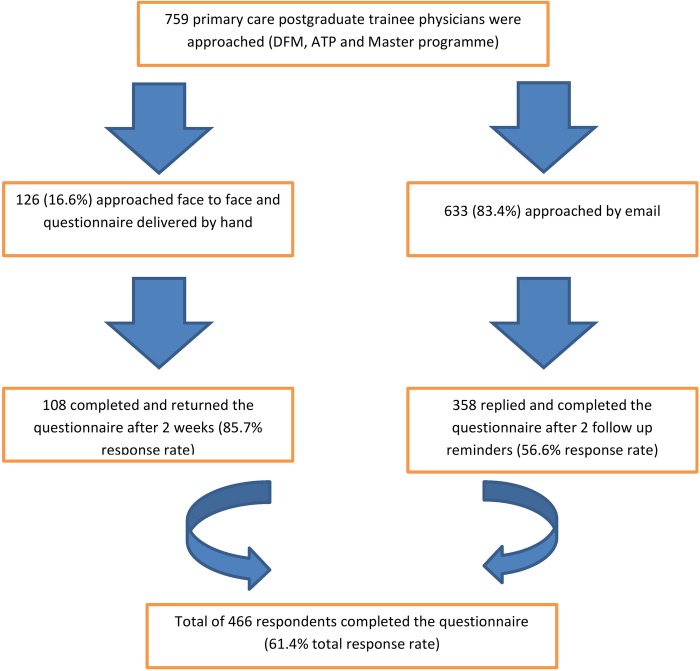
Participants: 759 postgraduate primary care trainees were approached through email or hard copy, of whom 466 responded.
Method: A self-administered questionnaire was used to assess their awareness, knowledge and practice of dyslipidaemia management. The total cumulative score derived from the knowledge section was categorised into good or poor knowledge based on the median score, where a score of less than the median score was categorised as poor and a score equal to or more than the median score was categorised as good. We further examined the association between knowledge score and sociodemographic data. Associations were considered significant when p<0.05.
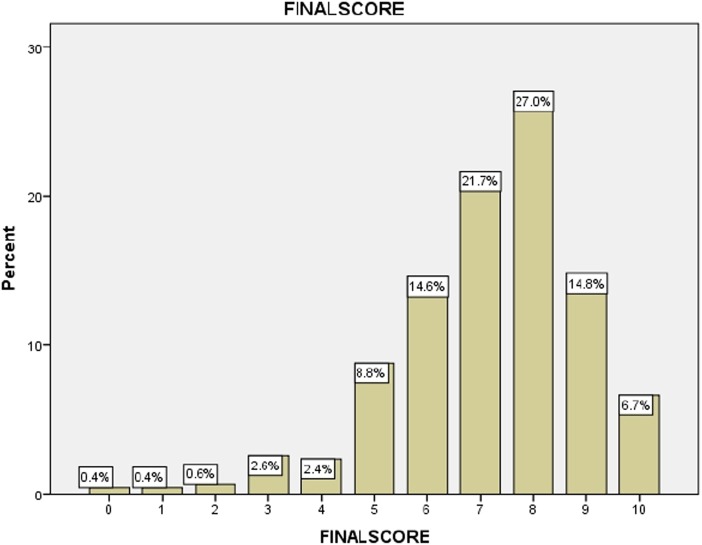
Results: The response rate achieved was 61.4%. The majority (98.1%) were aware of the national lipid guideline, and 95.6% reported that they used the lipid guideline in their practice. The median knowledge score was 7 out of 10; 70.2% of respondents scored 7 or more which was considered as good knowledge. Despite the majority (95.6%) reporting use of guidelines, there was wide variation in their clinical practice whereby some did not practise based on the guidelines. There was a positive significant association between awareness and the use of the guideline with knowledge score (p<0.001). However there was no significant association between knowledge score and sociodemographic data (p>0.05).
Conclusions: The level of awareness and use of the lipid guideline among postgraduate primary care trainees was good. However, there were still gaps in their knowledge and practice which are not in accordance with standard guidelines.
Keywords: awareness, knowledge and practice; primary care physician.
Published by the BMJ Publishing Group Limited. For permission to use (where not already granted under a licence) please go to http://www.bmj.com/company/products-services/rights-and-licensing/.
Conflict of interest statement
Figures
References
-
- Eaton CB, Galliher JM, McBride PE et al. . Family physician's knowledge, beliefs, and self-reported practice patterns regarding hyperlipidemia: a National Research Network (NRN) survey. J Am Board Fam Med 2006;19:46–53. - PubMed
-
- Guan F, Xie J, Wang GL et al. . Community-wide survey of physicians’ knowledge of cholesterol management. Chin Med J 2010;123:884–9. - PubMed
-
- Ministry of Health Malaysia Management of dyslipidemia, clinical practice guideline. 4th edn Malaysia: Ministry of Health Malaysia, 2011.
Publication types
MeSH terms
LinkOut - more resources
Full Text Sources
Other Literature Sources
