


Constraint-Induced Movement Therapy Combined with Transcranial Direct Current Stimulation over Premotor Cortex Improves Motor Function in Severe Stroke: A Pilot Randomized Controlled Trial
- PMID: 28250992
- PMCID: PMC5303863
- DOI: 10.1155/2017/6842549
Constraint-Induced Movement Therapy Combined with Transcranial Direct Current Stimulation over Premotor Cortex Improves Motor Function in Severe Stroke: A Pilot Randomized Controlled Trial
Abstract
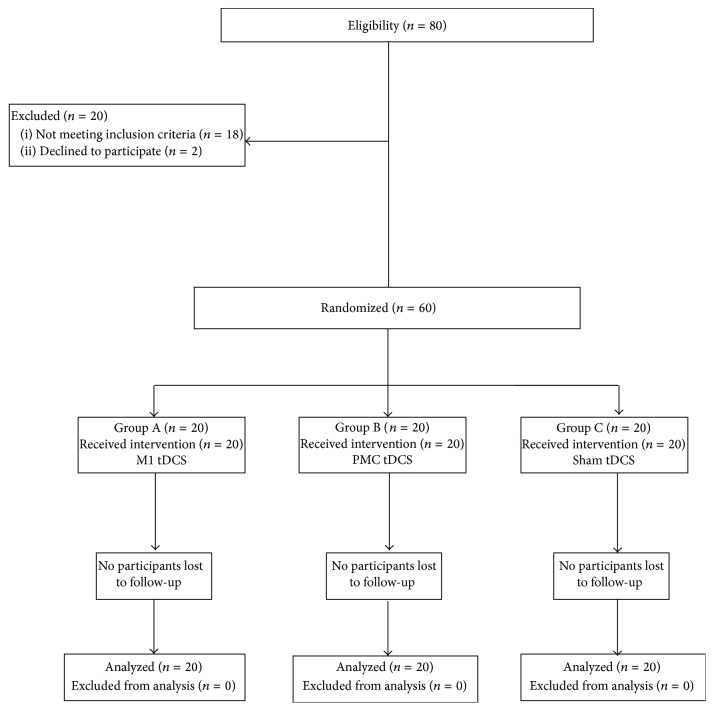
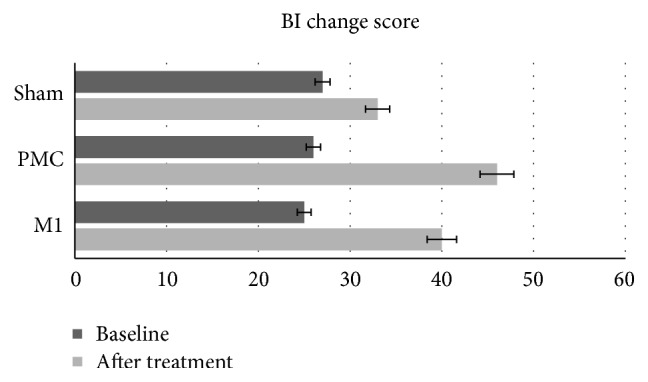
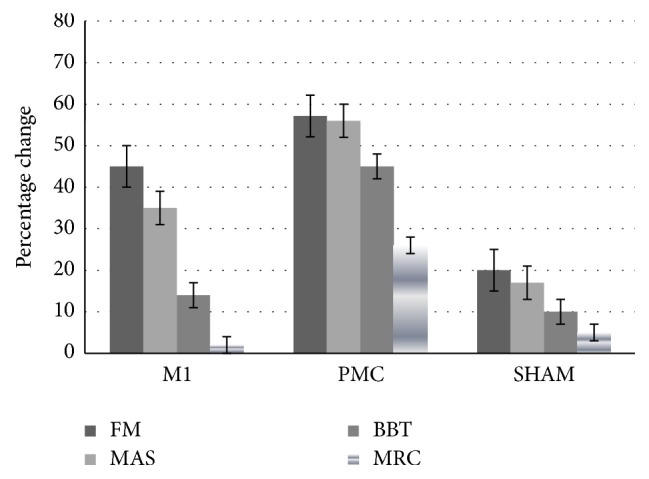
Objective. We compared the effects of transcranial direct current stimulation at different cortical sites (premotor and motor primary cortex) combined with constraint-induced movement therapy for treatment of stroke patients. Design. Sixty patients were randomly distributed into 3 groups: Group A, anodal stimulation on premotor cortex and constraint-induced movement therapy; Group B, anodal stimulation on primary motor cortex and constraint-induced movement therapy; Group C, sham stimulation and constraint-induced movement therapy. Evaluations involved analysis of functional independence, motor recovery, spasticity, gross motor function, and muscle strength. Results. A significant improvement in primary outcome (functional independence) after treatment in the premotor group followed by primary motor group and sham group was observed. The same pattern of improvement was highlighted among all secondary outcome measures regarding the superior performance of the premotor group over primary motor and sham groups. Conclusions. Premotor cortex can contribute to motor function in patients with severe functional disabilities in early stages of stroke. This study was registered in ClinicalTrials.gov database (NCT 02628561).
Conflict of interest statement
Financial disclosure statements have been obtained, and no competing interests have been reported by the authors or by any individuals in control of the content of this article.
Figures

References
-
- Wu D., Qian L., Zorowitz R. D., Zhang L., Qu Y., Yuan Y. Effects on decreasing upper-limb poststroke muscle tone using transcranial direct current stimulation: a randomized sham-controlled study. Archives of Physical Medicine and Rehabilitation. 2013;94(1):1–8. doi: 10.1016/j.apmr.2012.07.022. - DOI - PubMed
LinkOut - more resources
Full Text Sources
Other Literature Sources
