


Efficacy of motivational enhancement therapy to decrease alcohol and illicit-drug use in pregnant substance users reporting baseline alcohol use
- PMID: 28254158
- PMCID: PMC5420331
- DOI: 10.1016/j.jsat.2017.02.003
Efficacy of motivational enhancement therapy to decrease alcohol and illicit-drug use in pregnant substance users reporting baseline alcohol use
Abstract
Background: Approximately 35% of pregnant substance users in treatment report alcohol abuse, which increases the risk of fetal alcohol spectrum disorders (FASD) in their offspring. The present study was a preliminary evaluation of the efficacy of motivational enhancement therapy (MET) in decreasing alcohol use in pregnant women attending substance use treatment.
Methods: Secondary analysis of a trial evaluating the efficacy of MET, relative to treatment as usual (TAU), in improving treatment outcomes in 200 pregnant substance users. The present study included the 41 women (n=27 MET and n=14 TAU) who reported alcohol use in the 28days prior to randomization. Alcohol and illicit-drug use days were assessed with self-report; illicit drug use was assessed with urine drug screens. All measures were obtained weekly for the 4week active study phase and at 1 and 3month follow-ups.
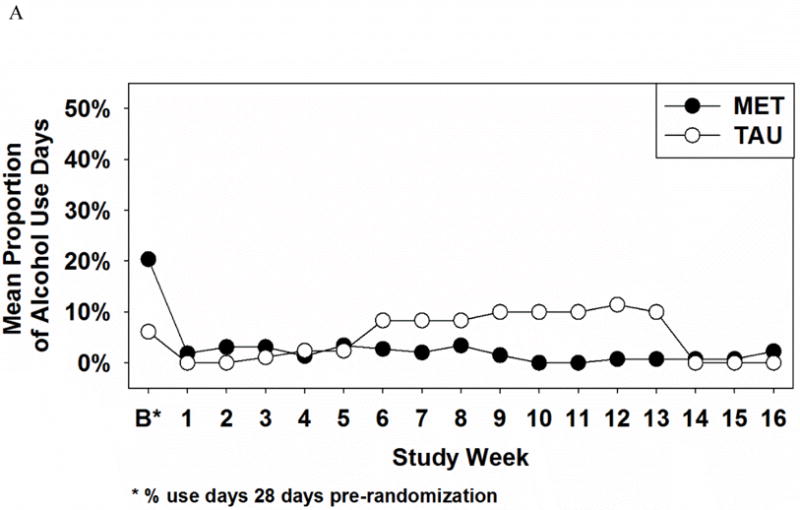
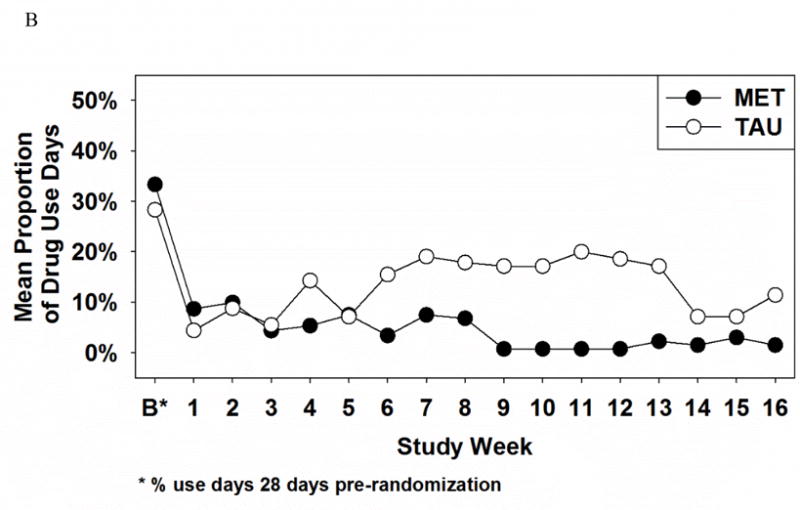
Results: Significant treatment-by-time interaction effects were found for illicit-drug use days during the active (X2=6.89, df=1, p<0.01) and follow-up (X2=8.26, df=1, p<0.01) phases and for alcohol use during the follow-up phase (X2=13.07, df=1, p<0.001), all reflecting a beneficial effect for MET, relative to TAU. All other treatment effects were non-significant.
Conclusions: These findings suggest that MET may be effective in decreasing alcohol and illicit-drug use in pregnant substance users reporting alcohol use. With 2-5% of US births affected by FASD, future research to replicate these findings seems warranted.
Trial registration: ClinicalTrials.gov http://www.clinicaltrials.gov; Identifier: NCT00078143.
Keywords: Alcohol use; Drug use; Fetal alcohol spectrum disorders; Motivational enhancement therapy; Pregnant.
Copyright © 2017 Elsevier Inc. All rights reserved.
Figures
References
-
- Burke BL, Arkowitz H, Menchola M. The efficacy of motivational interviewing: A meta-analysis of controlled clinical trials. J Consult Clin Psychol. 2003;71(5):843–861. - PubMed
-
- Centers for Disease Control and Prevention: CDC. A 2005 message to women from the US Surgeon General: Advisory on alcohol use during pregnancy. n.d. Retrieved from https://www.cdc.gov/ncbddd/fasd/documents/sg-advisory.pdf.
-
- Fals-Stewart W, O’Farrell TJ, Frietas TT, McFarlin SK, Rutigliano P. The timeline followback reports of psychoactive substance use by drug abusing patients: Psychometric properties. J Consult Clin Psychol. 2000;68:134–144. - PubMed
Publication types
MeSH terms
Associated data
Grants and funding
LinkOut - more resources
Full Text Sources
Other Literature Sources
Medical
Miscellaneous
