Current Multistage Drug Delivery Systems Based on the Tumor Microenvironment
- PMID: 28255348
- PMCID: PMC5327631
- DOI: 10.7150/thno.16684
Current Multistage Drug Delivery Systems Based on the Tumor Microenvironment
Abstract
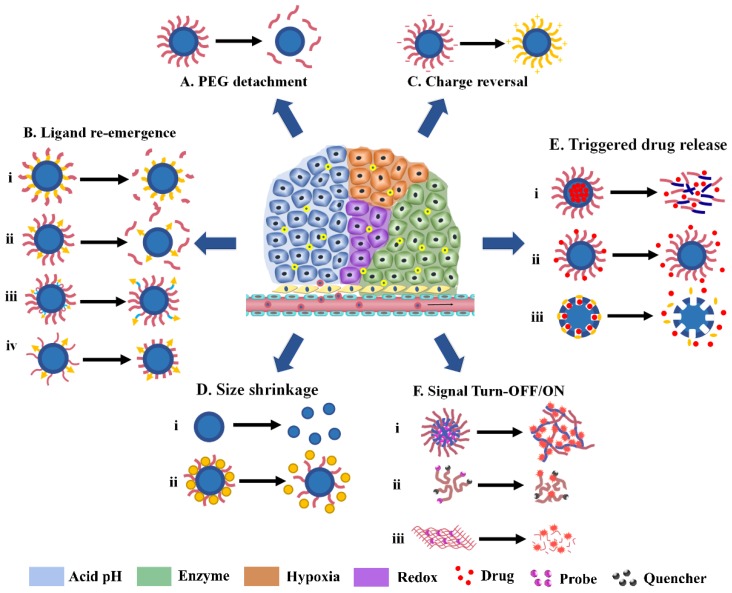
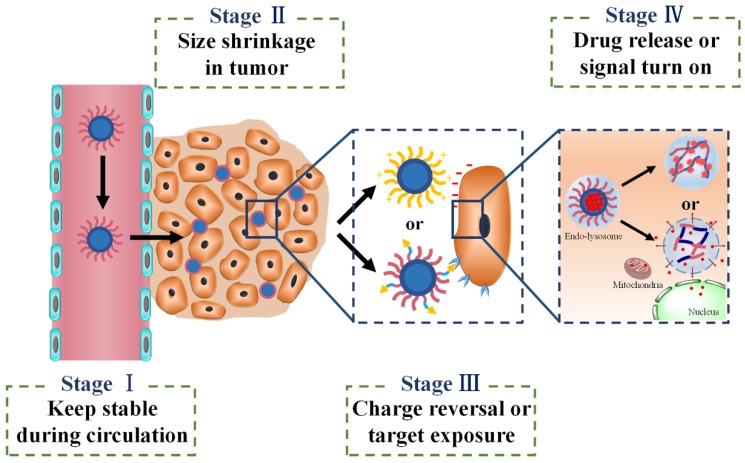
The development of traditional tumor-targeted drug delivery systems based on EPR effect and receptor-mediated endocytosis is very challenging probably because of the biological complexity of tumors as well as the limitations in the design of the functional nano-sized delivery systems. Recently, multistage drug delivery systems (Ms-DDS) triggered by various specific tumor microenvironment stimuli have emerged for tumor therapy and imaging. In response to the differences in the physiological blood circulation, tumor microenvironment, and intracellular environment, Ms-DDS can change their physicochemical properties (such as size, hydrophobicity, or zeta potential) to achieve deeper tumor penetration, enhanced cellular uptake, timely drug release, as well as effective endosomal escape. Based on these mechanisms, Ms-DDS could deliver maximum quantity of drugs to the therapeutic targets including tumor tissues, cells, and subcellular organelles and eventually exhibit the highest therapeutic efficacy. In this review, we expatiate on various responsive modes triggered by the tumor microenvironment stimuli, introduce recent advances in multistage nanoparticle systems, especially the multi-stimuli responsive delivery systems, and discuss their functions, effects, and prospects.
Keywords: activatable nanoparticles; drug delivery systems; multistage; stimuli-responsive; tumor microenvironment.
Conflict of interest statement
Competing Interests: The authors have declared that no competing interest exists.
Figures
References
-
- Yasuhiro Matsumura HM. A New Concept for Macromolecular Therapeutics in Cancer Chemotherapy: Mechanism of Tumoritropic Accumulation of Proteins and the Antitumor Agent Smancs. Cancer Res. 1986;46:6387–92. - PubMed
-
- Wagner V, Dullaart A, Bock AK. et al. The emerging nanomedicine landscape. Nat Biotechnol. 2006;24:1211–7. - PubMed
-
- Fang J, Nakamura H, Maeda H. The EPR effect: Unique features of tumor blood vessels for drug delivery, factors involved, and limitations and augmentation of the effect. Adv Drug Deliv Rev. 2011;63(3):136–151. - PubMed
Publication types
MeSH terms
Substances
LinkOut - more resources
Full Text Sources
Other Literature Sources