


A Systematic Review of Randomized Controlled Trials to Assess Outcomes of Genetic Counseling
- PMID: 28255928
- PMCID: PMC7350655
- DOI: 10.1007/s10897-017-0082-y
A Systematic Review of Randomized Controlled Trials to Assess Outcomes of Genetic Counseling
Abstract
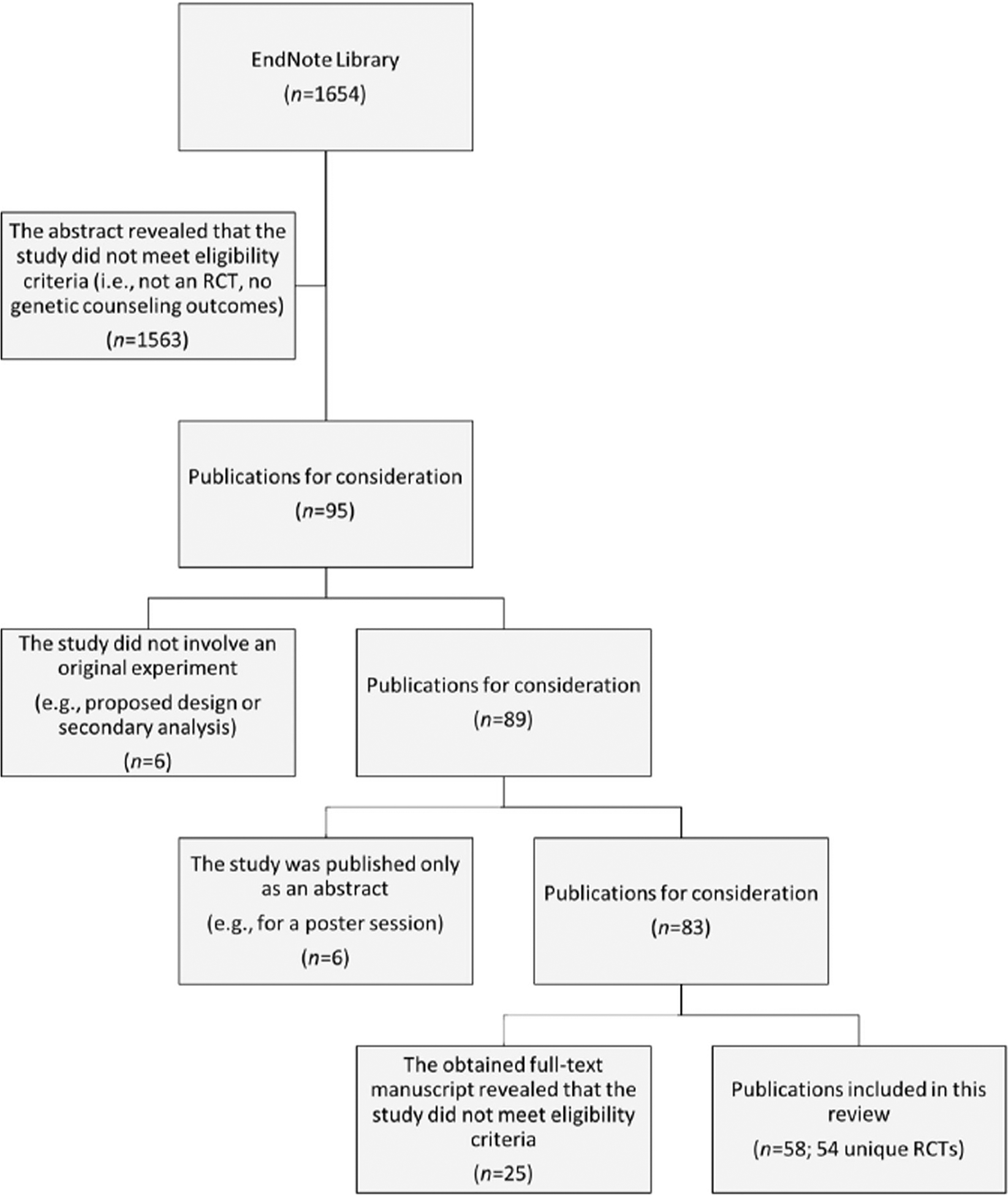
With the advancements in precision medicine and health care reform, it is critical that genetic counseling practice respond to emerging evidence to maximize client benefit. The objective of this review was to synthesize evidence on outcomes from randomized controlled trials (RCTs) of genetic counseling to inform clinical practice. Seven databases were searched in conducting this review. Studies were selected for inclusion if they were: (a) RCTs published from 1990 to 2015, and (b) assessed a direct outcome of genetic counseling. Extracted data included study population, aims, and outcomes. Risk of bias was evaluated using the Cochrane Handbook for Systematic Reviews of Interventions guidelines. A review of 1654 abstracts identified 58 publications of 54 unique RCTs that met inclusion criteria, the vast majority of which were conducted in cancer genetic counseling setting. Twenty-seven publications assessed 'enhancements' to genetic counseling, and 31 publications compared delivery modes. The methodological rigor varied considerably, highlighting the need for attention to quality criteria in RCT design. While most studies assessed several client outcomes hypothesized to be affected by genetic counseling (e.g., psychological wellbeing, knowledge, perceived risk, patient satisfaction), disparate validated and reliable scales and other assessments were often used to evaluate the same outcome(s). This limits opportunity to compare findings across studies. While RCTs of genetic counseling demonstrate enhanced client outcomes in a number of studies and pave the way to evidence-based practice, the heterogeneity of the research questions suggest an important need for more complementary studies with consistent outcome assessments.
Keywords: Evidence-based practice; Genetic counseling; Genetic counseling outcomes; Genetics knowledge; Patient outcomes; Patient satisfaction; Psychological wellbeing; Randomized controlled trials; Risk perception.
Conflict of interest statement
Figures
References
-
- Bernhardt BA, Biesecker BB, & Mastromarino CL (2000). Goals, benefits, and outcomes of genetic counseling: Client and genetic counselor assessment. American Journal of Medical Genetics, 94(3), 189–197. - PubMed
-
- Biesecker BB (2001). Goals of genetic counseling. Clinical Genetics, 60, 323–330. - PubMed
Publication types
MeSH terms
Grants and funding
LinkOut - more resources
Full Text Sources
Other Literature Sources
Medical
Miscellaneous
