Review
. 2017 Apr;17(4):239-253.
doi: 10.1038/nrc.2017.5. Epub 2017 Mar 3.

Tissue-specific tumorigenesis: context matters

Affiliations
Review

Tissue-specific tumorigenesis: context matters

Günter Schneider et al. Nat Rev Cancer. 2017 Apr.

Abstract

How can we treat cancer more effectively? Traditionally, tumours from the same anatomical site are treated as one tumour entity. This concept has been challenged by recent breakthroughs in cancer genomics and translational research that have enabled molecular tumour profiling. The identification and validation of cancer drivers that are shared between different tumour types, spurred the new paradigm to target driver pathways across anatomical sites by off-label drug use, or within so-called basket or umbrella trials which are designed to test whether molecular alterations in one tumour entity can be extrapolated to all others. However, recent clinical and preclinical studies suggest that there are tissue- and cell type-specific differences in tumorigenesis and the organization of oncogenic signalling pathways. In this Opinion article, we focus on the molecular, cellular, systemic and environmental determinants of organ-specific tumorigenesis and the mechanisms of context-specific oncogenic signalling outputs. Investigation, recognition and in-depth biological understanding of these differences will be vital for the design of next-generation clinical trials and the implementation of molecularly guided cancer therapies in the future.


Conflict of interest statement

Competing interests statement

The authors declare no competing interests.

Figures
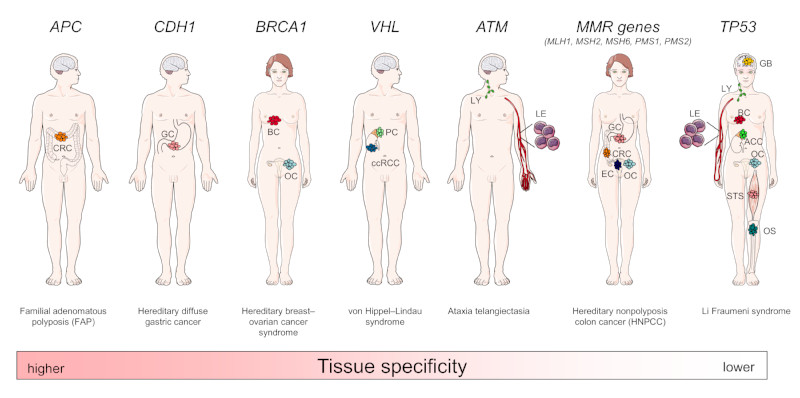
Figure 1
Figure 1. Hereditary cancer predisposition syndromes and tissue-specific tumourigenesis.
Gene defects underlying hereditary cancer predisposition syndromes such as alterations in adenomatous polyposis coli (APC), cadherin 1 (CDH1), BRCA1, von Hippel-Lindau tumour suppressor (VHL) and ataxia telangiectasia mutated (ATM) are associated with a high risk to develop tissue-specific cancer types, whereas others, such as DNA mismatch repair (MMR) genes (MLH1, MSH2, MSH6, PMS1, PMS2) or TP53 are associated with cancers from many different tissues of origin. For each syndrome, associated cancer entities with an at least 4-fold increased risk are indicated. CRC, colo-rectal cancer; GC, gastric cancer; BC, breast cancer; OC, ovarian cancer; PC, pheochromocytoma (adrenal gland tumour); ccRCC, clear cell renal cell carcinoma; LY, lymphoid malignancies; LE, leukaemia; EC, endometrial cancer; STS, soft tissue sarcoma; OS, osteosarcoma; ACC, adrenal cortical carcinoma; GB, glioblastoma.
Figure 2
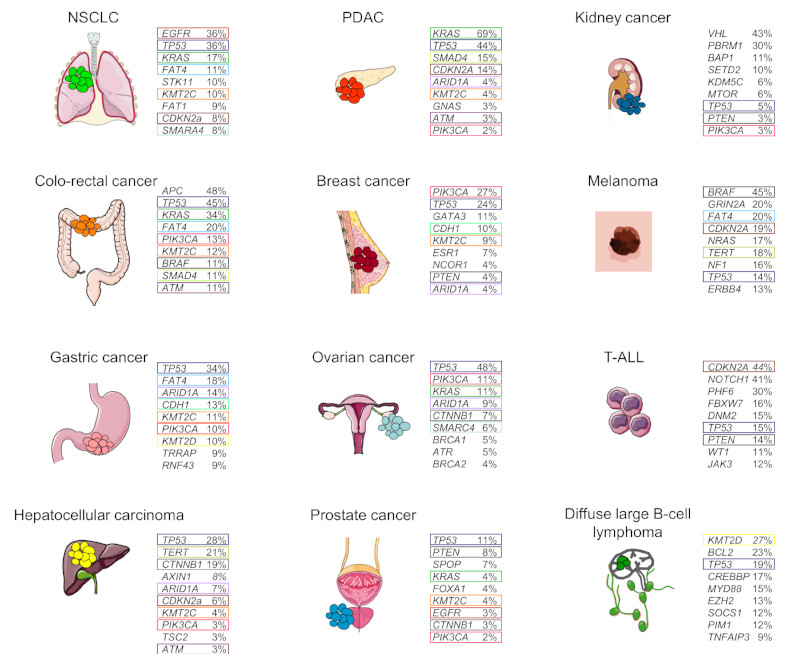
Figure 2. Somatic mutation frequencies (single-nucleotides, small insertions or deletions (indels)) in common cancers from the Catalogue of Somatic Mutations in Cancer (COSMIC).
The top 9 mutations occurring in the different depicted common tumour-types are shown. Mutations shared across tumour entities are depicted by coloured boxes. Mutation data were obtained from the COSMIC release version 77 at Welcome Trust Sanger Institute (http://cancer.sanger.ac.uk/cosmic). Please note: only the frequency of somatic mutations (single-nucleotides or indels), but not larger deletions, amplifications or rearrangements are depicted in the figure. NSCLC, non-small cell lung cancer; PDAC, pancreatic ductal adenocarcinoma; T-ALL, T-cell acute lymphoblastic leukaemia. APC, adenomatous polyposis coli, ARID1A, AT-rich interactive domain 1A, ATM, ataxia telangiectasia mutated; ATR, ataxia telangiectasia and Rad3-related; BAP1, BRCA1-associated protein 1; CDH1, cadherin 1; CDKN2A, cyclin-dependent kinase inhibitor 2A; CREBBP, CREB-binding protein; CTNNB1, encoding β-catenin; DMN2, dynamin 2; EGFR, epidermal growth factor receptor; ESR1, oestrogen receptor 1; EZH2, enhancer of zeste homologue 2; FAT, atypical cadherin; FBXW7, F-box and WD repeat domain containing 7; GATA3, GATA binding protein 3; GNAS, encoding G protein, GαS; GRIN2A, glutamate receptor ionotropic, NMDA 2A; JAK3, Janus kinase 3; KDM5C, lysine-specific demethylase 5C; KMT2, histone-lysine N-methyltransferase 2; NCOR1, nuclear receptor co-repressor 1; MYD88, myeloid differentiation primary response 88; NF1, neurofibromatosis type 1; PBRM1, polybromo 1; SETD2, SET domain containing 2; PHF6, PHD finger protein 6; SMARCA4, SWI/SNF related, matrix associated, actin-dependent regulator of chromatin, subfamily A, member 4; SOCS1, suppressor of cytokine signalling 1; SPOP, speckle-type POZ protein; STK11, serine-threonine kinase 11; TERT, telomerase reverse transcriptase; TNFAIP3, tumour necrosis factor α (TNFα)-induced protein 3; TSC2, tuberous sclerosis 2; TRRAP, transformation/transcription domain associated protein; VHL, von Hippel-Lindau tumour suppressor; WT1, Wilms tumour 1.
Figure 3
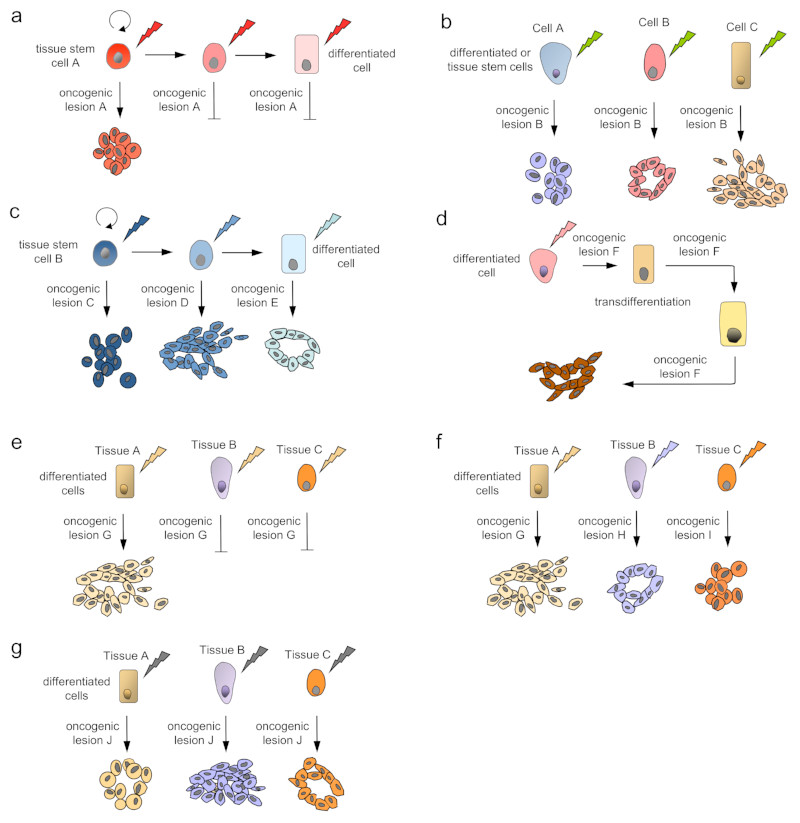
Figure 3. Models of context-specific carcinogenesis and intertumour heterogeneity based on the cell of origin and its differentiation status.
Genetic and phenotypic variations are observed between individuals with the same tumour-type as well as between tumours of different tissue and cell types. The phenotype of the tumour depends on the specific oncogenic lesion (indicated by a blizzard) as well as the cell of origin (e.g. self-renewing tissue stem cells indicated by curved arrows) in all models. (a) Tumour development in the stem cell compartment. Only stem cells are susceptible to a specific oncogenic event, such as loss of the adenomatous polyposis coli (APC) tumour suppressor in colo-rectal cancer. (b) The same mutation or lesion induces very different tumour phenotypes in different cells of origin of a given tissue type, such as PIK3CA mutations in breast cancer. (c) Different cell populations in the lineage hierarchy, from stem cells to fully differentiated cells, can serve as cells of cancer origin if they acquire the right set of specific mutations, as shown for T-cell acute lymphoblastic leukaemia (T-ALL). (d) Cellular plasticity and transdifferentiation is a driver of tumour development in some tumour types, such as pancreatic ductal adenocarcinoma (PDAC). Here, a specific oncogenic lesion induces the transdifferentiation of acinar cells to a duct-like phenotype and leads to tumourigenesis, which depends on the continuous expression of the oncogenic lesion. (e) Only differentiated cells in a specific tissue type, but not in most others, are susceptible to transformation by a cancer driver, such as von Hippel–Lindau tumour suppressor (VHL) gene mutations in proximal renal tubular epithelial cells that give rise to clear cell renal cell carcinoma (ccRCC). (f) Cells in other tissue types require the right combination of specific molecular alterations to serve as cells of origin of a tumour, such as TP53 and BRCA mutations in serous ovarian cancers that originate from the distal fallopian tube. (g) The same driver lesion induces different tumour types with distinct molecular and phenotypic features, depending on the tissue, in which the oncogene is expressed, such as oncogenic BRAF mutations in melanoma, papillary thyroid cancer and NSCLC.
Figure 4
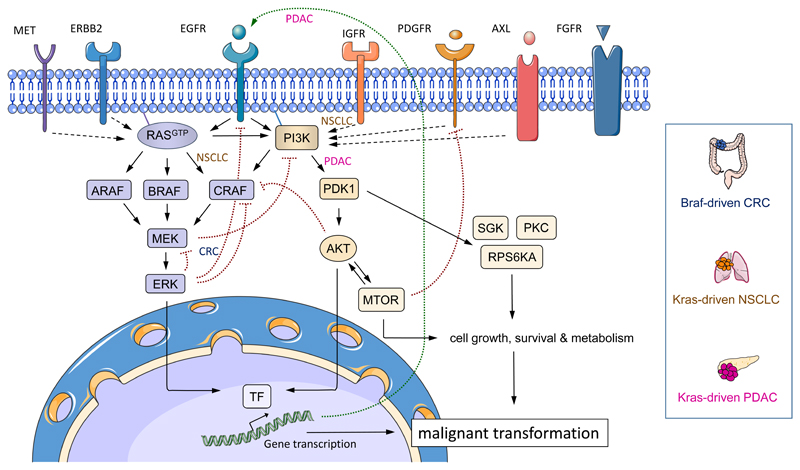
Figure 4. Determinants of context-specific oncogenic signalling networks.
Schematic overview of RAS–RAF–MEK–ERK- and PI3K–3-phosphoinositide dependent protein kinase 1 (PDK1)–AKT–MTOR-regulated signalling networks in cancer. Receptor tyrosine kinases (RTK) and RAS, RAF or PI3K oncoproteins signal through both pathways in a context-specific fashion to drive cancer initiation, progression and maintenance. As examples for context-specific oncogenic signalling mechanisms, BRAF-driven colorectal cancer (CRC), KRAS-driven non-small cell lung cancer (NSCLC), and KRAS-driven pancreatic ductal adenocarcinoma (PDAC) specific signalling pathways are highlighted. Signalling output is enhanced by the tissue-specific positive feedback activation of RTKs (e.g. epidermal growth factor receptor (EGFR); long dotted arrow) or other RTKs that are engaged by autocrine and paracrine stimuli. Tissue- and cell-type specific negative feedback loops and inhibitory as well as activating cross-signalling exist at various levels. Activating pro-tumourigenic signalling connections of the canonical signalling pathways are depicted as arrows, inhibitory anti-tumourigenic pathways are shown as dotted lines headed by a perpendicular line. Dotted arrows depict activating pro-tumourigenic signalling loops regulated by the tissue-specific engagement of RTKs. FGFR, fibroblast growth factor receptor; IGFR, insulin-like growth factor receptor; PDGFR, platelet-derived growth factor receptor; PKC, protein kinase C; RPS6KA, ribosomal protein S6 kinase α; SGK, serum and glucocorticoid-regulated kinase; TF, transcription factors.
Figure 5
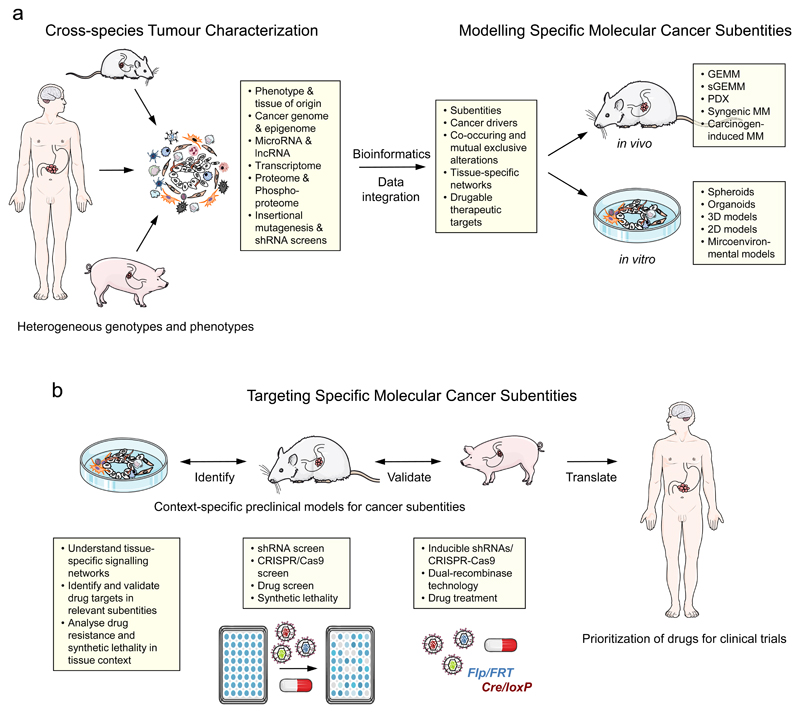
Figure 5. Approaches to identify, analyse and validate cancer drivers in context.
(a) Cross-species comparative characterization of distinct heterogeneous tumour entities to improve the signal-to-noise ratio and identify substantially altered pathways, transcriptional regulators, missense mutations or copy number changes that likely drive the tumour and are potential therapeutic targets. The comparison of human cancers with corresponding genetically engineered or carcinogen-induced mouse and pig tumour models serves as a filter to identify shared alterations. Pig cancer modelling is a rapidly evolving field, which is driven by the need of more humanized tumour models for pre-clinical studies. Systems biology and data integration is used to define relevant molecular subtypes of a cancer type, based on putative driver mutations, co-occurring alterations, and druggable targets. Such bioinformatic analyzes will help to model these molecular cancer subtypes, e.g. by genetic engineering in the mouse germline (genetically engineered mouse model (GEMM)), or by (multiplexed) somatic gene engineering of an appropriate target cell in vitro (e.g. in organoids) or in vivo (somatic GEMM (sGEMM)) using CRISPR-Cas9, short hairpin RNAs (shRNAs) or overexpression systems. Thereby, it is possible to reproduce most of the features that are unique for the particular context-specific tumour subtype. In addition, patient-derived xenograft models (PDXs), orthotopic syngeneic engraftment models, and carcinogen-induced models, which may recapitulate important features of a specific tumour subtype (e.g. hypermutation in carcinogen-induced models), can be employed. (b) These subtype specific cancer models can then be used to understand tissue-specific signalling networks of molecular alterations or to identify context-specific targets by retroviral shRNA or CRISPR-Cas9-based library, drug or synthetic lethality screens. These models can also be used to analyse drug resistance or validate therapeutic targets preclinically by inducible shRNA or CRISPR-Cas9 systems, dual-recombinase technology, or drug treatment studies. Genetically defined pig cancer models can be used to perform more representative molecularly-guided context-specific treatment trials at human scale. Knowledge gained from this approach can then be exploited to prioritize drugs and treatment trials with stratified patients in the clinic. lncRNA; long non-coding RNA.

References

    1. Dancey JE, Bedard PL, Onetto N, Hudson TJ. The genetic basis for cancer treatment decisions. Cell. 2012;148:409–420. - PubMed
    1. Slamon DJ, et al. Use of chemotherapy plus a monoclonal antibody against HER2 for metastatic breast cancer that overexpresses HER2. N Engl J Med. 2001;344:783–792. - PubMed
    1. Demetri GD, et al. Efficacy and safety of imatinib mesylate in advanced gastrointestinal stromal tumors. N Engl J Med. 2002;347:472–480. - PubMed
    1. Rosell R, et al. Erlotinib versus standard chemotherapy as first-line treatment for European patients with advanced EGFR mutation-positive non-small-cell lung cancer (EURTAC): a multicentre, open-label, randomised phase 3 trial. Lancet Oncol. 2012;13:239–246. - PubMed
    1. Kwak EL, et al. Anaplastic lymphoma kinase inhibition in non-small-cell lung cancer. N Engl J Med. 2010;363:1693–1703. - PMC - PubMed

Publication types

Substances

LinkOut - more resources