


Genome Editing in Clostridium saccharoperbutylacetonicum N1-4 with the CRISPR-Cas9 System
- PMID: 28258147
- PMCID: PMC5411512
- DOI: 10.1128/AEM.00233-17
Genome Editing in Clostridium saccharoperbutylacetonicum N1-4 with the CRISPR-Cas9 System
Abstract
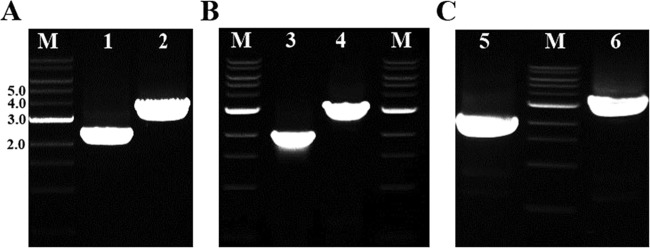
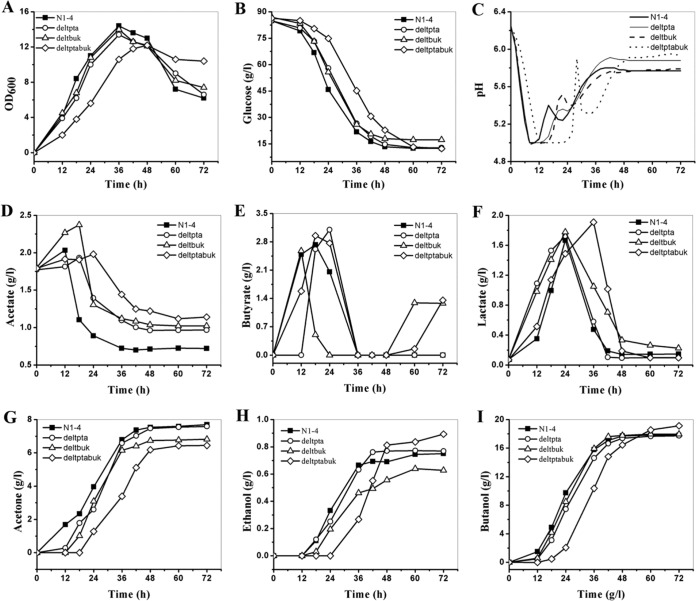
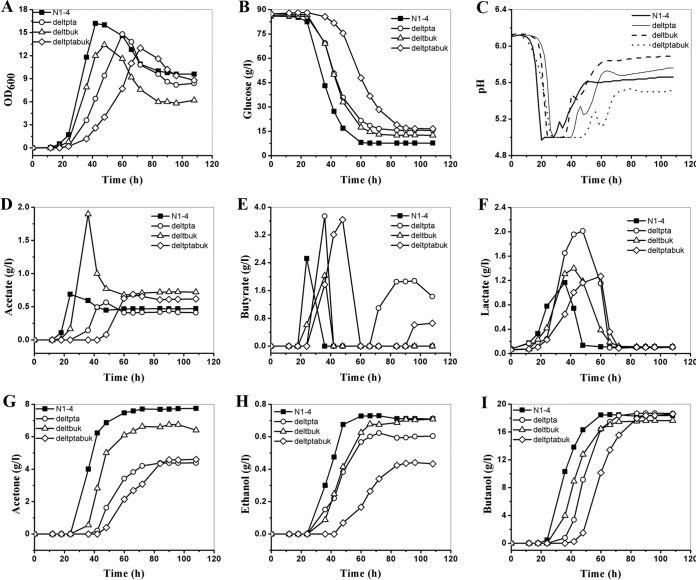
Clostridium saccharoperbutylacetonicum N1-4 is well known as a hyper-butanol-producing strain. However, the lack of genetic engineering tools hinders further elucidation of its solvent production mechanism and development of more robust strains. In this study, we set out to develop an efficient genome engineering system for this microorganism based on the clustered regularly interspaced short palindromic repeats (CRISPR) and CRISPR-associated 9 (CRISPR-Cas9) system. First, the functionality of the CRISPR-Cas9 system previously customized for Clostridium beijerinckii was evaluated in C. saccharoperbutylacetonicum by targeting pta and buk, two essential genes for acetate and butyrate production, respectively. pta and buk single and double deletion mutants were successfully obtained based on this system. However, the genome engineering efficiency was rather low (the mutation rate is <20%). Therefore, the efficiency was further optimized by evaluating various promoters for guide RNA (gRNA) expression. With promoter P J23119 , we achieved a mutation rate of 75% for pta deletion without serial subculturing as suggested previously for C. beijerinckii Thus, this developed CRISPR-Cas9 system is highly desirable for efficient genome editing in C. saccharoperbutylacetonicum Batch fermentation results revealed that both the acid and solvent production profiles were altered due to the disruption of acid production pathways; however, neither acetate nor butyrate production was eliminated with the deletion of the corresponding gene. The butanol production, yield, and selectivity were improved in mutants, depending on the fermentation medium. In the pta buk double deletion mutant, the butanol production in P2 medium reached 19.0 g/liter, which is one of the highest levels ever reported from batch fermentations.IMPORTANCE An efficient CRISPR-Cas9 genome engineering system was developed for C. saccharoperbutylacetonicum N1-4. This paves the way for elucidating the solvent production mechanism in this hyper-butanol-producing microorganism and developing strains with desirable butanol-producing features. This tool can be easily adapted for use in closely related microorganisms. As also reported by others, here we demonstrated with solid data that the highly efficient expression of gRNA is the key factor determining the efficiency of CRISPR-Cas9 for genome editing. The protocol developed in this study can provide essential references for other researchers who work in the areas of metabolic engineering and synthetic biology. The developed mutants can be used as excellent starting strains for development of more robust ones for desirable solvent production.
Keywords: CRISPR-Cas9; Clostridium saccharoperbutylacetonicum; buk; butanol; gRNA; genome engineering; pta.
Copyright © 2017 American Society for Microbiology.
Figures
References
-
- Croux C, Lee J, Raynaud C, Saint-Prix F, Gonzalez-Pajuelo M, Meynial-Salles I, Soucaille P. 2016. Construction of a restriction-less, marker-less mutant useful for functional genomic and metabolic engineering of the biofuel producer Clostridium acetobutylicum. Biotechnol Biofuels 9:23. doi: 10.1186/s13068-015-0423-8. - DOI - PMC - PubMed
MeSH terms
Substances
LinkOut - more resources
Full Text Sources
Other Literature Sources
Molecular Biology Databases
Research Materials
