. 2017 Jun;101(6):1373-1381.
doi: 10.1189/jlb.4A0616-270R. Epub 2017 Mar 3.

Rationalized design of a mucosal vaccine protects against Mycobacterium tuberculosis challenge in mice

Affiliations

Rationalized design of a mucosal vaccine protects against Mycobacterium tuberculosis challenge in mice

Mushtaq Ahmed et al. J Leukoc Biol. 2017 Jun.

Abstract

Pulmonary tuberculosis (TB) caused by Mycobacterium tuberculosis (Mtb) is a leading cause of global morbidity and mortality. The only licensed TB vaccine, Mycobacterium bovis bacillus Calmette-Guerin (BCG), has variable efficacy in protecting against pulmonary TB. Thus, the development of more effective TB vaccines is critical to control the TB epidemic. Specifically, vaccines delivered through the mucosal route are known to induce Th17 responses and provide superior protection against Mtb infection. However, already tested Th17-inducing mucosal adjuvants, such as heat-labile enterotoxins and cholera toxins, are not considered safe for use in humans. In the current study, we rationally screened adjuvants for their ability to induce Th17-polarizing cytokines in dendritic cells (DCs) and determined whether they could be used in a protective mucosal TB vaccine. Our new studies show that monophosphoryl lipid A (MPL), when used in combination with chitosan, potently induces Th17-polarizing cytokines in DCs and downstream Th17/Th1 mucosal responses and confers significant protection in mice challenged with a clinical Mtb strain. Additionally, we show that both TLRs and the inflammasome pathways are activated in DCs by MPL-chitosan to mediate induction of Th17-polarizing cytokines. Together, our studies put forward the potential of a new, protective mucosal TB vaccine candidate, which incorporates safe adjuvants already approved for use in humans.

Keywords: Th17/Th1 responses; adjuvants; mucosal immunity; tuberculosis.


Figures

Figure 1.
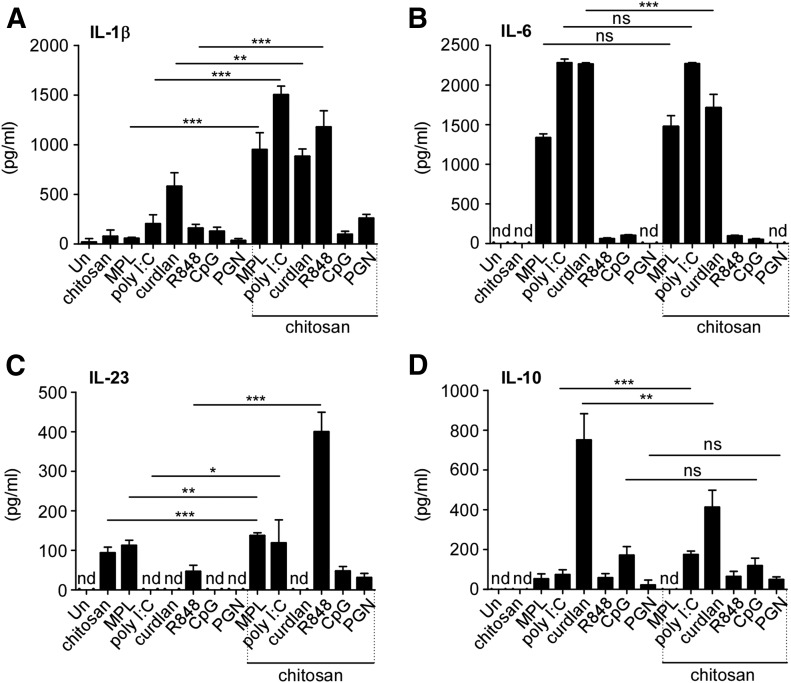
Figure 1.. Synergistic induction of Th17-polarizing cytokines by MPL and chitosan in DCs.
BMDCs were generated from C57BL/6J mice, and 1 × 10⁶ DCs were cultured in the presence or absence of various adjuvants (chitosan 25 µg/ml or/and MPL 25 µg/ml, poly I:C 25 µg/ml, curdlan 25 µg/ml, R848 25 µg/ml, CpG 25 µg/ml, PGN 20 µg/ml), alone or in combination, as indicated for 48 h. Culture supernatants were harvested for cytokine analysis: (A) IL-1β, (B) IL-6, (C) IL-23, (D) IL-10 by ELISA. The data points represent the means (sd) of values from 3 to 5 samples. *P < 0.05, **P < 0.005, ***P < 0.0005. ns, Not significant; nd, not detected; Un, untreated.
Figure 2.
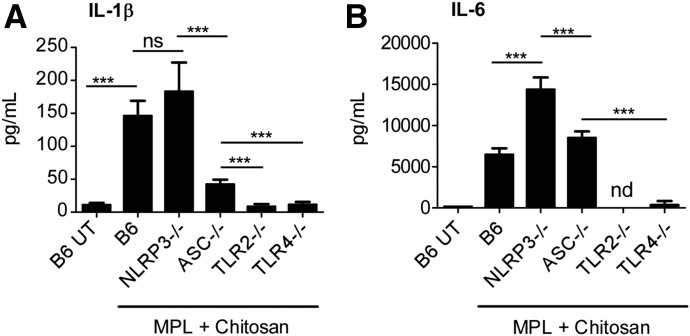
Figure 2.. MPL-chitosan treatment activates the inflammasome and TLR-2/4 pathways for induction of Th17-polarizing cytokines.
BMDCs were generated from TLR-2−/−, TLR-4−/−, ASC−/−, and NLRP3−/− mice and 1 × 10⁶ DCs cultured with MPL-chitosan (25 µg/ml each) or with media alone for 48 h. The culture supernatants were harvested and analyzed for the presence of (A) IL-1β and (B) IL-6 by ELISA. The data points represent the means (sd) of values from 3 to 5 samples. ***P < 0.0005. B6, C57BL/6J; UT, untreated.
Figure 3.
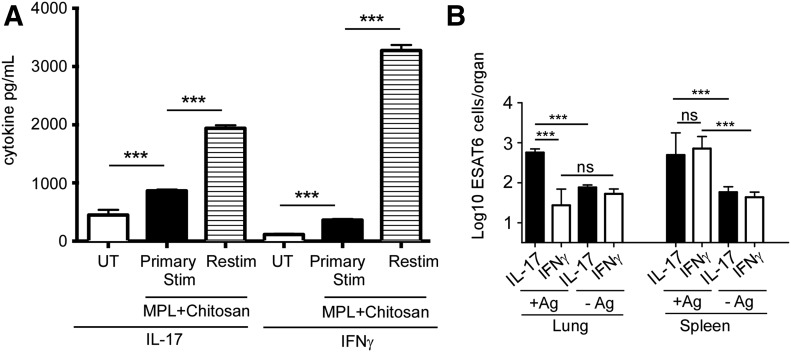
Figure 3.. MPL-chitosan treatment of DCs induces IL-17 and IFN-γ production in T cells.
(A) C57BL/6J BMDCs were left untreated (UT) or treated with MPL-chitosan for 48 h, following which DCs were cocultured with naive CD4+ ESAT-6 TCR Tg T cells (Primary Stim) in the presence of ESAT-61–20 antigen. Additionally, previously primed CD4+ ESAT-6 TCR Tg T cells were rested in vitro, following which they were restimulated with MPL-chitosan-treated DCs (Restim). The supernatants from T cell cocultures were collected for cytokine analysis by ELISA. (B) C57BL/6J mice were vaccinated with ESAT-61–20 peptide (133 µg/mouse), formulated in MPL-chitosan adjuvant (50 µg each /mouse), intranasally 3 times with 2 wk intervals. On d 14 post-last booster, lungs and spleens were harvested and ESAT-6-specific IL-17, and IFN-γ-producing cells were enumerated by antigen-driven ELISPOT assay, with and without antigen (+Ag and −Ag, respectively). The data points represent the means (sd) of values from 3 to 5 samples (A) or 4 to 5 mice (B). ***P < 0.0005.
Figure 4.
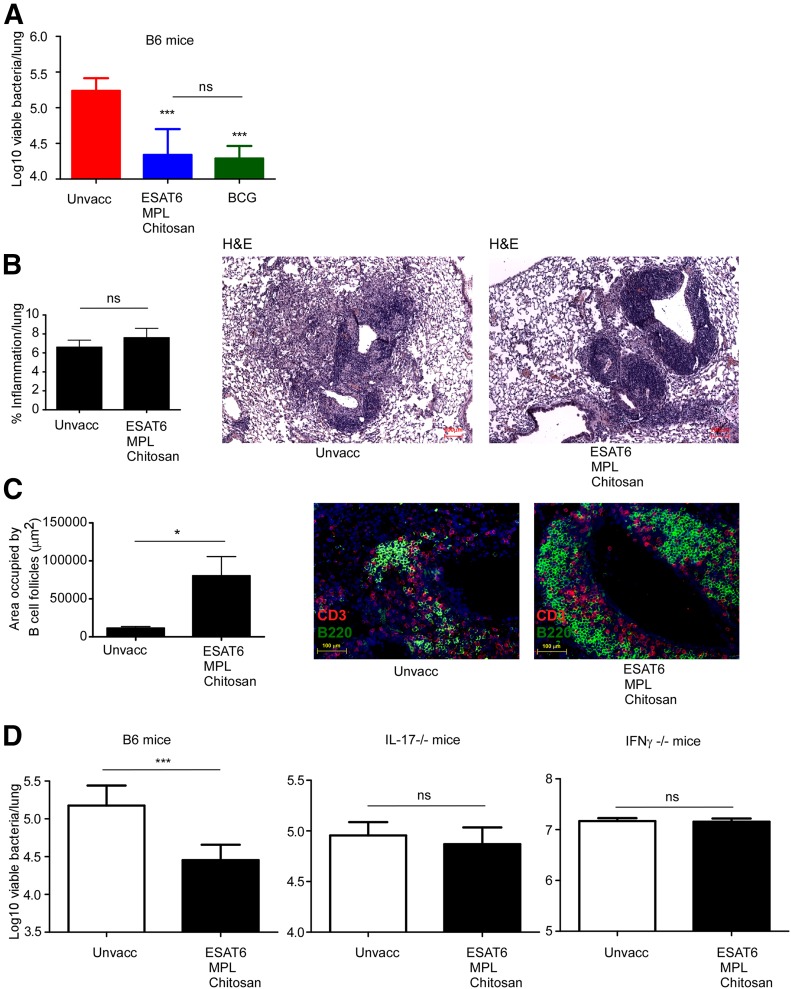
Figure 4.. Mucosal TB vaccine comprising MPL-chitosan protects mice upon challenge with clinical Mtb HN878 strain.
C57BL/6J mice were vaccinated with ESAT-61–20 peptide (133 µg/mouse), formulated in MPL-chitosan adjuvant (50 µg each/mouse), delivered intranasally 3 times with 2 week intervals. Unvaccinated and BCG vaccinated mice were also included as relevant controls. Vaccinated mice received 1 × 10⁶ CFU BCG subcutaneously. All groups of mice were rested for 30 d after the vaccinations and then challenged with aerosolized Mtb HN878 (100 CFU). (A) Lung bacterial burden was determined on d 30 post-Mtb infection in C57BL/6J mice. (B) Pulmonary inflammation was assessed on formalin-fixed, paraffin-embedded lung sections from unvaccinated (Unvacc) and MPL-chitosan-vaccinated mice on H&E-stained sections. Representative images are shown. (C) B Cell lymphoid follicle formation was determined by CD3 (red) and B220 (green) staining on formalin-fixed, paraffin-embedded sections by immunofluorescent staining. The total area occupied by B cell follicles per lobe was quantified using the morphometric tool of the Zeiss Axioplan microscope. Representative images of B cell follicles are shown. (D) Lung bacterial burden was determined on d 30 post-Mtb infection in C57BL/6J, IL-17−/−, IFN-γ−/− unvaccinated, and ESAT-61–20 MPL-chitosan-vaccinated mice. The data points represent the means (sd) of values from 4 to 5 mice. *P < 0.05, ***P < 0.0005.

References

    1. World Health Organization (2015) Global Tuberculosis Report 2015 WHO, Geneva, Switzerland.
    1. Dye C., Glaziou P., Floyd K., Raviglione M. (2013) Prospects for tuberculosis elimination. Annu. Rev. Public Health 34, 271–286. - PubMed
    1. Goonetilleke N. P., McShane H., Hannan C. M., Anderson R. J., Brookes R. H., Hill A. V. (2003) Enhanced immunogenicity and protective efficacy against Mycobacterium tuberculosis of bacille Calmette-Guérin vaccine using mucosal administration and boosting with a recombinant modified vaccinia virus Ankara. J. Immunol. 171, 1602–1609. - PubMed
    1. Chen L., Wang J., Zganiacz A., Xing Z. (2004) Single intranasal mucosal Mycobacterium bovis BCG vaccination confers improved protection compared to subcutaneous vaccination against pulmonary tuberculosis. Infect. Immun. 72, 238–246. - PMC - PubMed
    1. Wang J., Thorson L., Stokes R. W., Santosuosso M., Huygen K., Zganiacz A., Hitt M., Xing Z. (2004) Single mucosal, but not parenteral, immunization with recombinant adenoviral-based vaccine provides potent protection from pulmonary tuberculosis. J. Immunol. 173, 6357–6365. - PubMed

Publication types

MeSH terms