


Chloroquine improves the response to ischemic muscle injury and increases HMGB1 after arterial ligation
- PMID: 28259568
- PMCID: PMC5581296
- DOI: 10.1016/j.jvs.2017.01.021
Chloroquine improves the response to ischemic muscle injury and increases HMGB1 after arterial ligation
Abstract
Objective: We have previously shown that exogenous administration of the nuclear protein high mobility group box 1 (HMGB1) improves angiogenesis after tissue ischemia. Antagonizing HMGB1 prolongs muscle necrosis and deters regeneration. In this study, we evaluated HMGB1 expression in peripheral arterial disease (PAD) and the mechanisms that promote its release in a murine model of hindlimb ischemia. Specifically, we investigated how chloroquine (CQ), a commonly employed disease-modifying antirheumatic drug, promotes HMGB1 release from muscle. We hypothesized that CQ could increase HMGB1 locally and systemically, allowing it to mediate recovery from ischemic injury.
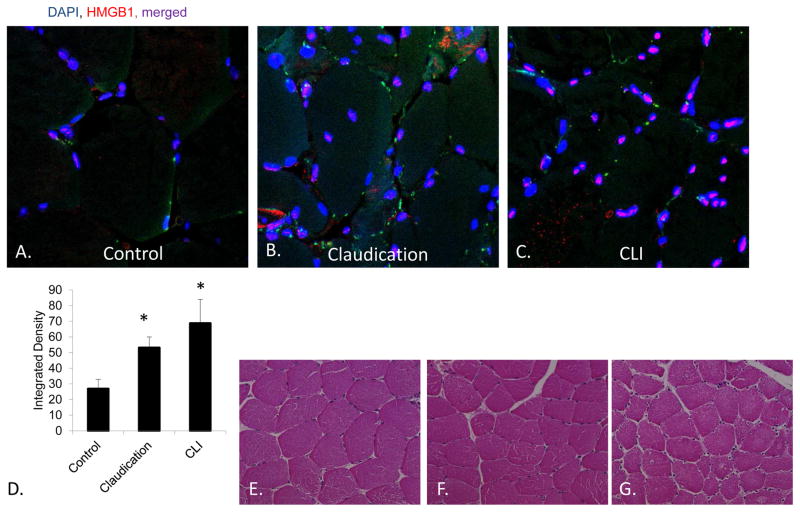
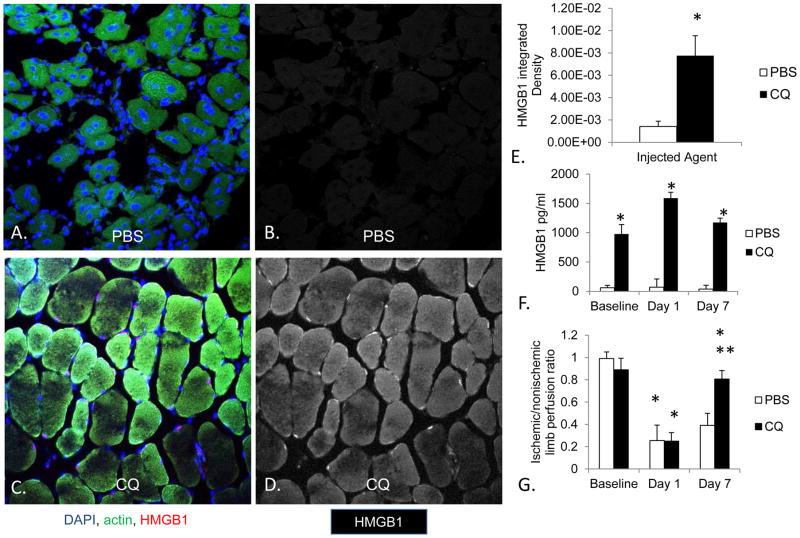
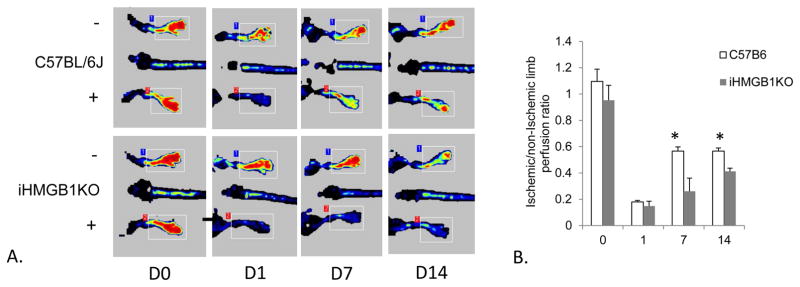
Methods: Muscle biopsies were performed on patients undergoing lower extremity surgery for non-PAD-related disease as well as for claudication and critical limb ischemia. Clinical symptoms and ankle-brachial indices were recorded for each patient. HMGB1 was detected in muscle sections using immunohistochemical staining. Unilateral femoral artery ligation was performed on both wild-type and inducible HMGB1 knockout mice. Wild-type mice were administered intraperitoneal CQ 2 weeks before and after femoral artery ligation. Laser Doppler perfusion imaging was used to determine perfusion recovery. Serum and tissue levels of HMGB1 were measured at designated time points. In vitro, cultured C2C12 myoblasts were treated with increasing doses of CQ. HMGB1, autophagosome formation, p62/SQSTM1 accumulation, caspase-1 expression and activity, and lactate dehydrogenase levels were measured in supernatants and cell lysates.
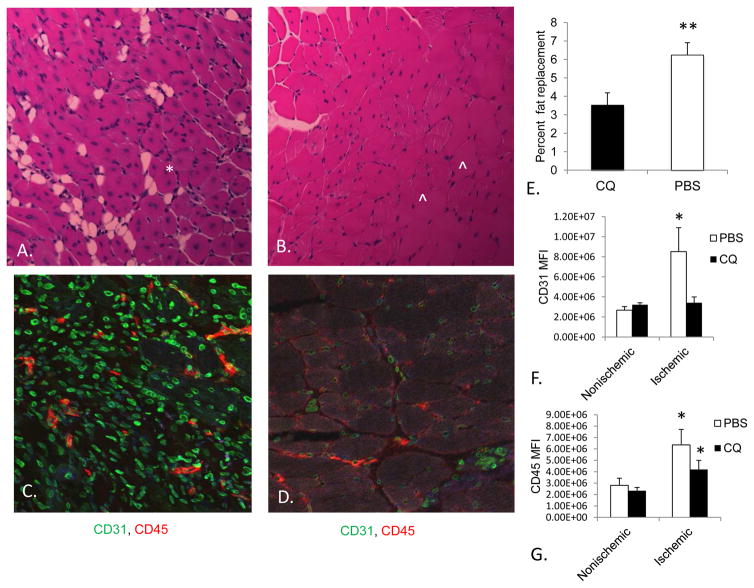
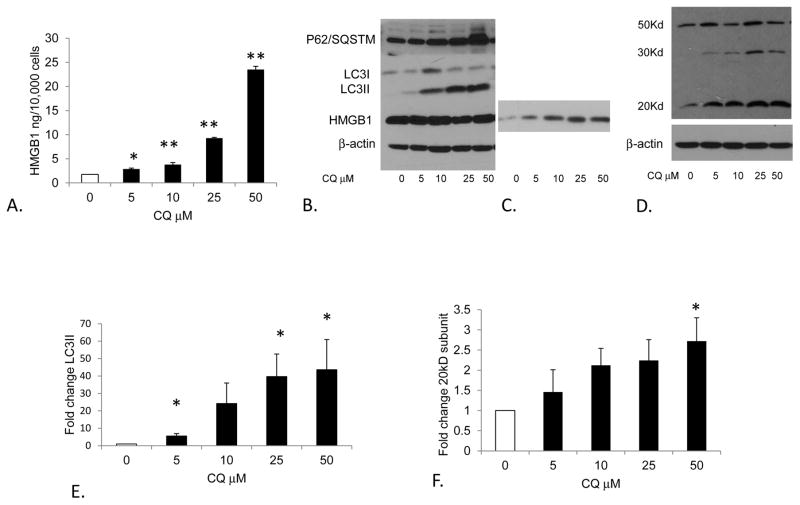
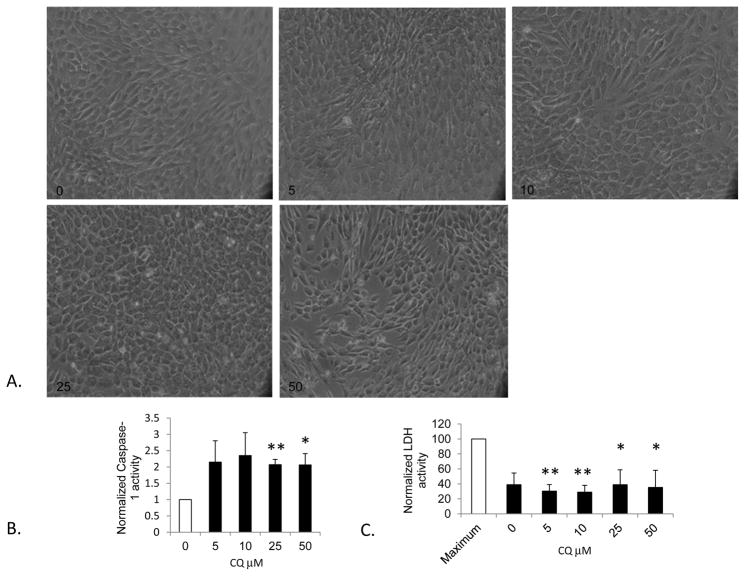
Results: Nuclear expression of HMGB1 was prominent in patients with claudication and critical limb ischemia (P < .05) compared with controls. CQ-treated mice had elevated serum HMGB1 and diffuse HMGB1 staining in muscle (P < .01). In wild-type mice, CQ treatment resulted in higher laser Doppler perfusion imaging ratios in the ischemic limb at 7 days (P < .03) and less fat replacement after 2 weeks (P < .03). In cultured myoblasts, CQ induced autophagosome accumulation, inhibited p62/SQSTM-1 degradation, and activated caspase-1.
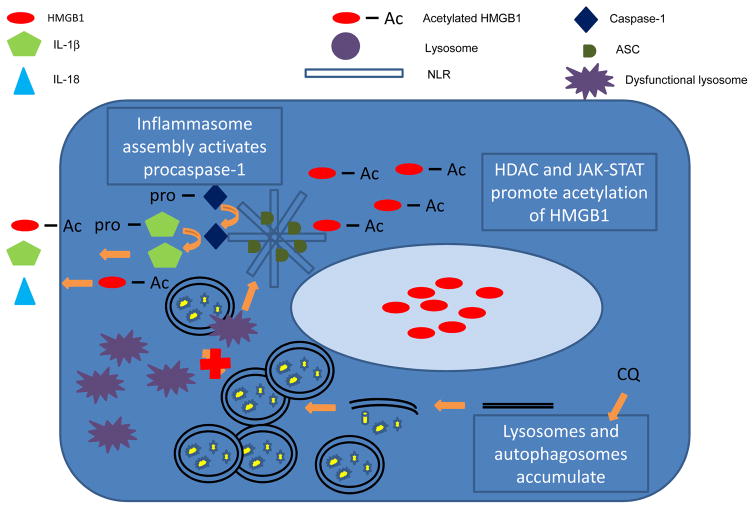
Conclusions: HMGB1 is prominently expressed in PAD muscle but mostly confined to the nucleus. Our in vivo data suggest that HMGB1 mobilization into the sarcoplasm and serum can be increased with CQ, possibly through caspase-1-mediated pathways. Whereas HMGB1 can be released by many cell types, these studies suggest that the muscle may be an important additional source that is relevant in PAD.
Copyright © 2017 Society for Vascular Surgery. All rights reserved.
Figures
References
-
- Selvin E, Erlinger TP. Prevalence of and risk factors for peripheral arterial disease in the United States: results from the National Health and Nutrition Examination Survey, 1999–2000. Circulation. 2004;110:738–43. - PubMed
-
- Nehler MR, Duval S, Diao L, Annex BH, Hiatt WR, Rogers K, Zakharyan A, Hirsch AT. Epidemiology of peripheral arterial disease and critical limb ischemia in an insured national population. Journal of Vascular Surgery. 2014;60:686–695. e2. - PubMed
-
- Rajagopalan S, Mohler ER, Lederman RJ, Mendelsohn FO, Saucedo JF, Goldman CK, Blebea J, Macko J, Kessler PD, Rasmussen HS, Annex BH. Regional Angiogenesis With Vascular Endothelial Growth Factor in Peripheral Arterial Disease: A Phase II Randomized, Double-Blind, Controlled Study of Adenoviral Delivery of Vascular Endothelial Growth Factor 121 in Patients With Disabling Intermittent Claudication. Circulation. 2003;108:1933–1938. - PubMed
-
- Masaki I, Yonemitsu Y, Yamashita A, Sata S, Tanii M, Komori K, Nakagawa K, Hou X, Nagai Y, Hasegawa M, Sugimachi K, Sueishi K. Angiogenic gene therapy for experimental critical limb ischemia: acceleration of limb loss by overexpression of vascular endothelial growth factor 165 but not of fibroblast growth factor-2. Circ Res. 2002;90:966–73. - PubMed
Publication types
MeSH terms
Substances
Grants and funding
LinkOut - more resources
Full Text Sources
Other Literature Sources
Medical
Molecular Biology Databases
