


Longitudinal associations of intimate partner violence attitudes and perpetration: Dyadic couples data from a randomized controlled trial in rural India
- PMID: 28260640
- PMCID: PMC5836743
- DOI: 10.1016/j.socscimed.2017.02.032
Longitudinal associations of intimate partner violence attitudes and perpetration: Dyadic couples data from a randomized controlled trial in rural India
Abstract
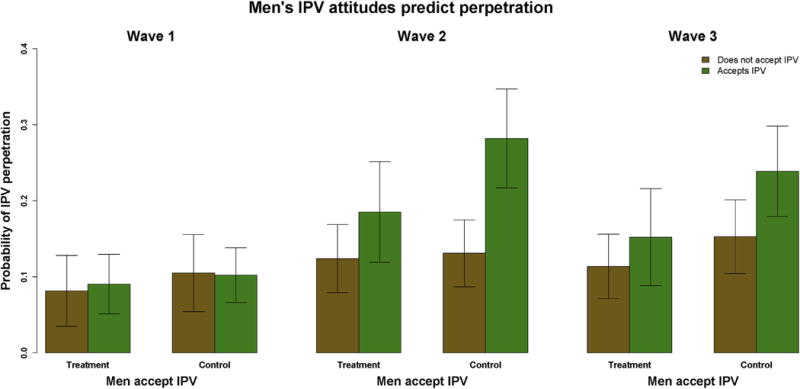
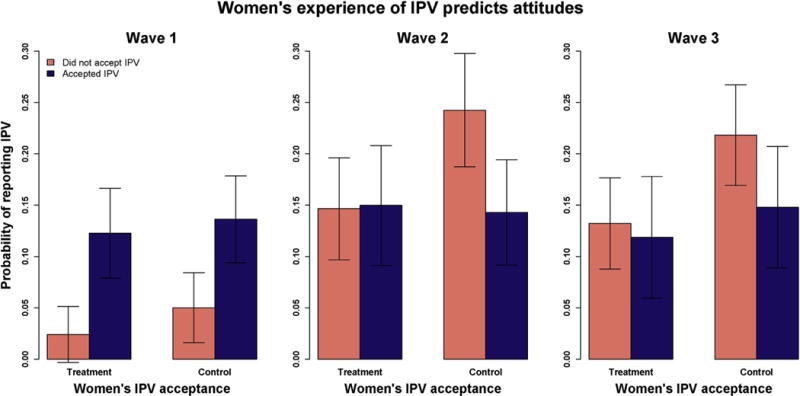
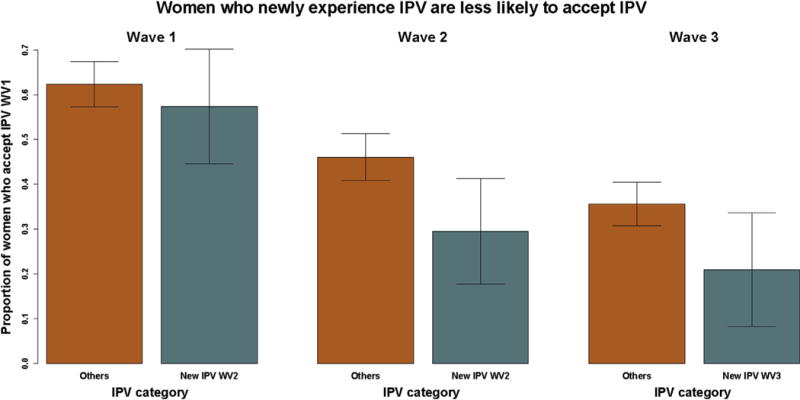
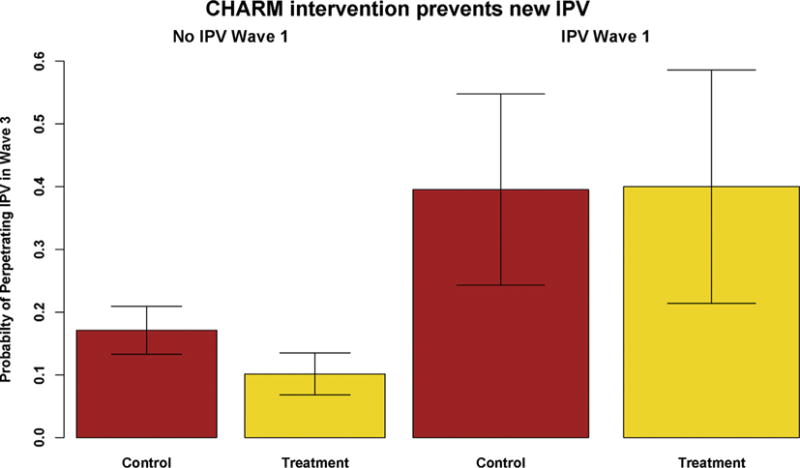
We conducted longitudinal analyses examining the associations between intimate partner violence (IPV) attitudes and women's reported IPV in couples (N = 762) using 3 waves of data from a randomized controlled trial in Maharashtra, India. We found that, between Waves 1 and 2, men's and women's acceptance of IPV in the overall population decreased significantly while reports of IPV increased. These changes, we hypothesize, are evidence of an exogenous shock, possibly a high profile rape in Delhi in December 2012, that may have impacted the entire population. Cross-sectional associations between men's attitudes towards IPV and reported IPV were not significant in Wave 1, while positively and significantly associated in Waves 2 and 3. Longitudinal analysis showed that reduction in men's acceptance of IPV between Waves 1 and 2 was associated with a lower likelihood of reported IPV in Wave 3. Women's Wave 1 acceptance of IPV was positively associated with reported IPV in the Wave 1 cross-sectional analysis, while Wave 2 and Wave 3 measures of IPV acceptance were negatively associated with reported IPV in Waves 2 and 3 respectively. Longitudinal analyses of the change in women's attitudes towards IPV from Wave 1 to 2 and reported IPV in Wave 3 were insignificant. However, When women first reported IPV in Waves 2 or 3 they were less likely to report acceptance of IPV in that same wave. Findings suggest that changes in husbands' IPV acceptance is predictive of subsequent IPV, while newly experienced IPV predicts decreased IPV acceptance for women. Wave 2 and Wave 3 results were significant for the control group only, evidence that the intervention affected those associations, potentially changing attitudes more quickly than behavior. We recommend interventions that expose community opposition to IPV as a new social norm, and analysis of how the 2012 Delhi rape case may have affected these norms.
Keywords: Attitudes; Couples level data; India; Intimate partner violence; Randomized controlled trial; Social norms.
Copyright © 2017. Published by Elsevier Ltd.
Figures
References
-
- Agarwal S, Sethi V, Gupta P, Jha M, Agnihotri A, Nord M. Experiential household food insecurity in an urban underserved slum of North India. Food Secur. 2009;1(3):239–250.
-
- Alio AP, Clayton HB, Garba M, Mbah AK, Daley E, Salihu HM. Spousal concordance in attitudes toward violence and reported physical abuse in African couples. J Interpers violence. 2011;26(14):2790–2810. - PubMed
-
- Belair-Gagnon V, Mishra S, Agur C. Reconstructing the Indian public sphere: newswork and social media in the Delhi gang rape case. Journalism. 2014;15(8):1059–1075.
-
- Bicchieri C, Muldoon R. Social norms. In: Zalta E, editor. Stanford Encyclopedia of Philosophy (Spring 2011 ed) The Metaphysics Research Lab; Stanford CA: 2011.
Publication types
MeSH terms
Grants and funding
LinkOut - more resources
Full Text Sources
Other Literature Sources
Medical
