


Profound vision loss impairs psychological well-being in young and middle-aged individuals
- PMID: 28260855
- PMCID: PMC5328297
- DOI: 10.2147/OPTH.S113414
Profound vision loss impairs psychological well-being in young and middle-aged individuals
Abstract
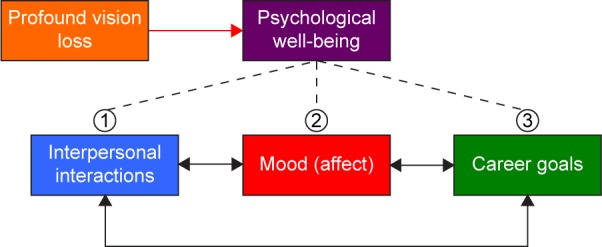
Purpose: The aim of this study was to evaluate the effects of profound vision loss on psychological well-being in adolescents, young adults, and middle-aged adults with regard to mood, interpersonal interactions, and career-related goals. In addition, we assessed the significance of the resources that may be used to enhance psychological well-being in cases of profound vision loss, and in particular, examined the utility of low vision aids and the role of the ophthalmologist as a provider of emotional support.
Methods: A questionnaire was issued to individuals aged 13-65 years with profound vision loss resulting from Leber's hereditary optic neuropathy (LHON). Depression prevalence was evaluated with questions regarding major depressive disorder symptomatology. Participants appraised the effects of vision loss on their interpersonal interactions and career goals by providing an impact rating (IR) on a 21-point psychometric scale from -10 to +10. Social well-being index was defined as the average of interpersonal IR and career IR. Subjects were additionally asked about the use of low vision aids and sources of emotional support.
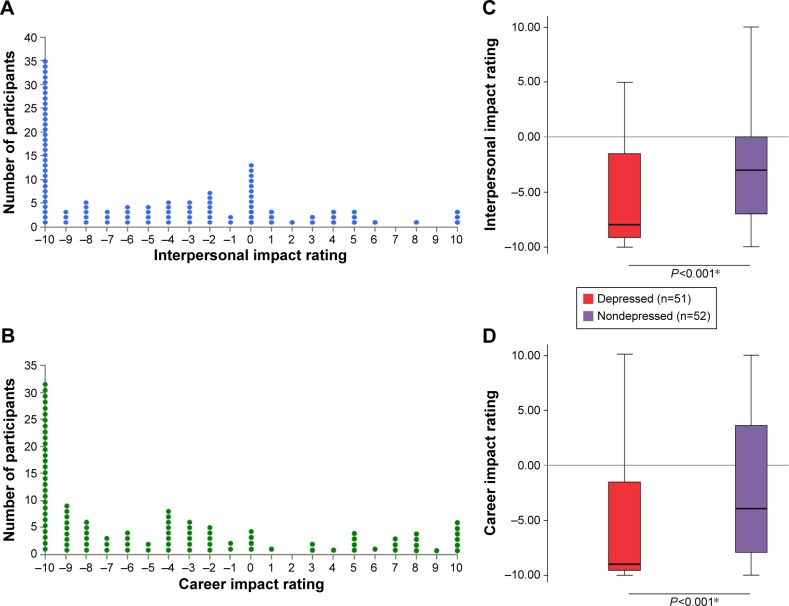
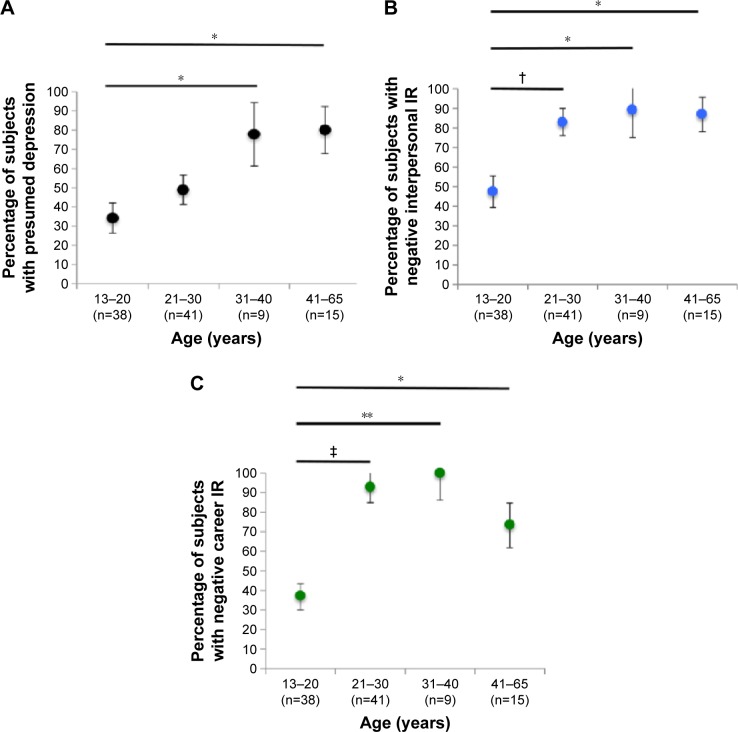
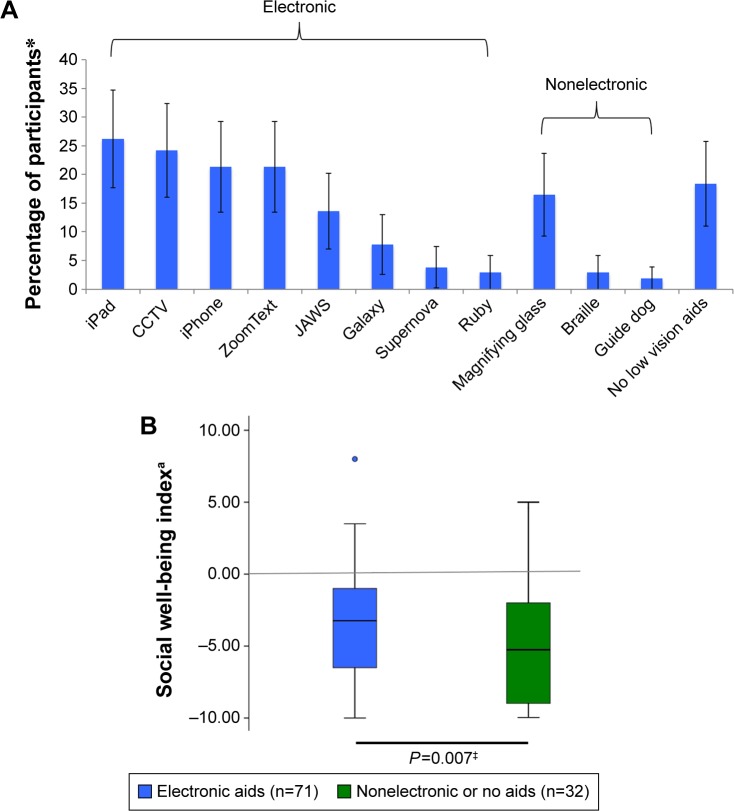
Results: A total of 103 participants (mean age =26.4±11.2 years at LHON diagnosis; mean ± standard deviation) completed the questionnaire. Nearly half (49.5%) met the depression criteria after vision loss. Negative impacts on interpersonal interactions (median IR = -5) and career goals (median IR = -6) were observed; both ratings were worse (P<0.001) for depressed versus nondepressed subjects. Older age at diagnosis corresponded to higher depression prevalence and increased incidence of negative interpersonal IR and career IR. Sixty-eight percent of subjects used electronic vision aids; controlling for age, social well-being index was higher among these individuals than for those who did not use electronic aids (P=0.03). Over half of the participants (52.4%) asserted that they derived emotional support from their ophthalmologist.
Conclusion: Profound vision loss in adolescents, young adults, and middle-aged adults is associated with significant negative psychological and psychosocial effects, which are influenced by age and use of electronic vision aids. Ophthalmologists, in addition to managing vision loss, may serve an important role in the emotional adaptation of these patients.
Keywords: Leber’s hereditary optic neuropathy; depression; low vision aids; psychological; quality of life; vision loss.
Conflict of interest statement
Disclosure The authors report no conflicts of interest in this work.
Figures
Comment in
-
Psychological morbidity in Leber's hereditary optic neuropathy depends on phenotypic, social, economic, and genetic factors.Clin Ophthalmol. 2017 May 22;11:959-962. doi: 10.2147/OPTH.S136761. eCollection 2017. Clin Ophthalmol. 2017. PMID: 28579746 Free PMC article. No abstract available.
References
-
- Nollett CL, Bray N, Bunce C, et al. High prevalence of untreated depression in patients accessing low-vision services. Ophthalmology. 2016;123(2):440–441. - PubMed
LinkOut - more resources
Full Text Sources
Other Literature Sources
Miscellaneous
