


Automated Detection of Stereotypical Motor Movements in Autism Spectrum Disorder Using Recurrence Quantification Analysis
- PMID: 28261082
- PMCID: PMC5311048
- DOI: 10.3389/fninf.2017.00009
Automated Detection of Stereotypical Motor Movements in Autism Spectrum Disorder Using Recurrence Quantification Analysis
Abstract
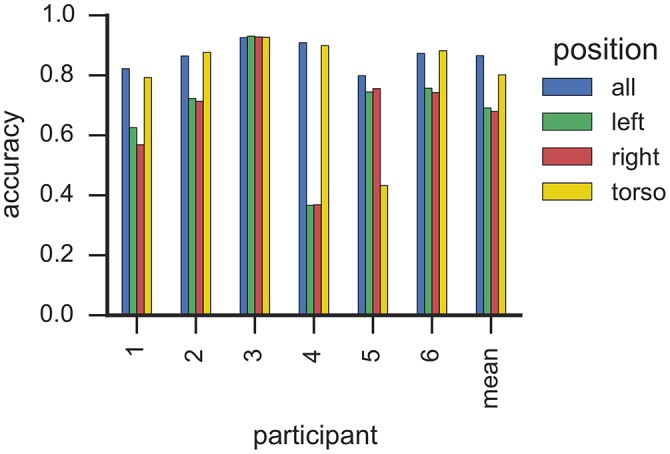
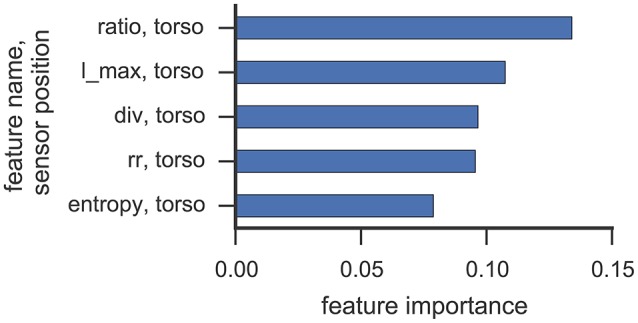
A number of recent studies using accelerometer features as input to machine learning classifiers show promising results for automatically detecting stereotypical motor movements (SMM) in individuals with Autism Spectrum Disorder (ASD). However, replicating these results across different types of accelerometers and their position on the body still remains a challenge. We introduce a new set of features in this domain based on recurrence plot and quantification analyses that are orientation invariant and able to capture non-linear dynamics of SMM. Applying these features to an existing published data set containing acceleration data, we achieve up to 9% average increase in accuracy compared to current state-of-the-art published results. Furthermore, we provide evidence that a single torso sensor can automatically detect multiple types of SMM in ASD, and that our approach allows recognition of SMM with high accuracy in individuals when using a person-independent classifier.
Keywords: ASD; autism; recurrence analysis; recurrence plots; repetitive behavior; stereotypical motor movement.
Figures


References
-
- Albinali F., Goodwin M. S., Intille S. (2012). Detecting stereotypical motor movements in the classroom using accelerometry and pattern recognition algorithms. Pervasive Mob. Comput. 8, 103–114. 10.1016/j.pmcj.2011.04.006 - DOI
-
- Albinali F., Goodwin M. S., Intille S. S. (2009). Recognizing stereotypical motor movements in the laboratory and classroom: a case study with children on the autism spectrum, in Proceedings of the 11th International Conference on Ubiquitous Computing (Orlando, FL: ACM; ), 71–80.
-
- Baio J. (2012). Prevalence of Autism Spectrum Disorders: Autism and Developmental Disabilities Monitoring Network, 14 Sites, United States, 2008. Morbidity and Mortality Weekly Report, Vol. 61. Centers for Disease Control and Prevention. - PubMed
-
- Baumeister A. A., Forehand R. (1973). Stereotyped acts. Int. Rev. Res. Ment. Retard. 6, 55–96.
Grants and funding
LinkOut - more resources
Full Text Sources
Other Literature Sources
