Efficacy of phosphodiesterase type 5 inhibitors for the treatment of distal ureteral calculi: A systematic review and meta-analysis
- PMID: 28261676
- PMCID: PMC5330375
- DOI: 10.4111/icu.2017.58.2.82
Efficacy of phosphodiesterase type 5 inhibitors for the treatment of distal ureteral calculi: A systematic review and meta-analysis
Abstract
Purpose: To determine the efficacy of phosphodiesterase type 5 inhibitors (PDE5i) as medical expulsive therapy (MET) for the treatment of distal ureteral calculi.
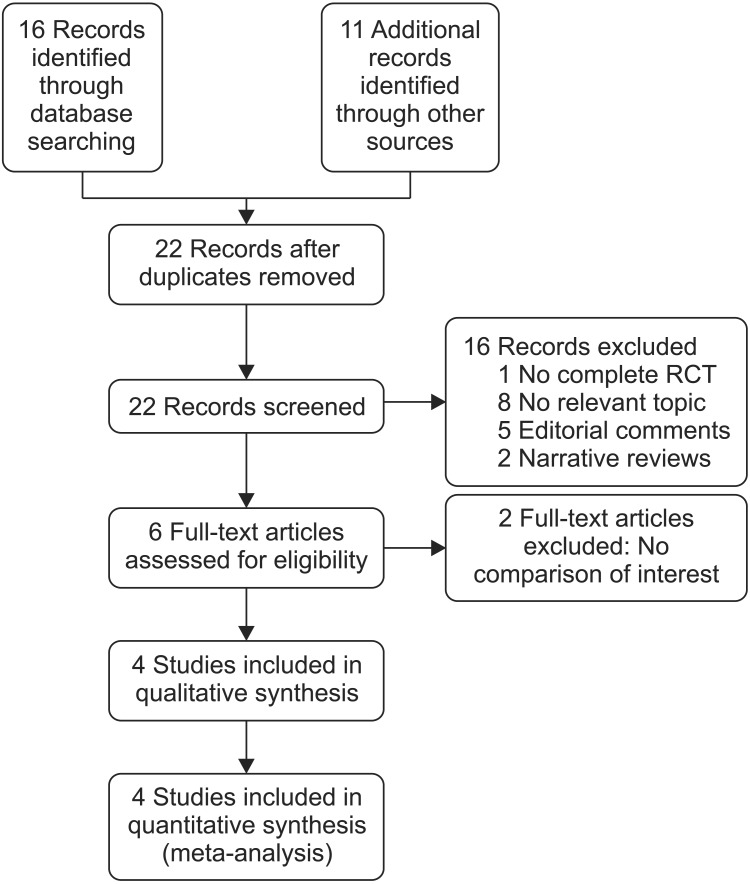
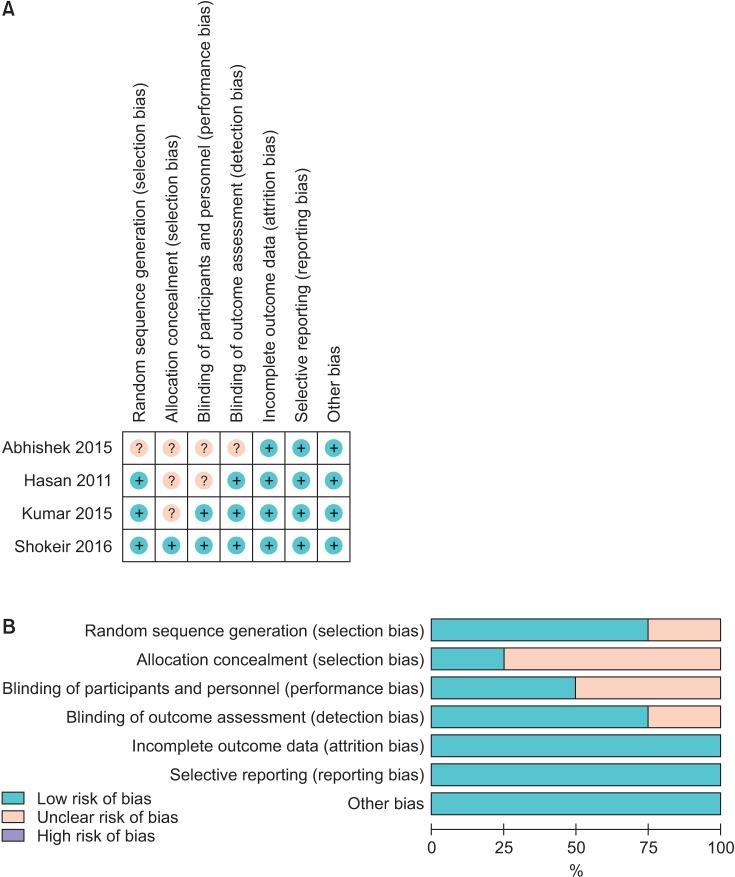
Materials and methods: A search strategy was conducted in the MEDLINE, CENTRAL, and Embase databases. Searches were also conducted in other databases and unpublished literature. Clinical trials were included without language restrictions. The risk of bias was evaluated with the Cochrane Collaboration's tool. An analysis of random effects due to statistical heterogeneity was conducted. The primary outcome was the expulsion rate of the distal ureteral calculus in 28 days. The secondary outcomes were the time to expulsion, side effects of treatment, and amount (mg) of nonopioid analgesia. The measure of the effect was the risk difference (RD) with a 95% confidence interval (CI). The planned interventions were PDE5i vs. placebo, tadalafil vs. placebo, and tadalafil vs. tamsulosin.
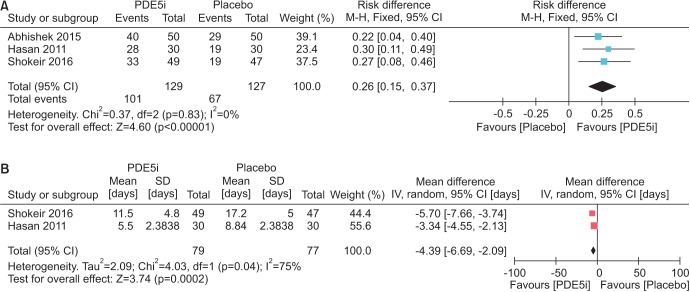
Results: Four articles were included in the qualitative and quantitative analysis. Records of 580 patients were found among the four studies. A low risk of bias was shown for the majority of the study items. The calculi expulsion rate had an RD of 0.26 (95% CI, 0.15-0.37) and a less prolonged expulsion as a secondary outcome with a mean difference of -4.39 days (95% CI, -6.69 to -2.09) in favor of PDE5i compared with the placebo. No significant difference was found for these outcomes when comparing tadalafil with tamsulosin.
Conclusions: Compared with a placebo, PDE5i could be effective as MET for the treatment of distal ureter calculi.
Keywords: Meta-analysis; Phosphodiesterase 5 inhibitors; Review; Ureteral calculi.
Conflict of interest statement
CONFLICTS OF INTEREST: The authors have nothing to disclose.
Figures

References
-
- Colella J, Kochis E, Galli B, Munver R. Urolithiasis/nephrolithiasis: what's it all about? Urol Nurs. 2005;25:427–428. 475, 449. - PubMed
-
- Wooldridge AA, Seahorn TL, Williams J, Taylor HW, Oliver JL, Kim DY, et al. Chronic renal failure associated with nephrolithiasis, ureterolithiasis, and renal dysplasia in a 2-year-old quarter horse gelding. Vet Radiol Ultrasound. 1999;40:361–364. - PubMed
-
- Miller OF, Kane CJ. Time to stone passage for observed ureteral calculi: a guide for patient education. J Urol. 1999;162(3 Pt 1):688–690. - PubMed
-
- Dellabella M, Milanese G, Muzzonigro G. Randomized trial of the efficacy of tamsulosin, nifedipine and phloroglucinol in medical expulsive therapy for distal ureteral calculi. J Urol. 2005;174:167–172. - PubMed
Publication types
MeSH terms
Substances
LinkOut - more resources
Full Text Sources
Other Literature Sources
Miscellaneous