


Shortened sleep fuels inflammatory responses to marital conflict: Emotion regulation matters
- PMID: 28262602
- PMCID: PMC5419294
- DOI: 10.1016/j.psyneuen.2017.02.015
Shortened sleep fuels inflammatory responses to marital conflict: Emotion regulation matters
Abstract
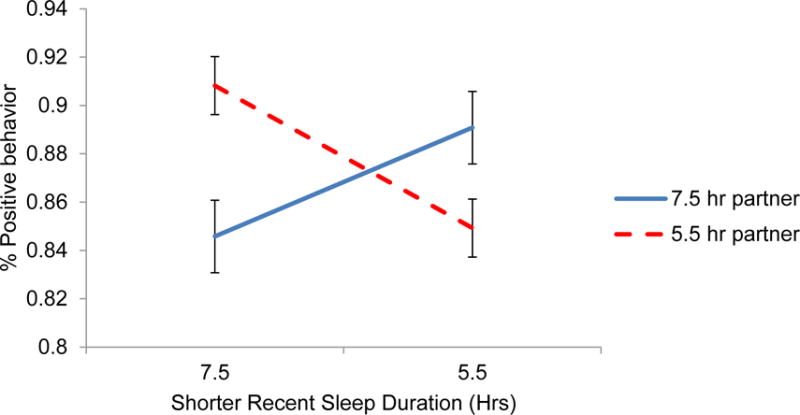
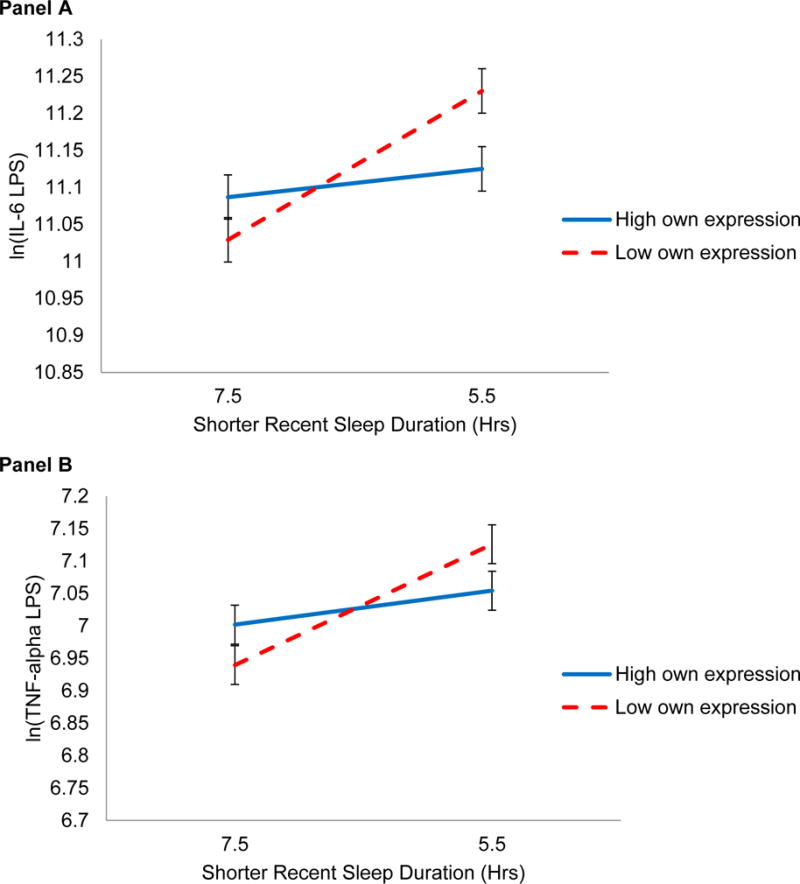
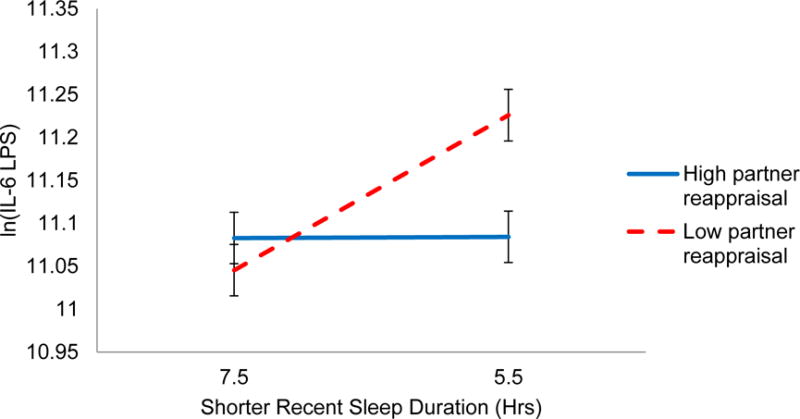
Sleep problems can boost inflammation and may jeopardize interpersonal functioning, risks that may be magnified in couples. This observational study examined the effects of self-reported recent sleep duration on couples' inflammation, inflammatory responses to a problem discussion, interpersonal behavior, and use of emotion regulation strategies (emotion expression, cognitive reappraisal) during conflict. People who slept less had higher stimulated interleukin-6 (IL-6) and tumor necrosis factor-alpha (TNF-α) production after the marital problem discussion than those who slept more. However, using emotion expression and cognitive reappraisal strategies during conflict protected couples who slept less from inflammatory reactivity. Specifically, people's short sleep did not relate to inflammatory increases when they expressed their own feelings more or when their partner reappraised or expressed their emotions more. When both partners slept less, couples interacted in a more hostile way than when at least one partner slept more. These data point to the combination of short sleep and marital conflict as a novel path to heightened inflammation, a risk that partners' emotion regulation strategies may counteract. The study also highlights the role of short sleep in more negative or punishing marital behavior.
Keywords: Couples; Emotion regulation; Inflammation; Inflammatory response; Marital conflict; Sleep duration.
Copyright © 2017 Elsevier Ltd. All rights reserved.
Figures
References
-
- Almeida DM. Resilience and vulnerability to daily stressors assessed via diary methods. Curr Dir Psychol Sci. 2005;14:64–68.
-
- Anderson C, Dickinson DL. Bargaining and trust: the effects of 36-h total sleep deprivation on socially interactive decisions. J Sleep Res. 2010;19:54–63. - PubMed
-
- Basco MR, Krebaum SR, Rush AJ. Outcome measures of depression. In: Strupp HH, Horowitz LM, Lambert MJ, editors. Measuring patient changes in mood, anxiety, and personality disorders. American Psychological Association; Washington D C: 1997. pp. 207–245.
-
- Beattie L, Kyle SD, Espie CA, Biello SM. Social interactions, emotion and sleep: A systematic review and research agenda. Sleep Med Rev. 2015;24:83–100. - PubMed
-
- Blair SN, Haskell WL, Ho P, Paffenbarger RS, Vranizan KM, Farquhar JW, Wood PD. Assessment of habitual physical activity by a seven-day recall in a community survey and controlled experiments. Am J Epidemiol. 1985;122:794–804. - PubMed
Publication types
MeSH terms
Substances
Grants and funding
LinkOut - more resources
Full Text Sources
Other Literature Sources
