. 2017 Mar 6:8:14621.
doi: 10.1038/ncomms14621.

To address surface reaction network complexity using scaling relations machine learning and DFT calculations

Affiliations

To address surface reaction network complexity using scaling relations machine learning and DFT calculations

Zachary W Ulissi et al. Nat Commun. .

Abstract

Surface reaction networks involving hydrocarbons exhibit enormous complexity with thousands of species and reactions for all but the very simplest of chemistries. We present a framework for optimization under uncertainty for heterogeneous catalysis reaction networks using surrogate models that are trained on the fly. The surrogate model is constructed by teaching a Gaussian process adsorption energies based on group additivity fingerprints, combined with transition-state scaling relations and a simple classifier for determining the rate-limiting step. The surrogate model is iteratively used to predict the most important reaction step to be calculated explicitly with computationally demanding electronic structure theory. Applying these methods to the reaction of syngas on rhodium(111), we identify the most likely reaction mechanism. Propagating uncertainty throughout this process yields the likelihood that the final mechanism is complete given measurements on only a subset of the entire network and uncertainty in the underlying density functional theory calculations.


Conflict of interest statement

The authors declare no competing financial interests.

Figures
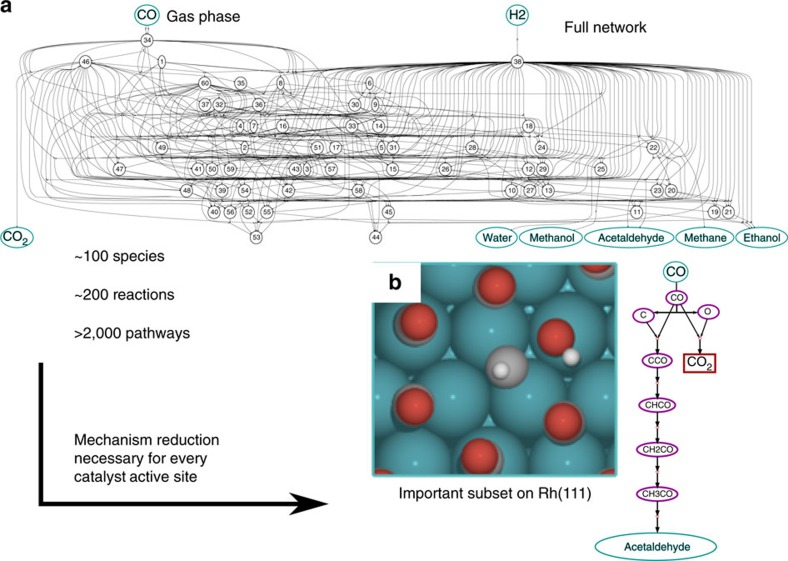
Figure 1
Figure 1. The challenge of reaction network complexity in catalyst discovery.
(a) Reaction network for the reaction of syngas (CO+H2) to CO2, water, methane, methanol, acetaldehyde and ethanol, including surface-adsorbed intermediates with up two carbons and two oxygens (C1/C2 chemistries). Even for this reduced network, there are hundreds of reactions and thousands of possible mechanisms to consider for each new catalyst active site, which are prohibitively expensive for materials discovery screens. (b) The reduced network for syngas reactivity on Rh(1 1 1), producing acetaldehyde selectively as confirmed by the experiment. The reduction from (a) to this subset is made more efficient and uses far fewer full-accuracy DFT calculations using the methods in this work.
Figure 2
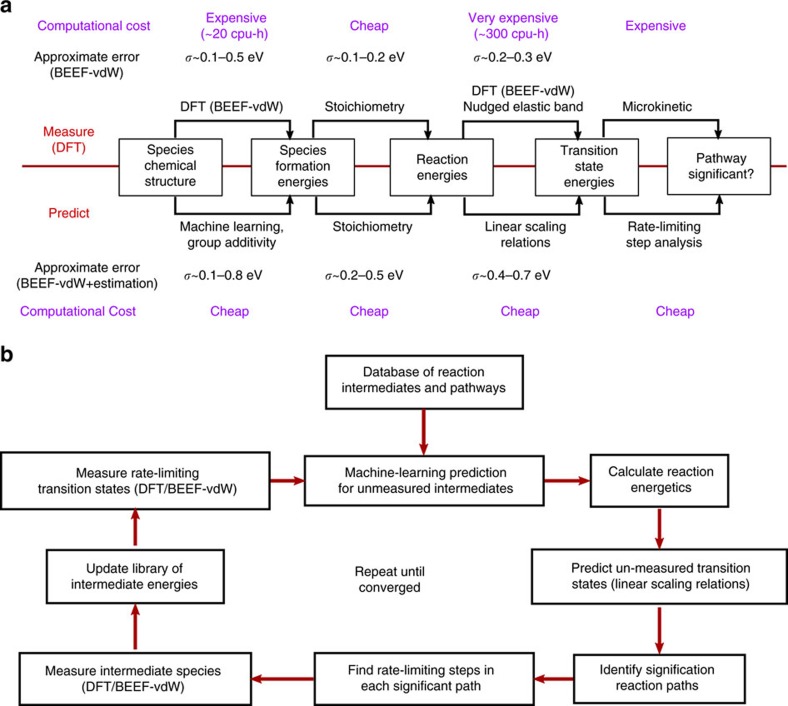
Figure 2. Successive approximations and feedback scheme used to determine which reaction pathways are important.
(a) Levels of detail necessary to determine whether a reaction pathway is significant. Measurements of each quantity are possible with DFT (and uncertainties provided by the BEEF-vdW functional), but are computationally expensive. These quantities can be predicted from chemical structure using a combination of group additivity, machine learning and linear scaling relations but with greater uncertainty. (b) Online model exploration methodology. In each iteration, redictions are made for the transition-state free energy of every reaction. Reactions that have a high likelihood of affecting the most likely pathway are selected for additional study with full accuracy (DFT/BEEF-vdW).
Figure 3
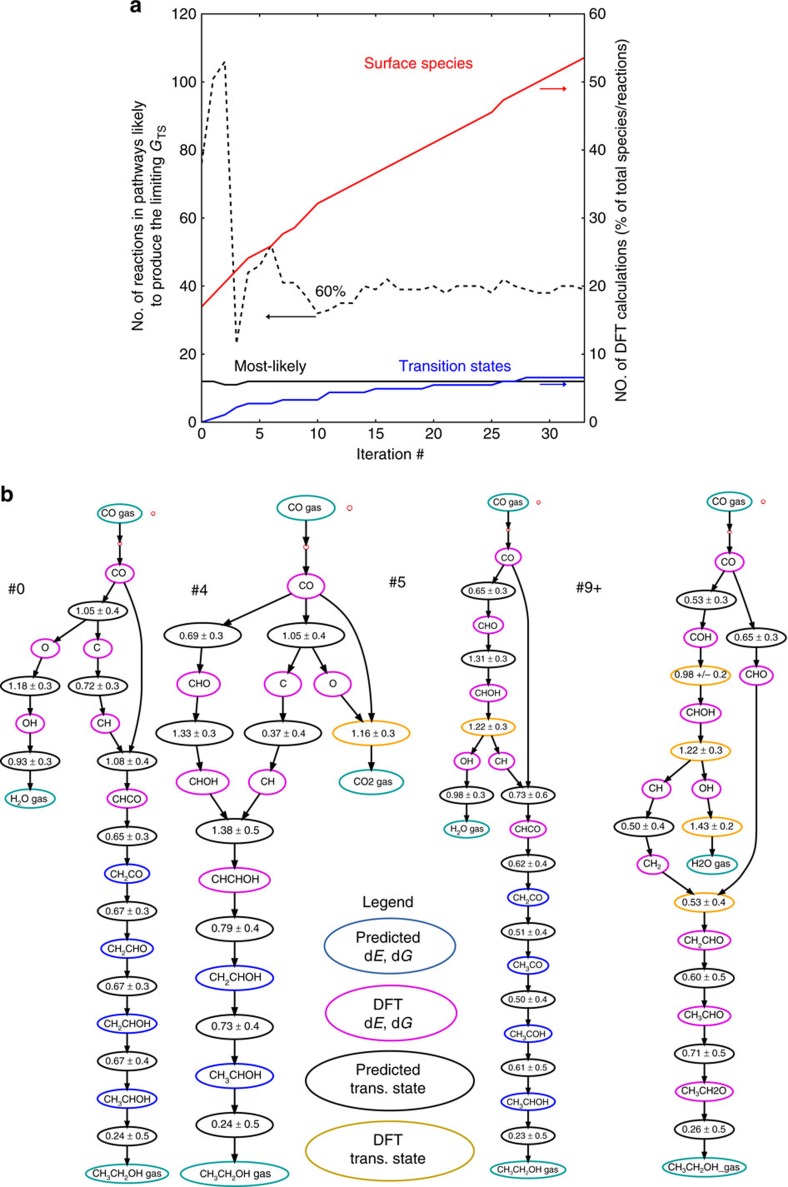
Figure 3. Reaction network exploration using predictive reaction energetic models.
(a) Convergence of the reaction network at each iteration of the process shown in Fig. 2. At each iteration, DFT calculations are performed for important intermediate species and transition states, allowing model performance to improve at each iteration. (b) Convergence of the most likely pathway for the production of ethanol on Rh(1 1 1). Direct CO scission is initially predicted to be the most likely process for the scission. By the fifth iteration, the correct CO scission step (CH–OH scission) found in the mechanism is mostly similar to the converged most likely network. By the ninth iteration, the converged most likely pathway is identified, and successive measurements focus on less likely pathways.
Figure 4
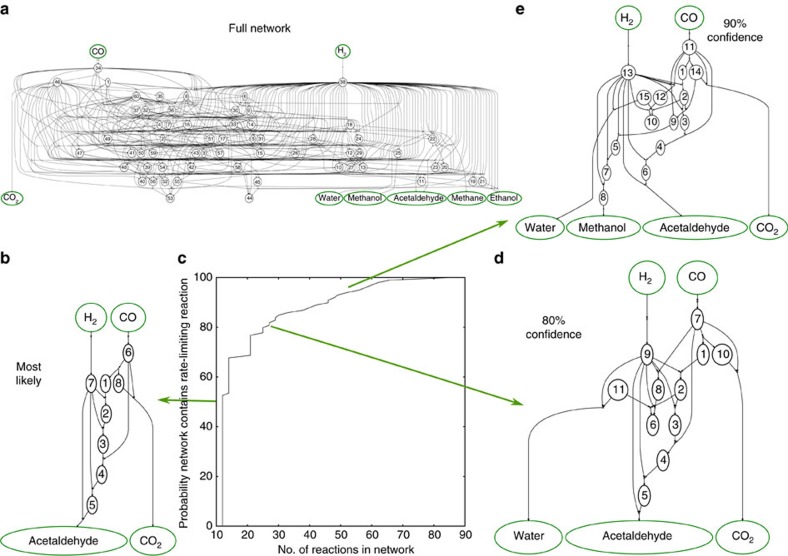
Figure 4. Reaction networks for the CO+H2 reaction on Rh(1 1 1) under DFT uncertainty provided by the BEEF-vdW functional.
(a) All reactions considered for C1 and CCO/OCCO chemistry on Rh(1 1 1). (b) Pathway with the lowest expected limiting transition-state energy, yielding acetaldehyde as a final product. (c) Including less likely reactions in the final mechanism increases the probability that the final network contains the actual rate-limiting step. (d) Reduced mechanism at the 80% confidence level, showing selectivity problems to water and CO2. (e) Reduced mechanism at the 90% confidence level, suggesting methanol cannot be ruled out as a final product at this confidence level given DFT-level uncertainty.

References

    1. Gutenkunst R. N. et al.. Universally sloppy parameter sensitivities in systems biology models. PLoS Comput. Biol. 3, 1–8 (2007). - PMC - PubMed
    1. Gao C. W., Allen J. W., Green W. H. & West R. H. Reaction mechanism generator: automatic construction of chemical kinetic mechanisms. Comput. Phys. Commun. 203, 212–255 (2016).
    1. Erdrich P., Steuer R. & Klamt S. An algorithm for the reduction of genome-scale metabolic network models to meaningful core models. BMC Syst. Biol. 9, 48 (2015). - PMC - PubMed
    1. Nørskov J. K., Bligaard T., Rossmeisl J. & Christensen C. H. Towards the computational design of solid catalysts. Nat. Chem. 1, 37–46 (2009). - PubMed
    1. Salciccioli M., Chen Y. & Vlachos D. G. Density Functional Theory-derived group additivity and linear scaling methods for prediction of oxygenate stability on metal catalysts: adsorption of open-ring alcohol and polyol dehydrogenation intermediates on Pt-based metals. J. Phys. Chem. C 114, 20155–20166 (2010).

Publication types