


Engineered yeast with a CO2-fixation pathway to improve the bio-ethanol production from xylose-mixed sugars
- PMID: 28262754
- PMCID: PMC5338314
- DOI: 10.1038/srep43875
Engineered yeast with a CO2-fixation pathway to improve the bio-ethanol production from xylose-mixed sugars
Abstract
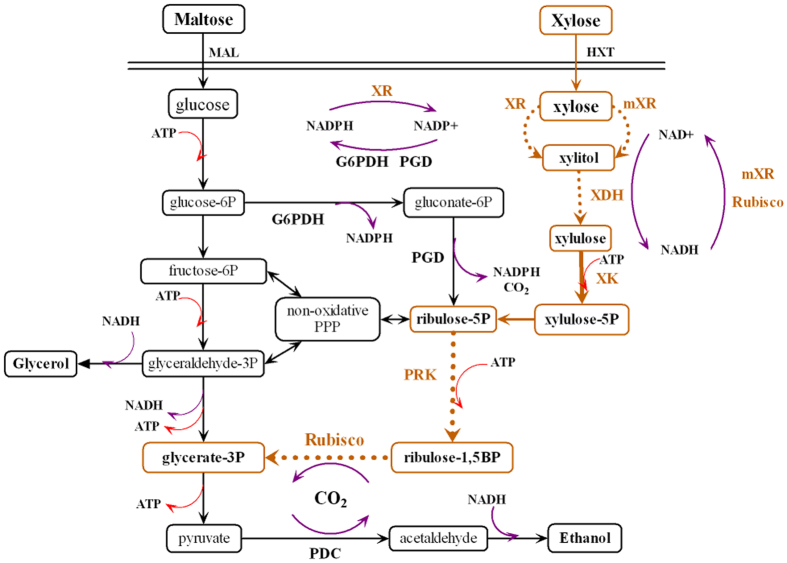
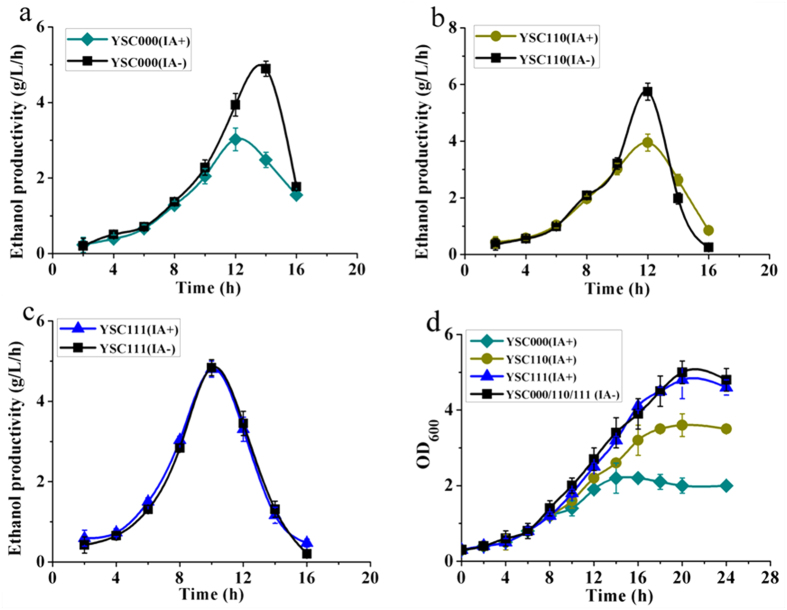
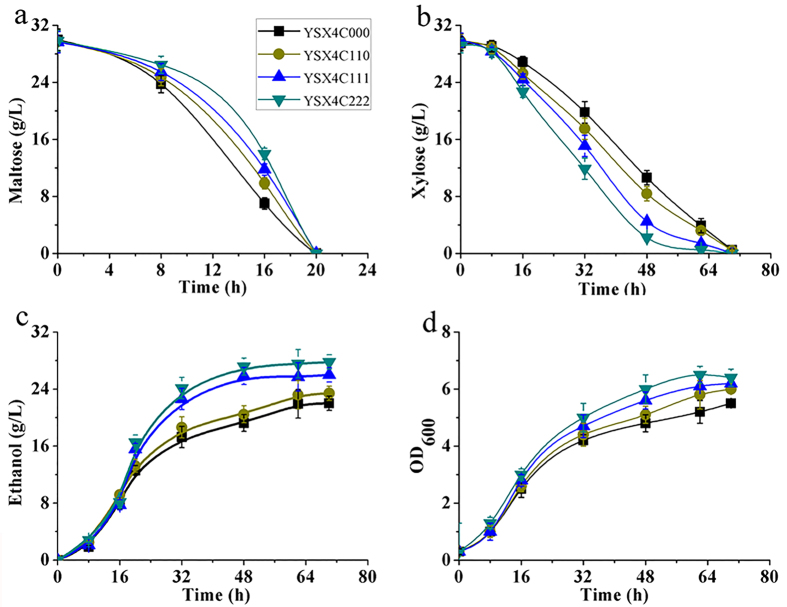
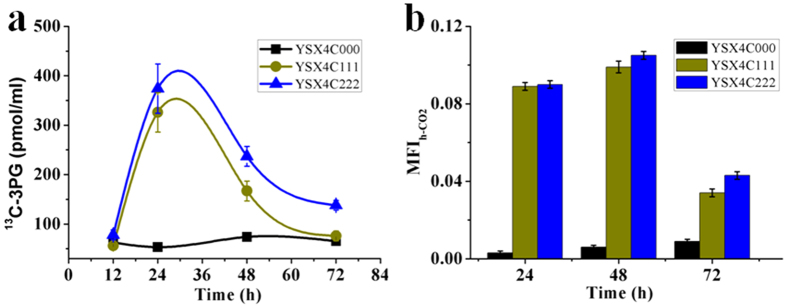
Bio-ethanol production from lignocellulosic raw materials could serve as a sustainable potential for improving the supply of liquid fuels in face of the food-to-fuel competition and the growing energy demand. Xylose is the second abundant sugar of lignocelluloses hydrolysates, but its commercial-scale conversion to ethanol by fermentation is challenged by incomplete and inefficient utilization of xylose. Here, we use a coupled strategy of simultaneous maltose utilization and in-situ carbon dioxide (CO2) fixation to achieve efficient xylose fermentation by the engineered Saccharomyces cerevisiae. Our results showed that the introduction of CO2 as electron acceptor for nicotinamide adenine dinucleotide (NADH) oxidation increased the total ethanol productivity and yield at the expense of simultaneous maltose and xylose utilization. Our achievements present an innovative strategy using CO2 to drive and redistribute the central pathways of xylose to desirable products and demonstrate a possible breakthrough in product yield of sugars.
Conflict of interest statement
The authors declare no competing financial interests.
Figures
References
-
- Baeyens J. et al.. Challenges and opportunities in improving the production of bio-ethanol. Prog. Energ. Combust. 47, 60–88 (2015).
-
- Ragauskas A. J. et al.. The path forward for biofuels and biomaterials. Science 311, 484–489 (2006). - PubMed
-
- Zhang H. L., Baeyens J. & Tan T. W. The bubble-induced mixing in starch-to-ethanol fermenters. Chem. Eng. Res. Des. 90, 2122–2128 (2012).
-
- Silva C. E. D. F. & Bertucco A. Bioethanol from microalgae and cyanobacteria: a review and technological outlook. Process Biochem. 51, 1833–1842 (2016).
Publication types
MeSH terms
Substances
LinkOut - more resources
Full Text Sources
Other Literature Sources
Molecular Biology Databases
