


Initial experience with intra-fraction motion monitoring using Calypso guided volumetric modulated arc therapy for definitive prostate cancer treatment
- PMID: 28263041
- PMCID: PMC5355366
- DOI: 10.1002/jmrs.224
Initial experience with intra-fraction motion monitoring using Calypso guided volumetric modulated arc therapy for definitive prostate cancer treatment
Abstract
Introduction: Accurate delivery of radiation while reducing dose to organs at risk is essential in prostate treatment. The Calypso motion management system detects and corrects both inter- and intra-fraction motion which offers potential benefits over standard alignment to fiducial markers. The aims of this study were to implement Calypso with Dynamic Edge™ gating and to assess both the motion seen, and interventions required.
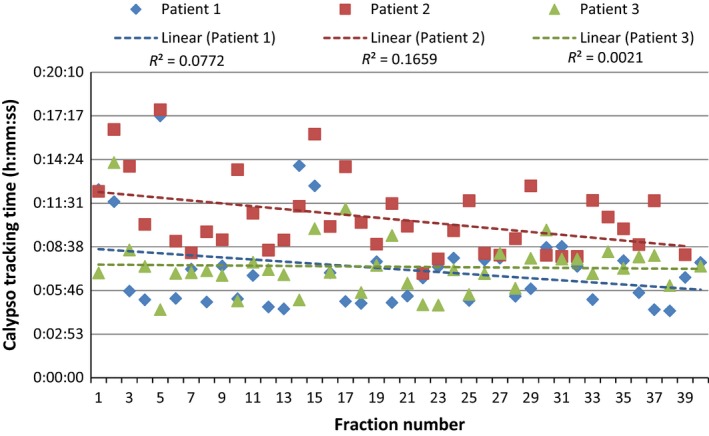
Methods: An implementation group was formed which assessed changes needed to standard workflows. Three patients had Calypso beacons inserted into their prostate. All patients were treated using volumetric modulated arc therapy to a dose of 80 Gy in 40 fractions. Standard inter-fraction motion correction using either kilovoltage (kV) orthogonal paired imaging or cone beam computed tomography (CBCT) image-guided radiotherapy techniques, were used along with the Calypso system to compare accuracy. A gating threshold of >0.5 cm was used during treatment. Workflow variations along with inter- and intra-fraction motion and interventions required were assessed.
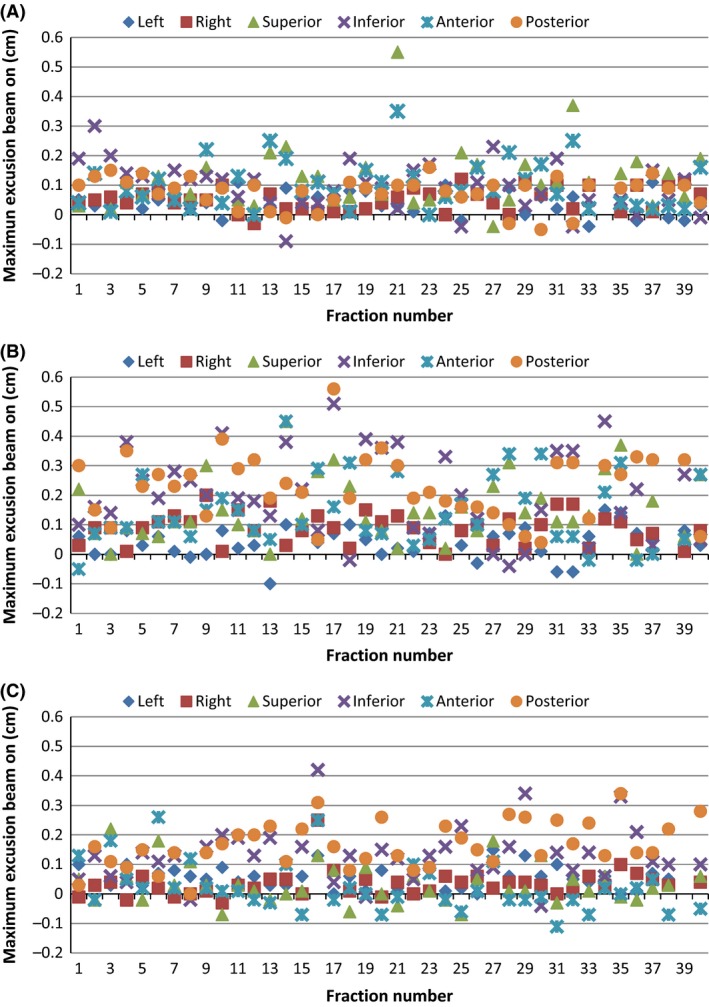
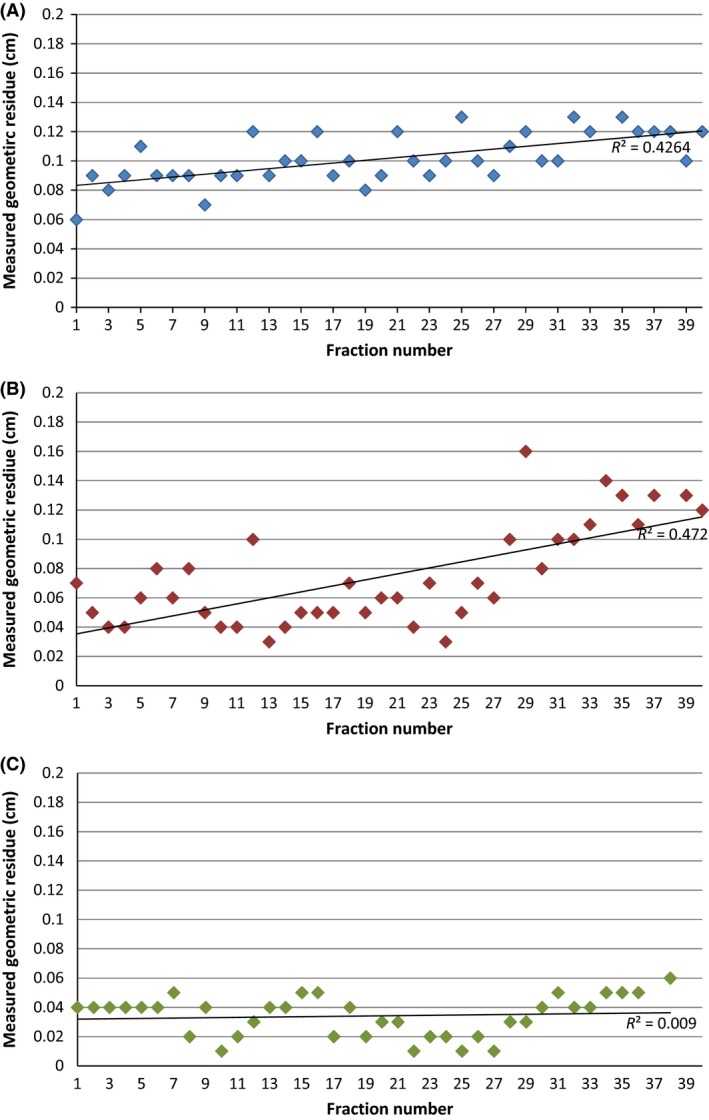
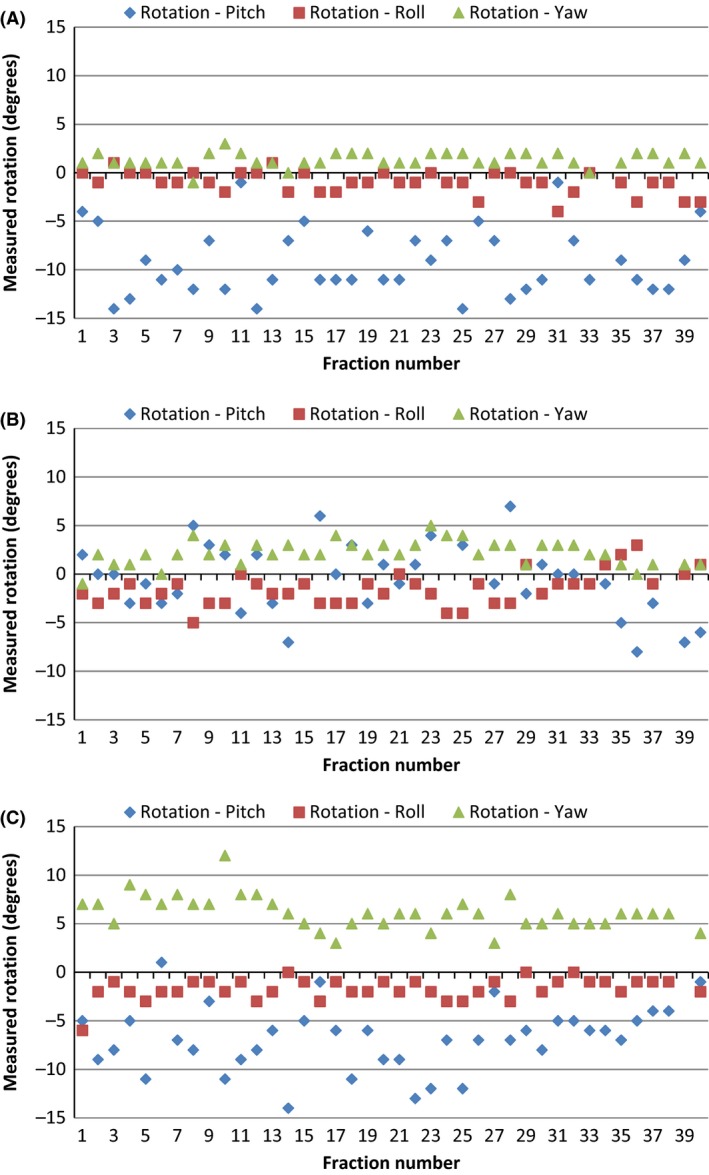
Results: A total of 116 fractions were treated using Calypso with Dynamic Edge™ gating. There was a strong concordance between aligning beacons using kV orthogonal imaging or CBCT and Calypso (mean variation ≤0.06 cm). The mean intra-fraction motion detected was ≤0.2 cm in all directions with the largest motion recorded being 2.2 cm in the left direction while the treatment beam was off. Prostate rotation was largest in the pitch direction and 28 fractions exceeded the 10° tolerance. A total of 78 couch shift corrections of ≥0.3 cm were required, usually following standard imaging, and before treatment starting. Three gating events due to intra-fraction motion occurred during treatment.
Conclusions: Intra-fraction motion monitoring with Calypso was successfully implemented. Greatest movement was seen between time of standard imaging and treatment starting with more than half the treatments requiring a ≥0.3 cm adjustment. This would not have been detected without intra-fraction monitoring.
Keywords: calypso; implementation; intra-fraction motion; prostate; radiation treatment.
© 2017 The Authors. Journal of Medical Radiation Sciences published by Wiley Publishing Asia Pty Ltd on behalf of Australian Society of Medical Imaging and Radiation Therapy and New Zealand Institute of Medical Radiation Technology.
Figures
References
-
- Foroudi F, Tyldesley S, Barbera L, Huang J, Mackillop WJ. Evidence‐based estimate of appropriate radiotherapy utilization rate for prostate cancer. Int J Radiat Oncol Biol Phys 2003; 55: 51–63. - PubMed
-
- Pollack A, Zagars GK, Starkschall G, et al. Prostate cancer radiation dose response: Results of the M. D. Anderson phase III randomized trial. Int J Radiat Oncol Biol Phys 2002; 53: 1097–105. - PubMed
-
- Varian.Medical.Systems . Calypso System Operator's Manual Version 3.0. 2013.
-
- Kupelian P, Willoughby T, Mahadevan A, et al. Multi‐institutional clinical experience with the Calypso System in localization and continuous, real‐time monitoring of the prostate gland during external radiotherapy. Int J Radiat Oncol Biol Phys 2007; 67: 1088–98. - PubMed
MeSH terms
LinkOut - more resources
Full Text Sources
Other Literature Sources
Medical
