


Duration of red blood cell storage and inflammatory marker generation
- PMID: 28263172
- PMCID: PMC5336336
- DOI: 10.2450/2017.0343-16
Duration of red blood cell storage and inflammatory marker generation
Abstract
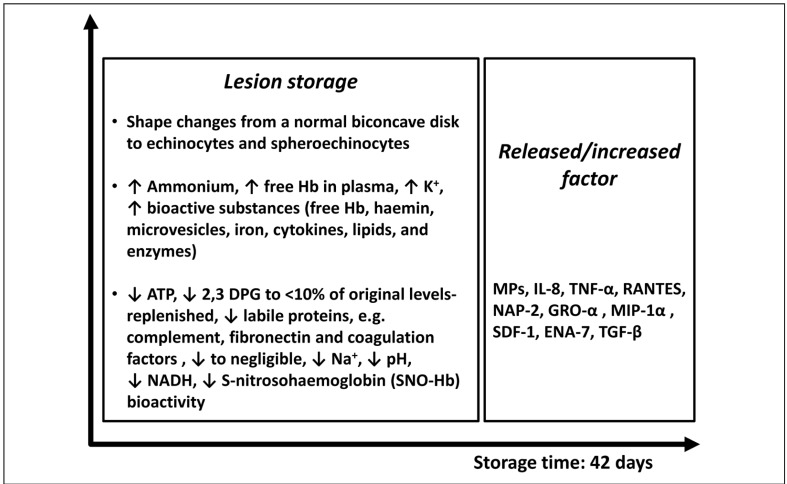
Red blood cell (RBC) transfusion is a life-saving treatment for several pathologies. RBCs for transfusion are stored refrigerated in a preservative solution, which extends their shelf-life for up to 42 days. During storage, the RBCs endure abundant physicochemical changes, named RBC storage lesions, which affect the overall quality standard, the functional integrity and in vivo survival of the transfused RBCs. Some of the changes occurring in the early stages of the storage period (for approximately two weeks) are reversible but become irreversible later on as the storage is extended. In this review, we aim to decipher the duration of RBC storage and inflammatory marker generation. This phenomenon is included as one of the causes of transfusion-related immunomodulation (TRIM), an emerging concept developed to potentially elucidate numerous clinical observations that suggest that RBC transfusion is associated with increased inflammatory events or effects with clinical consequence.
Conflict of interest statement
The Authors declare no conflicts of interest.
Figures
References
-
- Garraud O, Hamzeh-Cognasse H, Laradi S, Cognasse F. Paths to understand and to limit inflammation in Transfusions. Eur J Inflamm. 2014;12:191–5.
Publication types
MeSH terms
Substances
LinkOut - more resources
Full Text Sources
Other Literature Sources
