Review
. 2017 Dec:58:1-11.
doi: 10.1016/j.mam.2017.03.001. Epub 2017 Mar 3.

Discovery of specialized pro-resolving mediators marks the dawn of resolution physiology and pharmacology

Affiliations
Review

Discovery of specialized pro-resolving mediators marks the dawn of resolution physiology and pharmacology

Charles N Serhan. Mol Aspects Med. 2017 Dec.

Abstract

It is with great pleasure that I write this foreword and introduction to this Special Issue dedicated to the protective actions of the pro-resolving mediators and edited by my colleague Dr. Jesmond Dalli. Many of my collaborators and colleagues that helped to uncover the actions and clinical potential of the resolvins and other specialized proresolving mediators (SPM), namely, the superfamily of pro-resolving mediators that includes the resolvin (E-series, D-series and DPA-derived), protectin and maresin families, as well as the arachidonic acid-derived lipoxins, join me in this special issue. They have given contributions that present exciting new results on the remarkable actions and potency of these unique molecules, the SPM moving forward the importance of their mediators and pathways in human biology. Each contribution to this issue is presented by world authorities in their respective fields covering discoveries that demonstrate the importance and impact of resolution mediators in biology, medicine and surgery. While some of the authors were students and/or fellows with me and others, they are today the founding "resolutionists" of a new era of appreciation of autacoid biosynthesis and metabolomics in human health and disease with their rigorous attention to experimental detail and discovery. The chapters of this issue are filled with exciting new discoveries demonstrating the dynamics and potential of resolution mediators.

Keywords: Inflammation; Lipoxin; Maresin; Omega-3; Protectin; Resolvin.


Figures

Figure 1
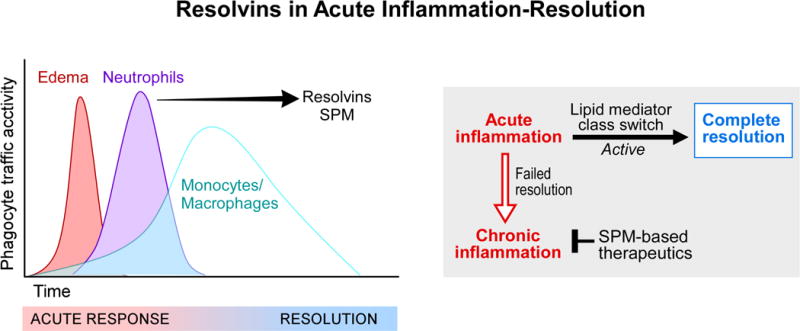
Figure 1. Function of Resolvins and Superfamily of SPM in acute inflammation resolution
(Left) In self-limited inflammation, acute vascular and leukocyte trafficking are rapid and protective to rid the host of invaders, resolving with time to return to homeostasis, namely the loss of pus and inflammatory exudate cells from the site to return to function of the tissue. Edema and neutrophil infiltration are governed by chemoattractants, both exogenous (microbial derived) and endogenous, such as leukotriene B4 and chemokines. Resolvins and other SPM are temporally biosynthesized when neutrophils reach maximal numbers and begin to reduce in number from the inflamed site in tissues. Monocytes and resolution-phase macrophages (Stables et al., 2011) enter in a nonphlogistic fashion to help repair and remodel tissues as needed for complete resolution of the site. (Right) Lipid mediator class switching is the process we introduced (Levy et al., 2001) to describe the temporal change in lipid mediators from initiation of inflammation to resolutionphase mediators as a biosynthetically active process, switching from PG and LT production to translational regulation of the leukocyte enzymes required to biosynthesize lipoxins, protectins and D-series resolvins. Failed resolution mechanisms may be responsible for persistent recurring bursts of acute infiltrates of leukocytes that can lead to chronic inflammation and the amplification of tissue injury. The potential of SPM-based therapeutics exemplifies a new approach, namely “one-to-many” counter-regulating pro-inflammatory targets to stop the progression (Business Wire, 2009) to chronic is depicted.
Figure 2
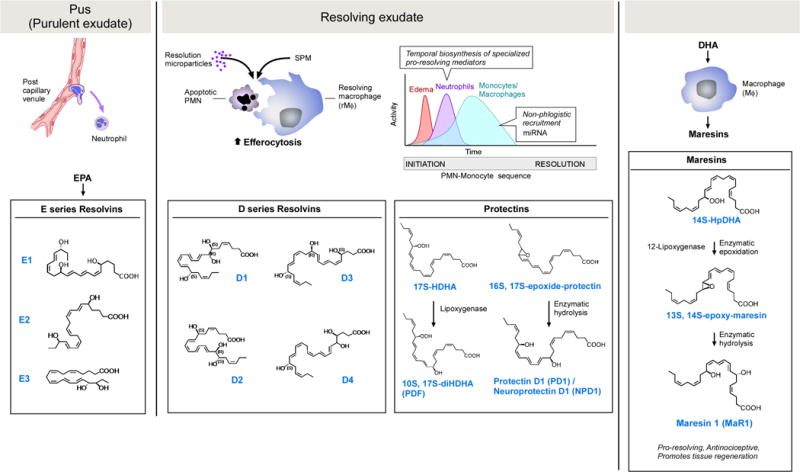
Figure 2. Resolvins, protectins and maresins in the frame of resolution of inflammation
(Left) Pus production from the first step of PMN-endothelial interactions is the nidus of E-series resolvin formation and actions, with three separate potent bioactive molecules produced. Microparticles, macrophages and apoptotic PMN produce resolvins and SPM (Dalli and Serhan, 2012), which enhance phagocytosis and limit further PMN infiltration. D-series resolvins are biosynthesized from DHA; four are depicted, six are currently elucidated and functionally defined. Maresins and protectins are also produced in inflammatory exudates from DHA. The potent PD1/neuroprotectin D1 is biosynthesized via an epoxide intermediate that is synthesized and confirmed via total organic synthesis, as is the eMaresin 13(14)-epoxide (see text for details). The 17S-hydroperoxy precursor to 10S,17S-diDHA, a.k.a. PDx, gives the trans-cis-trans conjugation (Serhan et al., 2015; Serhan et al., 2006). The complete stereochemistry of each resolvin, protectin and maresin is established, and their potent stereoselective actions are confirmed.
Figure 3
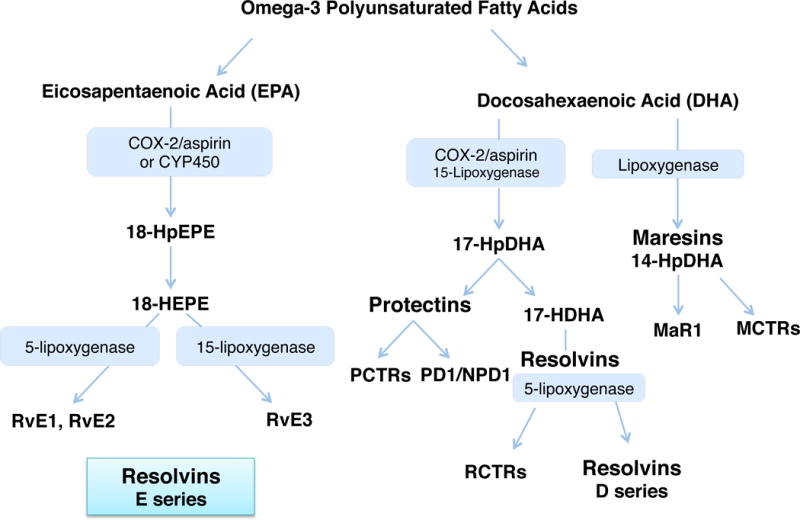
Figure 3. Biosynthesis routes for resolvins and SPM
The main biosynthesis routes are depicted. Each was confirmed via label tracking of precursors and intermediates as well as trapping of proposed intermediates. In addition to lipoxygenase-initiated pathways that produce mediators with alcohols, for example in PD1 or D-series resolvins in predominantly the 17S configuration, aspirin acetylation of cyclooxygenase-2 (COX-2) produces intermediates predominantly in the R configuration at the 17-carbon position producing the 17R epimers of 17R-PD1 and D-series resolvins coined the aspirin-triggered resolvin and protectin mediators. Statins can also lead to S-nitrosylation of COX-2 that, like aspirin acetylation, changes the enzyme’s catalytic site or produce R epimer-containing intermediates (see text for details).
Figure 4
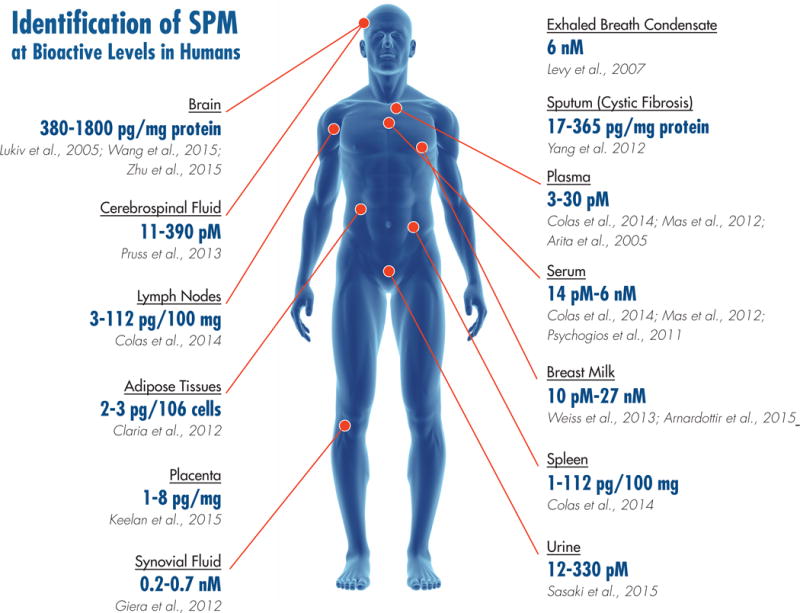
Figure 4. Identification of resolvins and SPM in vivo
Illustration depicts the location of SPM identified by rigorous LC-MS-MS-based methods that are present in concentrations that are bioactive in experimental model systems in vivo. See accompanying references in Figure 4.
Figure 5
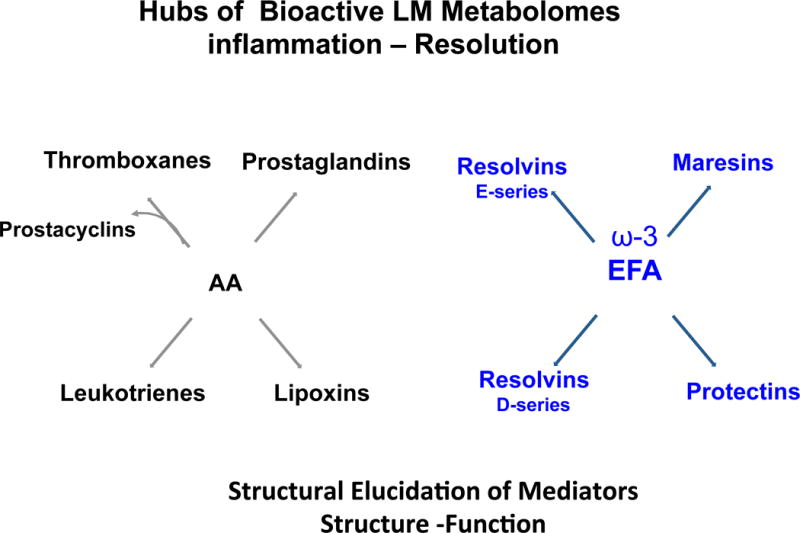
Figure 5. Hubs of conserved bioactive lipid mediator metabolomes
(Left) The arachidonic acid-derived mediators. (Right) The ω-3 essential fatty acid-derived mediators. These families and their function illustrate the importance of structural elucidation in metabolomics based on structure-function in biologic and human systems.

References

    1. Arita M, Ohira T, Sun YP, Elangovan S, Chiang N, Serhan CN. Resolvin E1 selectively interacts with leukotriene B4 receptor BLT1 and ChemR23 to regulate inflammation. J Immunol. 2007;178:3912–3917. - PubMed
    1. Arita M, Yoshida M, Hong S, Tjonahen E, Glickman JN, Petasis NA, Blumberg RS, Serhan CN. Resolvin E1, an endogenous lipid mediator derived from omega-3 eicosapentaenoic acid, protects against 2,4,6-trinitrobenzene sulfonic acid-induced colitis. Proc Natl Acad Sci USA. 2005;102:7671–7676. - PMC - PubMed
    1. Arnardottir H, Orr SK, Dalli J, Serhan CN. Human milk proresolving mediators stimulate resolution of acute inflammation. Mucosal Immunol. 2016;9:757–766. - PMC - PubMed
    1. Arnardottir HH, Dalli J, Colas RA, Shinohara M, Serhan CN. Aging delays resolution of acute inflammation in mice: reprogramming the host response with novel nano-proresolving medicines. J Immunol. 2014;193(8):4235–4244. - PMC - PubMed
    1. Aursnes M, Tungen JE, Colas RA, Vlasakov I, Dalli J, Serhan CN, Hansen TV. Synthesis of the 16S,17S-Epoxyprotectin Intermediate in the Biosynthesis of Protectins by Human Macrophages. J Nat Prod. 2015;78:2924–2931. - PMC - PubMed